Most sneakers come with garbage insoles. You spend $150 on a pair of beautiful retro runners or sleek basketball shoes, assuming the interior engineering matches the exterior style. It doesn't. Open up your favorite pair, pull out the thin piece of foam inside, and look at it. It is usually a flimsy, flat piece of cheap material that provides zero arch support and loses its cushioning within a month.
Your feet deserve better. If you are walking around cities, working long shifts, or hitting the gym in factory-standard inserts, you are asking for plantar fasciitis, shin splints, and lower back pain. Upgrading to the best insoles for your sneakers changes everything. It turns an uncomfortable lifestyle shoe into a cloud you can walk in for ten miles.
Finding the right insert requires looking past marketing buzzwords. You need to understand your specific foot shape, how you walk, and what you actually want to achieve. Let's fix your footwear.
The Big Lie About Factory Sneaker Inserts
Shoe companies prioritize aesthetic design, upper materials, and midsole tech. They skimp on the sockliner because they assume serious users will swap them out, or that average consumers won't notice until the return window closes. These stock inserts are basically placeholders.
When you wear a shoe with no structural support, your foot overpronates or oversupinates. Overpronation means your foot rolls inward, flattening your arch and placing massive strain on your tendons. Podiatrists at institutions like the American Podiatric Medical Association regularly emphasize that improper foot alignment causes a domino effect up your body. Your ankles turn, your knees misalign, and your hips tilt. That random lower back ache you get after standing for two hours? It probably starts at the bottom of your sneakers.
A real insole doesn't just add pillowy softness. It provides structure. It holds your heel in place, guides your stride, and distributes pressure across your entire foot instead of concentrating it on your heel and metatarsal heads.
High Arch vs Low Arch Dynamic
You cannot buy inserts based on a generic five-star review online. You must know your arch type.
The Wet Test
Wet the bottom of your foot and step onto a piece of cardboard.
- If you see almost your entire footprint, you have flat feet or low arches.
- If you see a distinct curved line connecting your heel and the ball of your foot, your arches are normal.
- If you only see your heel and the front ball of your foot with a tiny strip or nothing in between, you have high arches.
Flat feet need structural correction. You want a low to medium arch height with a rigid or semi-rigid support cap. If you buy a massive, stiff arch support for a flat foot, it will feel like walking on a golf ball. It hurts. You want gentle guidance that stops your foot from collapsing inward.
High arches need pressure distribution. Because only your heel and forefoot touch the ground, those two areas absorb 100% of the shock. You need an insert with a high, flexible arch that fills the empty space under your foot. This distributes your weight evenly across the whole sole, relieving pressure on the heel and ball.
Rigid Support vs Max Cushioning
People often confuse softness with support. They buy thick, squishy gel insoles thinking they are doing their joints a favor.
Gel is great for localized shock absorption, but it offers zero stability. Think about standing on a mattress versus standing on a firm floor with a yoga mat. The mattress makes your muscles work harder to stay balanced. Your foot needs a solid foundation.
The best insoles for your sneakers usually combine a rigid plastic or carbon fiber heel cradle with a dampening foam top layer. The rigid part keeps your heel bone aligned. The foam layer absorbs the impact of pavement.
If you run or play basketball, look for open-cell polyurethane foam like OrthoLite or specialized proprietary foams. These materials bounce back. They don't pack down and flatten after a few weeks of heavy use like cheap EVA foam does. For casual walking and everyday wear, a mix of cork and memory foam works wonders because it molds to your specific foot contours over time.
Fitting Insoles Into Tight Sneakers
Here is a mistake almost everyone makes. They buy a pair of thick, supportive insoles, shove them into their fitted sneakers on top of the existing liner, and wonder why their toes are numb.
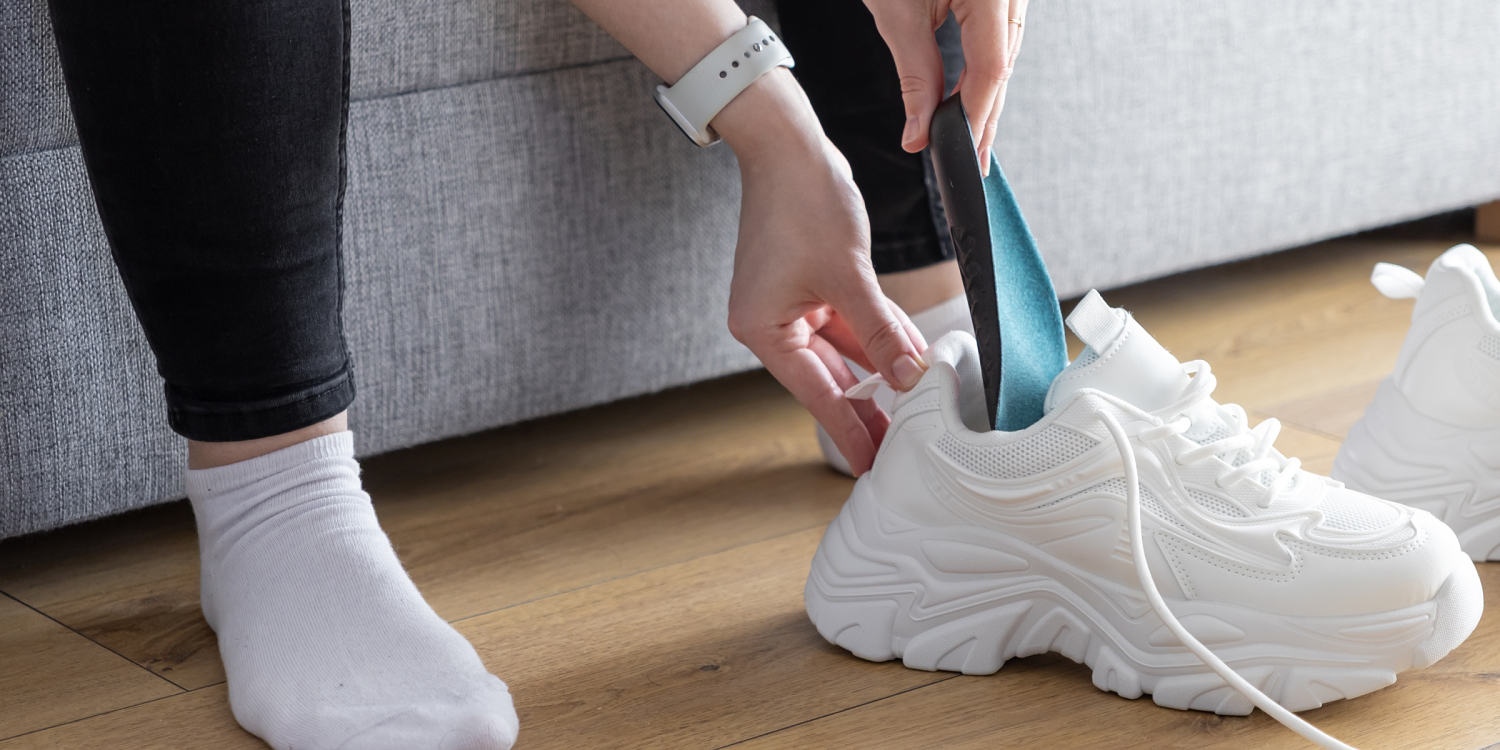
Always remove the factory insole first.
Even then, volume matters. Sneaker inserts come in different profiles or volume levels:
- High-Volume Insoles: Deep heel cups, thick foam. These are meant for roomy shoes like hiking boots, loose skate shoes, or running sneakers that you size up half a step.
- Medium-Volume Insoles: The sweet spot for most casual sneakers, lifestyle runners, and court shoes. They replace standard stock liners perfectly without changing how the shoe fits around the top of your foot.
- Low-Volume Insoles: Ultra-thin profiles designed for tight-fitting sneakers, dress shoes, or soccer cleats where space is minimal.
When you buy a high-quality insert, it will likely come in a size bracket (e.g., Men’s 9-10). It will look too big when you take it out of the box. Do not panic. Take your old factory insole, place it directly on top of the new one, line up the heels, and use a pen to trace the outline of the toe area. Take a sharp pair of scissors and trim along that line. This ensures a perfect fit inside your shoe compartment without bunching.
How to Make Them Last
Good insoles are an investment. They cost anywhere from $40 to $80, which sounds steep until you realize they outlast the sneakers themselves. A high-quality pair of structural inserts lasts around 12 months or roughly 500 miles of walking.
Don't leave them inside your sweaty sneakers after a long day. Pull them out halfway so the foam can air out and dry. Moisture destroys the structural integrity of foam layers and leads to nasty odors. Wash them by hand using a damp cloth and mild soap. Never throw them in the washing machine or dryer. The heat will warp the plastic support shells and ruin the adhesives holding the layers together.
When your sneakers wear out and the outsoles lose their grip, pull your aftermarket insoles out and move them to your next pair.
Stop settling for the cheap foam pieces shoe brands throw into their products. Find your arch type, match the volume to your favorite sneakers, trim them to fit perfectly, and give your feet the actual support they need to get through the day without pain.