The first thing you lose is the silence.
People who have never stood in the path of a major wildfire assume it begins with the smell of smoke or the sight of orange light bleeding over the horizon. It does not. Long before the air turns to ash, the forest goes completely, unnaturally quiet. The birds stop mid-song. The insects vanish into the dirt. Then, a low, guttural rumble starts vibrating through the soles of your shoes. It sounds like an idling freight train, miles away, parked right behind the ridge line.
By the time the sirens start wailing in the valley below, that rumble has transformed into a deafening roar.
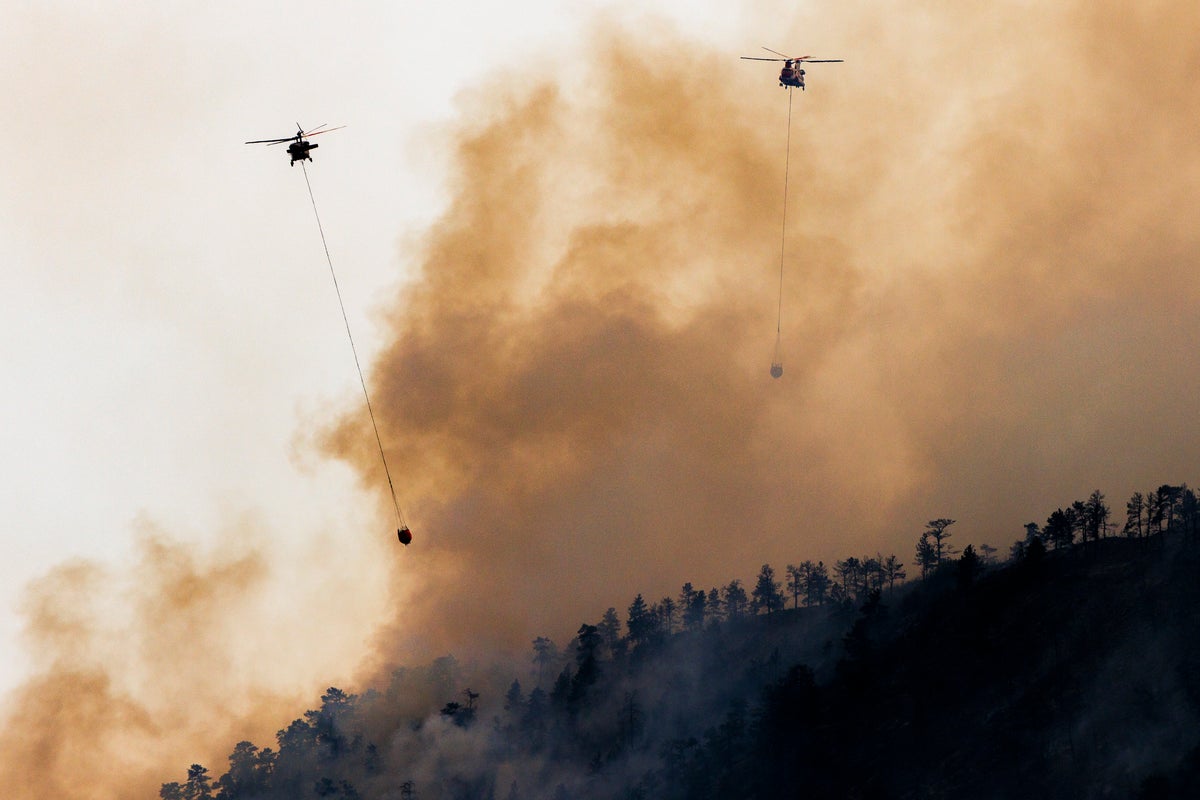
This week, thousands of families across Colorado learned exactly what that sound feels like. A fast-moving wildfire erupted in the parched foothills, exploding in size within a matter of hours. The official reports from emergency management agencies are stark: zero percent containment, thousands forced to evacuate, and zero control over where the flames go next.
But a spreadsheet of numbers and a map covered in red evacuation zones cannot capture the sheer panic of a Tuesday afternoon turned into midnight by a plume of choking black smoke.
The Thirty-Minute Choice
Consider a hypothetical resident named Sarah. She represents a very real composite of the frantic homeowners currently packing their lives into the backs of pickup trucks along the Front Range.
Sarah is standing in her living room. The sky outside is a bruised, apocalyptic purple. The automated emergency alert on her phone is screaming a continuous, high-pitched tone. The text on the screen is unambiguous: Evacuate Immediately. Pack essentials. Do not wait.
You have thirty minutes. What goes into the trunk?
The human brain does not function logically under the threat of impending incineration. You grab the birth certificates, yes. You grab the dog, the cat, the laptop. But then you find yourself staring at a bookshelf, or a closet full of old winter coats, suddenly paralyzed by the impossibility of choosing what deserves to survive. Do you take the handmade quilt from your grandmother, or the hard drive containing fifteen years of family photos? You can feel the heat radiating through the glass of your front windows. The air inside the house already tastes like charcoal.
This is the invisible tax of the modern wildfire season. It is not just the loss of property, though the financial devastation is staggering. It is the violent, sudden rupture of safety. One minute you are worrying about grocery lists and text messages; the next, you are looking at your home in the rearview mirror, wondering if it will be a pile of gray ash by sunrise.
The Illusion of Control
We like to believe we have conquered the elements. We build beautiful, multi-million-dollar timber-framed homes tucked deep into the ponderosa pines, chasing the dream of rugged Western isolation. We rely on satellite mapping, predictive weather models, and fleets of air tankers that drop bright red chemical retardant from the sky.
When a fire like this breaks out, that illusion shatters instantly.
Wildfires are not a sentient enemy. They do not care about property lines, zoning laws, or the heroic efforts of hotshot crews working eighteen-hour shifts on the fire line. A wildfire is a mathematical equation written in heat, wind, and fuel.
Right now, the mathematics are entirely in the fire’s favor.
Decades of aggressive fire suppression have left our forests dangerously overcrowded. Combine that with consecutive seasons of prolonged drought and a sudden spike in wind gusts topping fifty miles per hour, and the landscape becomes a giant tinderbox. When a spark hits that mixture, containment is not a matter of fighting harder; it is a matter of waiting for the weather to change.
If you talk to veteran wildland firefighters, they will admit to a quiet, sobering truth: you do not put out a fire of this magnitude. You merely guide it around the edges and pray for rain.
The Long Road to the Shelter
The drive out of an evacuation zone is a slow-motion nightmare. Bumper-to-bumper traffic snakes down winding mountain roads, illuminated only by the red glow of brake lights and the terrifying orange crown fires torching trees on the ridges above.
In local high school gymnasiums turned into makeshift Red Cross shelters, the atmosphere is heavy with a specific kind of exhaustion. Hundreds of neighbors sit on green canvas cots, wrapped in wool blankets, staring blankly at their phones for the latest updates from the sheriff’s department.
There is a unique bond that forms in these spaces. Strangers swap stories about how many minutes they had to leave, which backroads they took to escape the smoke, and whether they managed to round up their outdoor cats. They share chargers, split bottles of water, and try to comfort children who don't understand why they can't go home to get their favorite toys.
But beneath the community solidarity, a quiet dread hangs over the room. Everyone is waiting for the inevitable map update. Everyone is wondering if their street name will be on the list of structures lost.
The Fragility of the Mountain Dream
Living in the West has always required a certain degree of grit, but the terms of the contract are shifting. The wildfire season is no longer a distinct period on the calendar. It is a year-round reality that dictates insurance premiums, housing prices, and daily peace of mind.
When the smoke finally clears from this latest disaster—and it eventually will—the conversation will inevitably turn to rebuilding, to forest management, and to climate metrics. Those discussions are vital. They are the scaffolding upon which we build our future policies.
For the families currently displaced in Colorado, those macro-level debates mean absolutely nothing right now.
They are living in the raw, terrifying present tense. They are listening to the distant roar, watching the ash fall like gray snow on the hoods of their cars, and waiting to see what remains when the monster finally burns itself out.
The forest will grow back. The houses can be rebuilt with stronger materials, better defensible space, and smarter architecture. But the peace of mind that comes with a quiet night in the mountains takes much, much longer to return.