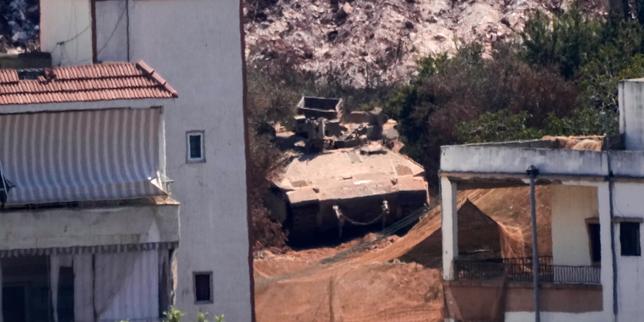
Southern Lebanon has once again become the epicenter of a localized yet devastating escalation following Israeli airstrikes targeting a prayer hall in the region. Local media reports confirm that these precise attacks resulted in at least one fatality and left eleven others injured, deepening the humanitarian strain across border communities already enduring months of continuous cross-border hostilities. The incident highlights a troubling pattern where civilian infrastructure, including religious and communal spaces, is increasingly caught in the crossfire of a broader, intractable regional conflict.
The mechanics of these border engagements follow a grimly familiar trajectory. An exchange of fire across the Blue Line triggers a rapid retaliation, often moving from military outposts to civilian structures when intelligence or operational assumptions point toward dual-use facilities. Local authorities in southern Lebanon report that the prayer hall sustained direct structural damage during afternoon prayers, compounding the terror for residents who refuse to evacuate their ancestral villages despite persistent shelling.
Understanding the gravity of this specific strike requires looking past the immediate casualty numbers. One life lost and eleven wounded may not register as a mass-casualty event by the standards of modern warfare, but within the fragile ecosystem of southern Lebanon, every strike acts as a psychological fracture. These communities are operating at the absolute limit of endurance. Water networks, electrical grids, and agricultural fields have sustained cumulative damage that threatens the long-term viability of rural life in the districts of Tyre, Bint Jbeil, and Marjayoun.
The Regional Calculus of Localized Violence
Military analysts frequently categorize these skirmishes as managed escalation, a dangerous game of signaling between state and non-state actors designed to demonstrate resolve without crossing the threshold into total war. Yet, targeting community hubs like prayer halls alters the operational and political calculus entirely. When sacred or communal spaces are hit, the pressure on political leaderships to respond proportionally multiplies exponentially.
The strategic rationale behind such strikes usually centers on disrupting logistical nodes or command networks allegedly embedded within civilian populations. However, verification remains exceptionally difficult given the security lockdown enforced by combatants on both sides of the border. Independent monitors face severe restrictions, leaving local municipal workers and civil defense volunteers to pick up the pieces, rescue the injured, and document the structural devastation under the constant hum of surveillance drones.
Displacement remains the most visible symptom of this slow-motion crisis. Tens of thousands of residents have fled northward toward Saida and Beirut, transforming schools into makeshift shelters and straining municipal budgets that were already buckling under Lebanon's broader economic collapse. Those who remain behind are predominantly the elderly or those without the economic means to relocate, making every new airstrike an immediate threat to the most vulnerable segments of the population.
Humanitarian Realities on the Ground
International humanitarian law mandates the protection of civilian objects and places of worship during armed conflict. The recurrent violations of these principles in southern Lebanon point to a systemic failure of deterrence. Accountability mechanisms are virtually non-existent in active combat zones where investigations are superseded by immediate military imperatives.
Civil defense teams operating in the south describe scenes of chaos following the recent strike. First responders arrived at the prayer hall to find heavy debris blocking the entrance, forcing neighbors to dig through concrete with hand tools before heavy machinery could be safely deployed. The wounded were subsequently distributed among regional hospitals that face acute shortages of trauma supplies, surgical anesthetics, and fuel to keep emergency generators running.
The international community responds with routine expressions of deep concern, yet diplomatic channels have yielded little tangible relief for the civilians on the ground. Ceasefire negotiations remain tethered to larger geopolitical bargains involving regional powers and international mediators, leaving southern Lebanese villagers as political leverage in a game they never chose to play.
As night falls over the frontier, the silence is punctuated intermittently by artillery fire and the distant drone of aircraft. The prayer hall in ruins stands as a stark physical manifestation of a conflict that continues to devour its surroundings, leaving communities to mourn their dead and tend to their wounded in the gathering dark.