The humidity in Georgia during mid-June does not just sit in the air; it presses against your chest like a physical weight. It is the kind of heavy, unyielding heat that makes every movement feel deliberate, every decision feel permanent. In the quiet, air-conditioned war rooms of the state’s Republican establishment, political strategists had been holding their breath for months, watching the thermometer rise alongside the stakes of an impending primary runoff.
They thought they had built a fortress. You might also find this related article insightful: Why Chandrayaan 3 Proves the West Misunderstands Global Tech Innovation.
For nearly a year, Governor Brian Kemp and his inner circle had been playing a delicate, high-stakes game of political chess. Their goal was simple yet immensely difficult: keep the White House on the sidelines. Kemp had made the quiet treks to Washington, placed the private phone calls, and utilized every ounce of his considerable regional leverage to protect his handpicked candidate for the United States Senate, Derek Dooley. Dooley, an attorney and former University of Tennessee football coach—blessed with the legendary surname of his late father, Georgia coaching icon Vince Dooley—was supposed to be the clean-slate outsider. He was the man who could theoretical bridge the gap between traditional suburban conservatives and the populists required to unseat Democratic Senator Jon Ossoff in November.
Then came Sunday morning. As extensively documented in recent reports by The Washington Post, the effects are worth noting.
With a single social media post fired from Mar-a-Lago, the carefully constructed fortress evaporated.
Donald Trump did not just wade into the Georgia Senate runoff; he detonated it. Early on June 14, 2026, just forty-eight hours before voters were set to head to the polls, Trump explicitly passed over Dooley to offer his "Complete and Total Endorsement" to two-term Congressman Mike Collins.
Trump called Collins a "WARRIOR" and a "WINNER."
In doing so, he chose a side in an ideological blood feud that has quietly consumed Georgia politics for six years.
The Trucker and the Coach
To understand the sheer weight of this moment, you have to look past the policy positions and look at the men themselves. On paper, both claim the same destination: defeating Jon Ossoff and returning the Senate to Republican control. But the paths they offer represent two entirely different visions of what it means to hold power.
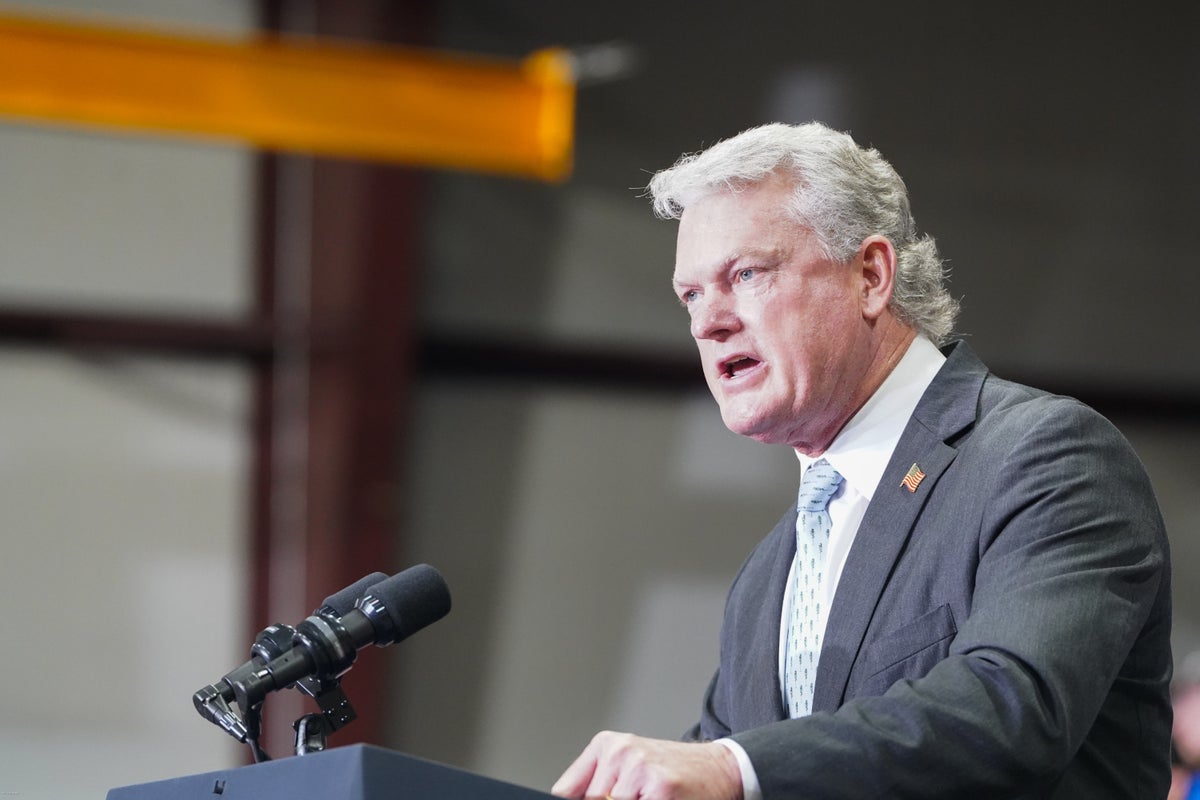
Consider Mike Collins. He is not a creature of country clubs or corporate boardrooms. He built his life around the diesel-fumed reality of a trucking business he owns and operates. Since entering the U.S. House in 2023, Collins has modeled his entire political identity on unapologetic disruption. He doesn’t merely support the America First platform; he embodies its combative ethos. When the legislative fight over the Laken Riley Act intensified, Collins championed the measure to mandate the detention of undocumented immigrants charged with theft, turning it into a political blunt instrument to hammer Ossoff.
Collins operates with the certainty of a man who believes the old conservative establishment is dead, and that survival requires absolute allegiance to the movement's leader. He did not court Trump from a distance; he lived in his orbit, campaigning alongside Vice President JD Vance and framing his first-place finish in the May primary—where he captured roughly 41% of the vote—as proof that the base wanted a fighter, not a diplomat.
Then look at Derek Dooley. Dooley carries the weight of a Southern dynasty. His father’s name is synonymous with Saturday afternoons, autumn leaves, and Georgia pride. Dooley’s campaign was built on the premise of electability. Backed by Kemp’s formidable state machinery, Dooley argued that a political outsider without Washington baggage was the only weapon capable of flipping a state that has broken the hearts of national Republicans since 2020.
Dooley’s strategy relied on a delicate tightrope walk. He spoke respectfully of Trump, pledging to work with him, but he refused to perform the public rituals of total submission. He did not echo the narrative that the 2020 election was stolen. He attempted to run a race focused on the future of Georgia, rather than the grievances of the past.
But on the ledger that matters most in modern Republican politics, that nuance looked like hesitation.
The Phantom of 2020
The real battle unfolding in Georgia isn't found in campaign flyers or television commercials. It is a psychological war over the memory of a single election night six years ago.
Trump’s endorsement text made the subtext explicit. He dismissed Dooley with a casual wave of the hand, writing that he didn't know him, that nobody else did either, and pointedly noting that Dooley had lived outside of Georgia for much of his life. Then came the real strike: Trump brought up the 2020 election results, punishing Dooley for privately acknowledging the reality of the 2020 vote count.
It is a familiar pattern. Over the last month, the political landscape has become a graveyard for Republicans who tried to chart a path independent of Mar-a-Lago. In Texas, Ken Paxton vanquished traditionalists. In Kentucky, Thomas Massie’s chosen allies fell. In Indiana and Louisiana, the story repeated. The message from the top of the ticket is clear, unyielding, and absolute: loyalty is a binary choice. There is no partial credit.
For Governor Brian Kemp, this runoff is the ultimate test of his own political legacy. Kemp has survived Trump’s wrath before, winning reelection in 2022 against a Trump-backed challenger by focusing strictly on state-level achievements. By recruiting Dooley, Kemp sought to prove that his model of disciplined, result-oriented conservatism could be exported to a federal race. He wanted to show that Georgia could win on its own terms.
Now, that theory faces the ultimate stress test.
Imagine the voter walking into a local precinct on Tuesday morning. They aren't thinking about committee assignments or legislative text. They are caught between two gravitational pulls. On one side is the governor who managed their state through economic turmoil and cultural shifts. On the other is the former president whose voice still possesses the unique power to command the passions of millions.
The Echo Chamber of the November Stakes
The immediate reaction to the endorsement was swift, revealing the raw nerves exposed by the announcement.
Collins immediately seized the mantle of the chosen heir, thanking Trump and pivoting directly to the general election. "It starts with firing Jon Ossoff in November," he declared, trying to project an aura of inevitability.
Dooley, left to pick up the pieces of a strategy upended in an instant, struck back with the fury of a coach facing a sudden fourth-quarter deficit. He reiterated his respect for Trump but turned his fire squarely on Collins, labeling him a "typical D.C. politician" and declaring that "the most important endorsement is that of the Georgia people."
But statements on social media cannot obscure the cold reality of the numbers. Because neither candidate cleared the 50% threshold in May, the race belongs entirely to whoever can motivate their core believers to show up on a random Tuesday in June. Runoffs are won on enthusiasm, grit, and tribal loyalty. By placing his thumb on the scale, Trump didn’t just give Collins a boost; he injected a massive dose of adrenaline into the populist base.
The ultimate irony of this race is that the winner inherits a battlefield of terrifying complexity. Jon Ossoff sits on a mountain of campaign cash, waiting. He is the sole Democratic senator fighting for survival in a state that Trump carried in 2024. The path to the Senate majority runs directly through the red clay of Georgia.
Traditional Republicans worry that by nominating an incendiary figure like Collins, the party is repeating the mistakes of previous cycles, trading general election viability for primary purity. Populists counter that a watered-down candidate without a distinct edge will simply evaporate under the intense pressure of a multi-million-dollar Democratic media campaign.
There are no certainties left in this state. The political ground here is fluid, shifting with every news cycle, leaving voters to navigate a world where old loyalties are constantly tested by new realities.
As the sun sets over the peach orchards and suburban cul-de-sacs, the campaign signs dotting the lawns feel less like advertisements and more like battle lines. On Tuesday, the voters will speak. But the true answer to what Georgia wants—and what the Republican Party has become—will linger long after the final ballots are counted, echoing through the halls of Capitol hill and into the fast-approaching autumn.