Pack a suitcase for a three-year trip, and you will quickly realize that space is a premium. Now imagine that suitcase has to keep six people alive in a radiation-soaked void with zero chance of a supply drop.
When we talk about going to Mars, everyone obsesses over food and oxygen. Hardly anyone talks about the medicine cabinet.
A brutal reality check from the International Space Station (ISS) shows that more than half the pharmaceuticals currently stocked in space expire within three years. Some lose their potency even faster because cosmic radiation degrades chemical bonds. On a journey to Mars, which could easily span hundreds of days round-trip, expired drugs aren't just useless—they can turn toxic.
If an astronaut develops a severe infection or an aggressive illness two years into a deep-space mission, they can’t wait for a cargo ship. They need a pharmacy on demand.
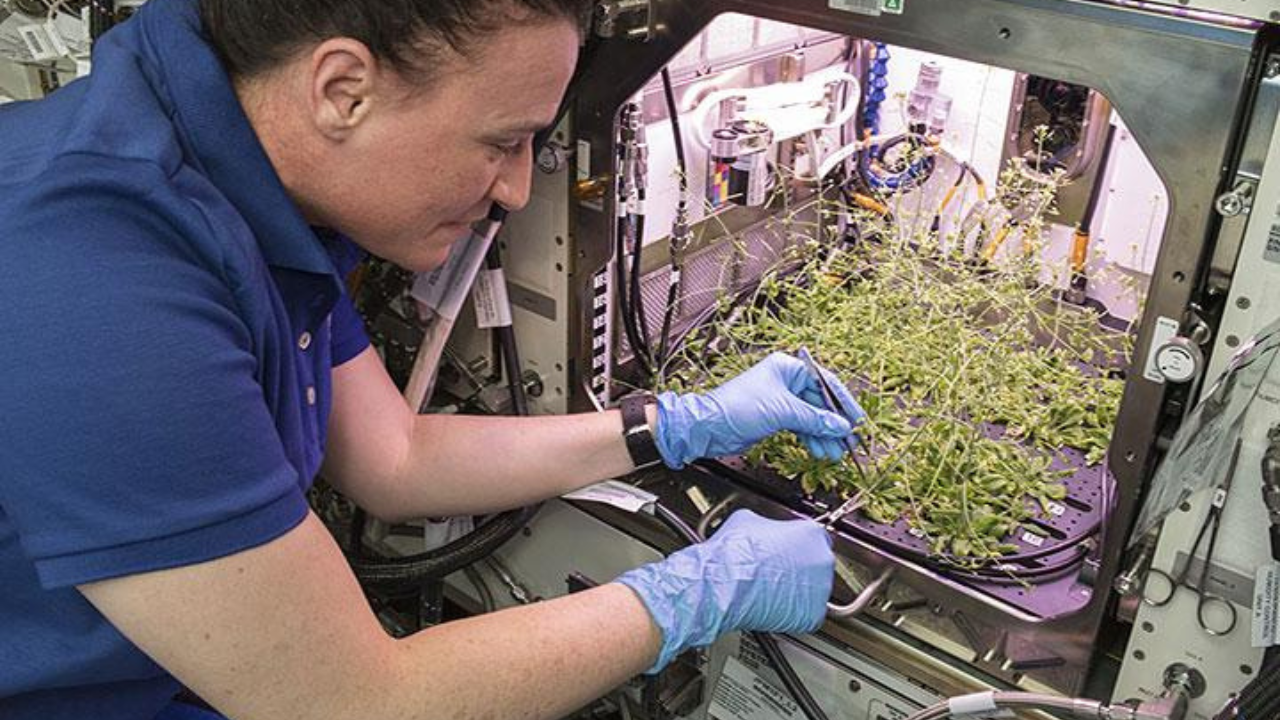
Researchers at the University of California San Diego have found a way to bypass the supply chain entirely. Instead of packing boxes of pills that will spoil, they want astronauts to grow their own medicine using plants and a harmless virus.
The Real Crisis of Space Pharmacology
Earth-bound pharmacies rely on stable temperatures, dark bottles, and predictable gravity. Space strip-mines all of that security.
Data from the ISS formulary indicates that 54 out of 91 critical medications have a terrestrial shelf-life of 36 months or less. When you blast those same compounds with high-energy cosmic rays, that expiration timeline accelerates dramatically.
We already know medical emergencies happen out there. In 2018, an astronaut on the ISS discovered a deep vein thrombosis (a blood clot) during a routine ultrasound. They had to be treated immediately with blood thinners to prevent a fatal pulmonary embolism.
On the ISS, Earth is just a few hours away if things go completely sideways. On Mars, you are on your own.
Turning Tobacco and Peas into Biological Factories
To solve the shelf-life problem, the UC San Diego team turned to molecular farming—using plants as living bioreactors. They focused their study on two specific hosts: Nicotiana benthamiana, a wild relative of the tobacco plant, and the humble black-eyed pea plant.
Nicotiana benthamiana is a favorite in biotechnology because it grows rapidly and accepts genetic modifications without throwing a tantrum. The black-eyed pea plant offers a different, highly practical advantage: it serves a dual purpose. It can produce therapeutics while simultaneously offering fresh, edible nutrition to a crew tired of eating paste from a tube.
The secret sauce in this setup is the cowpea mosaic virus (CPMV).
[Plant Host] + [Engineered CPMV Virus] ──> [Target Therapeutic Protein]
Don't let the word virus scare you. CPMV is entirely harmless to humans. Scientists love it because its protein shell can be engineered to carry specific medical instructions. By using a vacuum to flood the plant leaves with genetic instructions, the researchers turned each individual plant into a self-contained, sterile mini-bioreactor. The plant does all the heavy lifting of building the complex proteins, eliminating the need for massive, heavy sterilization tanks that would never fit on a spacecraft.
Simulating Mars in a Lab
Growing things on Earth is easy. Doing it while tumbling through zero gravity is a nightmare.
To prove this could actually work on a journey to the red planet, the researchers had to mimic the harsh realities of space flight without leaving the ground. They used a few clever engineering tricks:
- Weightlessness Simulation: The team placed the plants on a random positioning machine that rotated continuously in three dimensions, driven by a custom Python script running on a simple Raspberry Pi. This kept the plants in a state of perpetual free-fall.
- Radiation Stress: To simulate the destructive oxidative stress caused by cosmic radiation, the team introduced hydrogen peroxide to the plants.
- Temperature Spikes: Climate control chambers mimicked the unpredictable thermal environments of a spaceship hull.
Despite the simulated space stress, the plants successfully expressed the virus particles.
The No-Blender Extraction Breakthrough
Traditionally, harvesting compounds from plants is a destructive process. You harvest the leaves, throw them into a commercial blender, and end up with a thick green smoothie. Purifying a delicate medicine out of that messy organic sludge requires a massive amount of chemical filters and heavy laboratory hardware.
Spacecraft don't have room for a pharmaceutical purification lab.
The UC San Diego engineers solved this with a non-destructive extraction technique. Instead of grinding up the plant, they submerged the living leaves in a liquid buffer solution and pulled a vacuum. This forced the liquid into the tiny spaces between the plant cells.
Next, they placed the intact leaves into a centrifuge. The spinning motion gently drew the fluid out, carrying the therapeutic particles with it. The ISS already features a laboratory-grade centrifuge, meaning no new heavy machinery needs to be launched.
The best part? The plant stays alive. You put it back under the grow lights, and it keeps growing to produce another batch later.
What This Means for Earth
While the primary goal is keeping astronauts alive on Mars, this biotech has immediate, massive implications for terrestrial medicine.
The engineered CPMV virus used in these experiments has already shown powerful anti-tumor properties in mouse models and clinical trials for canine cancer patients. Some pets with late-stage diseases went into complete remission after receiving the plant-derived viral therapy.
Because this method strips away the need for multi-million-dollar sterile cleanrooms and industrial bioreactors, it could fundamentally drop the cost of manufacturing vaccines and biological drugs. Resource-limited regions or disaster zones could use these exact same portable plant systems to grow emergency medical supplies on site within days.
The current system has its limitations. The non-destructive vacuum method only yields about 10% to 20% of the total medicine you would get from grinding the entire plant into mush. That is the trade-off for saving weight and keeping the plant alive.
The research team met with the FDA earlier this year to outline the translation of this platform into human clinical environments. The immediate next steps focus heavily on tweaking the genetic delivery systems to boost that 20% yield ceiling without sacrificing the low-weight, low-equipment advantages that make the system viable for space travel. If they scale that hurdle, the medicine cabinet for the first Mars crew won't be filled with pills—it will be filled with seeds.