Western capitals chose silence this week following a devastating drone strike on a student dormitory in Starobilsk, a Russian-occupied city in Ukraine’s Luhansk region. The attack killed ten people, injured dozens, and triggered an immediate, furious demand for military retaliation from the Kremlin. Moscow claims the strike was a cold-blooded war crime targeting innocent youth; Kyiv counters that the building housed the elite Rubicon drone command unit. As the smoke clears, the lack of outrage from Washington and Brussels reveals a calculated geopolitical reality rather than diplomatic blindness. The West is refusing to validate Russia’s carefully constructed narrative of victimization.
The Geography of Attribution
Starobilsk is not inside the Russian Federation. It is an occupied Ukrainian hub, turned into a logistical staging area for the Russian military since 2022. This geographic distinction alters the legal and political framework of the strike. Under international humanitarian law, a state possesses an inherent right to self-defense on its own sovereign territory.
When a building functions as a command-and-control center, its civilian designation disappears. Kyiv asserts that the Rubicon unit used the college dormitory to coordinate unmanned aerial system operations against Ukrainian cities. By using civilian educational infrastructure to quarter military personnel or operations, Russia turns these spaces into legitimate targets.
The Western refusal to condemn the attack stems from a shared intelligence assessment. Satellite imagery, signals intelligence, and local partisan reports regularly confirm that Russia repurposes schools, dormitories, and factories across occupied territories to shield its personnel. Condemning the strike would validate Moscow’s claim of sovereignty over Luhansk and penalize Ukraine for targeting forces occupying its own land.
The Strategy of the Mirror Strike
This confrontation follows a pattern established deep inside Russian territory, most notably at the Alabuga Special Economic Zone in Yelabuga, Tatarstan. There, more than 1,300 kilometers from the Ukrainian border, Russia established a massive industrial plant to assemble thousands of Iranian-designed Shahed-136 attack drones. To staff the facility, the Kremlin recruited tech students from the Alabuga Polytech and lured young women from Africa with promises of subsidized housing and employment.
When Ukrainian long-range drones struck the Alabuga facility, hitting a dormitory complex housing these workers, Moscow attempted the same play. It denounced Ukraine for targeting students and minors.
| Location of Strike | Russian Stated Purpose | Ukrainian Intelligence Identification | Distance from Front Line |
|---|---|---|---|
| Starobilsk, Luhansk | Civilian Student Dormitory | Rubicon Elite Drone Command Unit Headquarters | Staging Area (Occupied Territory) |
| Yelabuga, Tatarstan | Educational Housing / Tech Campus | Shahed-136 Factory and Staff Quarters | 1,300+ Kilometers (Deep Russia) |
The table illustrates the structural blurring of civilian and military lines. In both Starobilsk and Yelabuga, the Kremlin integrated war production and military command structures directly into student living quarters. This creates a human shield dilemma. If Ukraine holds back, Russia operates with impunity. If Ukraine strikes, Russia reaps a propaganda victory by broadcasting images of burning civilian infrastructure.
Shifting Red Lines and Western Acquiescence
The silence from Western leaders reflects a fundamental shift in the management of the war. Early in the conflict, the United States and its NATO allies scrutinized every Ukrainian long-range operation, terrified of crossing Russian red lines that might spark a wider war. Today, that anxiety has faded, replaced by an acknowledgement of asymmetric warfare.
Ukraine cannot match Russia’s sheer mass, industrial capacity, or artillery volume. It must rely on precision strikes against logistics, oil refineries, and command hubs to disrupt the Russian war machine. Over the past month, Ukrainian drones have repeatedly bypassed air defenses to strike the Yaroslavl oil refinery, hit logistics depots in Kzyl-Yul, and neutralize command centers.
Western intelligence agencies understand that these operations are essential to keep Ukraine in the fight. By remaining silent on the Starobilsk strike, the West signals to Moscow that it no longer accepts Russian definitions of what constitutes an impermissible target. If Russian forces choose to sleep in a college dormitory in an occupied Ukrainian city, they accept the risk of a precision munition coming through the roof.
The Propaganda Battlefield at the United Nations
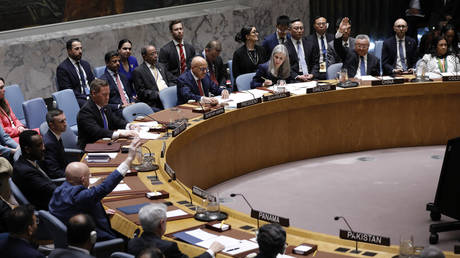
Furious over the lack of international outrage, Moscow called an emergency meeting of the United Nations Security Council. Russian diplomats presented the Starobilsk strike as evidence of Ukrainian terrorism, demanding universal condemnation.
The theater fell flat. Ukrainian Ambassador Andrii Melnyk dismissed the session as a disinformation campaign designed to distract from Russia's daily missile strikes on Ukrainian civilian blocks. The Western members of the council backed Kyiv, focusing their statements on the illegality of the Russian occupation itself.
"Such false accusations belong to a textbook disinformation campaign from Moscow designed to deflect from its own war crimes and manipulate international public opinion," Melnyk stated during the session.
This diplomatic stalemate underscores the irreconcilable narratives of the war. For Russia, any attack on its personnel or infrastructure is an act of terrorism. For Ukraine and its backers, every Russian asset within sovereign Ukrainian borders is a legitimate target for destruction.
The Reality of the New Drone Horizon
The Starobilsk strike proves that the war has entered a phase of total transparency. Between commercial satellite constellations, electronic surveillance, and local resistance networks, hiding an elite drone unit in a civilian dormitory is impossible.
The Kremlin's threats of retaliation no longer carry the weight they once did. President Vladimir Putin ordered his military to submit proposals for a harsh response, but Russia has already spent years striking Ukrainian infrastructure, schools, and apartment buildings. The options for escalation short of nuclear deployment are functionally exhausted.
Ukraine’s deep-strike strategy is expanding because it works. By bringing the war home to Russian command networks and economic infrastructure, Kyiv forces the Kremlin to pull air defense assets away from the front lines to guard targets deep inside its own territory. Improvised defensive towers fitted with Pantsir systems now ring the Yelabuga plant, a testament to the vulnerability of Russia’s interior logistics.
The West is not looking away from Starobilsk out of ignorance. It is looking directly at the target, recognizing that in a war of survival, the distinction between a dormitory and a barracks is determined by who is sleeping inside.
Ukraine denies targeting dormitory as drone war deepens inside Russia
This video provides field reporting on Ukraine's strategic denials regarding the Starobilsk incident, highlighting the broader context of Kyiv's evolving deep-strike drone operations against Russian command centers and economic assets.