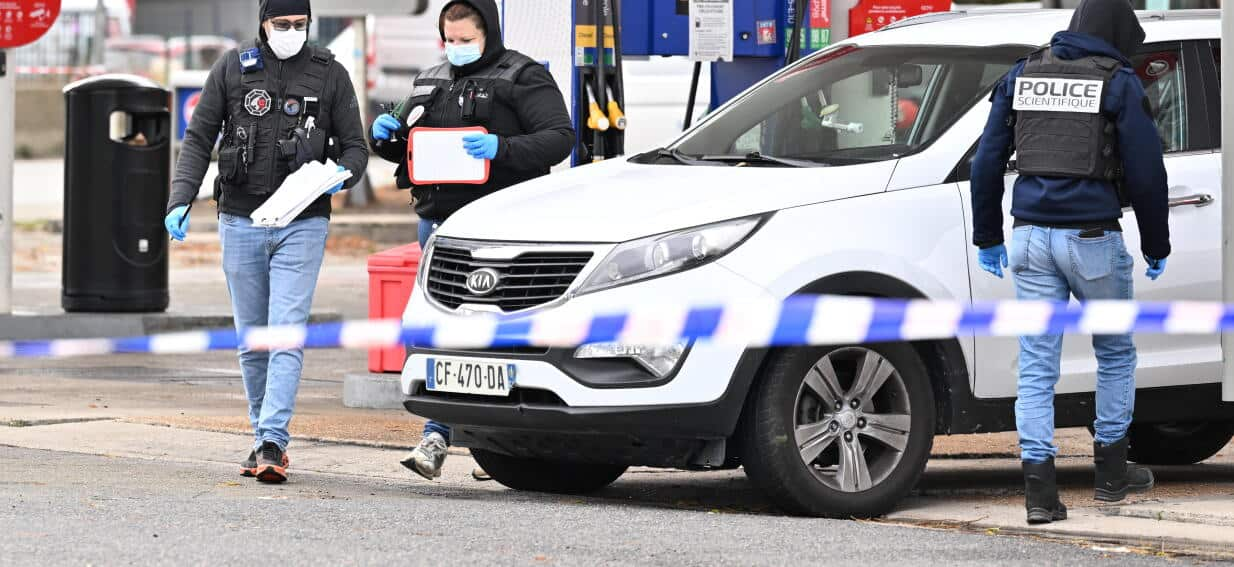
When a head of state labels an urban shooting a "racist terror attack," the declaration alters the legal architecture, intelligence allocation, and social stability mechanics of the entire state apparatus. In December 2022, following the fatal shooting of three Kurdish community members at a cultural center and hair salon in Paris's 10th arrondissement, French President Emmanuel Macron publicly characterized the perpetrator's actions as an attack targeting the Kurdish community specifically due to their ethnicity and political identity. Standard news coverage treats such presidential statements as reactive political rhetoric or expressions of solidarity. That framing misses the operational reality. Executive classification of domestic violence sits at the intersection of counterterrorism law, criminal prosecution thresholds, and public order management.
To understand the mechanics of this event and its institutional aftermath, one must separate the emotional reporting of street-level unrest from the structural frameworks governing how modern European states process lone-actor extremist violence.
The Legal Architecture of Terror vs. Hate Crime
In the French judicial system, the distinction between an aggravated hate crime (crime à caractère raciste) and an act of terrorism (acte de terrorisme) is not semantic; it dictates jurisdiction, investigative powers, and sentencing parameters.
Under Article 421-1 of the French Penal Code, an offense constitutes terrorism only when it is intentionally committed in connection with an individual or collective enterprise aimed at seriously disrupting public order through intimidation or terror. Proving this intent requires establishing an ideological or political objective beyond interpersonal animus. Conversely, racist motivation acts as an aggravating circumstance under Article 132-76, increasing maximum penalties for murder or assault without shifting the case out of standard criminal jurisdiction.
This creates a structural friction between executive messaging and judicial independence:
- Jurisdictional Routing: Terrorist offenses fall under the exclusive purview of the Parquet National Antiterroriste (PNAT). Standard racially motivated homicides remain with the local Parquet de Paris (Paris Prosecutor's Office).
- Investigative Tools: PNAT classification unlocks extended police custody (garde à vue) up to 96 hours (and up to 144 hours under imminent threat statutes), specialized domestic intelligence access (DGSI), and preemptive asset freezes. Standard criminal procedures cap custody at 48 hours for common homicides, extending to 96 hours only under specific organized crime provisions.
- Evidentiary Thresholds: Prosecutors require concrete manifestations of an ideological program—manifestos, organizational ties, or systematic targeting patterns—to sustain a terrorism charge. When a suspect exhibits a history of isolated, erratic violence alongside explicit xenophobic statements, prosecutors frequently default to aggravated murder charges to prevent the collapse of a terrorism indictment at trial.
In the Paris 10th arrondissement incident, the suspect—a 69-year-old retired train driver previously charged with attacking a migrant camp with a saber in 2021—admitted to investigators that he harbored a pathological hatred of foreigners. Despite the presidential framing of a "racist terror attack," judicial authorities initially pursued charges of assassination, attempted assassination, and aggravated violence with a weapon based on race, ethnicity, nation, or religion, rather than transferring the file to PNAT. The divergence between political terminology and prosecutorial classification demonstrates a recurring vulnerability in state crisis communication: when executive rhetoric outpaces judicial categorization, affected communities perceive institutional dissonance as a denial of the attack's severity.
Threat Modeling the Lone-Actor Extremist
Security agencies categorize attackers along a spectrum ranging from hierarchical cell operatives to self-radicalized lone actors. The Paris shooter exemplifies a distinct operational profile that consistently evades traditional counterterrorism filtering: the recidivist grievance-driven offender.
Traditional intelligence frameworks rely on signal detection—monitoring encrypted communications, financial transfers, travel to conflict zones, and association with known extremist networks. Lone actors operating without organizational infrastructure generate almost zero signals in these channels. Their radicalization occurs through ambient media consumption, personal grievance accumulation, and cognitive fixation rather than structured recruitment.
Three systemic bottlenecks hinder the interdiction of this offender profile:
- The Psychiatric-Ideological Overlap: Offenders presenting documented mental health instability alongside explicit racial animus create classification paralysis. Security services often categorize them as psychiatric cases rather than ideological threats, routing them toward clinical or standard penal supervision instead of counter-extremism monitoring (Fichier des signalements pour la prévention de la radicalisation à caractère terroriste, or FSPRT).
- Pretrial Release Mechanics: Under the French Code of Criminal Procedure, pretrial detention (détention provisoire) is strictly bounded by statutory time limits for non-terrorist offenses. When an offender is awaiting trial for a prior violent hate crime—as occurred with the 2021 saber attack—judicial oversight mechanisms frequently fail to account for escalating fixation during the release period.
- Target Softness: Cultural centers, local businesses, and community gathering points lack the hardened perimeter defenses applied to state institutions or major religious sites under Opération Sentinelle. An attacker armed with a standard firearm can inflict mass casualties within seconds before rapid-response units arrive.
The operational failure in Paris was not an intelligence blind spot regarding a foreign network; it was a risk-assessment failure within the domestic criminal justice pipeline. Systems optimized to disrupt coordinated plots struggle to contain individuals whose operational security is a byproduct of total social isolation.
The Escalation Dynamics of Diaspora Distrust
When an attack strikes a marginalized diaspora community—particularly one with a history of unresolved political violence—the incident triggers a secondary crisis: rapid breakdown of trust between the state and the affected population.
For the Kurdish diaspora in France, the December 2022 shooting did not occur in a historical vacuum. It took place less than a decade after the January 2013 triple assassination of Kurdish activists in the exact same neighborhood, a case whose judicial investigation stalled amid allegations of foreign intelligence involvement and state secrecy. In collective memory, unresolved historical trauma compresses the timeline between an isolated act of violence and perceived state complicity or negligence.
This dynamic operates through a predictable causal chain:
- Immediate Information Vacuum: In the initial hours following a shooting, law enforcement restricts details to protect the integrity of the investigation.
- Narrative Substitution: In the absence of verified motive data, the affected community interprets the event through its primary threat model—for the Kurdish diaspora, targeted political assassination by foreign state proxies.
- Institutional Friction: When authorities announce that the suspect is a lone domestic extremist with a history of racist violence rather than a foreign operative, the community often rejects the finding as an attempt to depoliticize the attack.
- Street-Level Mobilization: Protest gatherings rapidly transition from mourning to confrontation with riot police (Compagnies Républicaines de Sécurité), driven by the perception that the state failed to protect a known vulnerable population despite the suspect's recent release from custody.
The resulting clashes in central Paris—involving overturned vehicles, projectiles, and tear gas deployment—represent a secondary cost function of inadequate crisis communication. Deploying thousands of riot police to contain protests after an attack consumes vast municipal security bandwidth while deepening the alienation of the victimized community.
Structural Limitations of Reactive State Interventions
Following high-profile racist or extremist attacks, governments routinely deploy standardized stabilization measures: deploying static military patrols to community centers, convening ministerial roundtables with community leaders, and proposing legislative amendments to tighten firearm or hate-speech laws.
Practitioners managing urban security and judicial administration recognize severe structural limits to these interventions:
- Static Guarding Dilution: Assigning Sentinelle patrols or municipal police to guard specific cultural centers creates a displacement effect. Thousands of potential soft targets exist across any major metropolis; hardening ten locations simply shifts vulnerability to the remaining thousands while exhausting personnel through static, low-engagement deployments.
- Firearm Registry Lag: In the Paris case, the shooter legally acquired or possessed firearms despite a prior felony indictment for violent assault. Interoperability gaps between criminal court databases, psychiatric hold registries, and national weapons permit systems (Système d'Information sur les Armes) allow prohibited individuals to retain or acquire weapons during administrative lag windows.
- Rhetorical Overreach vs. Judicial Reality: When political leaders invoke terrorism terminology immediately after an incident, they establish an expectation of specific prosecutorial outcomes. If investigating magistrates subsequently decline to apply terrorism statutes due to strict statutory definitions, the public perceives a systemic cover-up rather than adherence to legal precision.
Operational Protocol for High-Risk Extremist Incidents
Mitigating both the primary threat of recidivist hate-crime offenders and the secondary destabilization of affected communities requires restructuring how justice and security apparatuses process non-networked extremists.
First, judicial systems must decouple pretrial detention risk assessments from organizational affiliation. Offenders charged with bias-motivated violent felonies—particularly those involving bladed weapons or firearms—must be subjected to mandatory threat-escalation protocols, automatic revocation of all weapons licenses synchronized in real time with court registries, and continuous electronic monitoring during pretrial release.
Second, executive crisis communication must align strictly with statutory definitions. Heads of state and interior ministries should avoid deploying legally binding terms such as "terror attack" before prosecutors determine jurisdictional routing. Precise language—identifying an act as a targeted racist assault under active investigation for potential ideological links—maintains moral clarity without creating institutional contradictions when prosecutors apply aggravated hate-crime statutes.
Third, municipal security architectures must replace reactive static guarding with liaison-driven early warning frameworks. Embedding dedicated, culturally competent police liaisons within diaspora community networks prior to crises establishes trusted communication channels. When an attack occurs, direct briefing mechanisms between investigating magistrates and community representatives prevent information vacuums, neutralizing the narrative escalation that turns public mourning into street-level conflict.