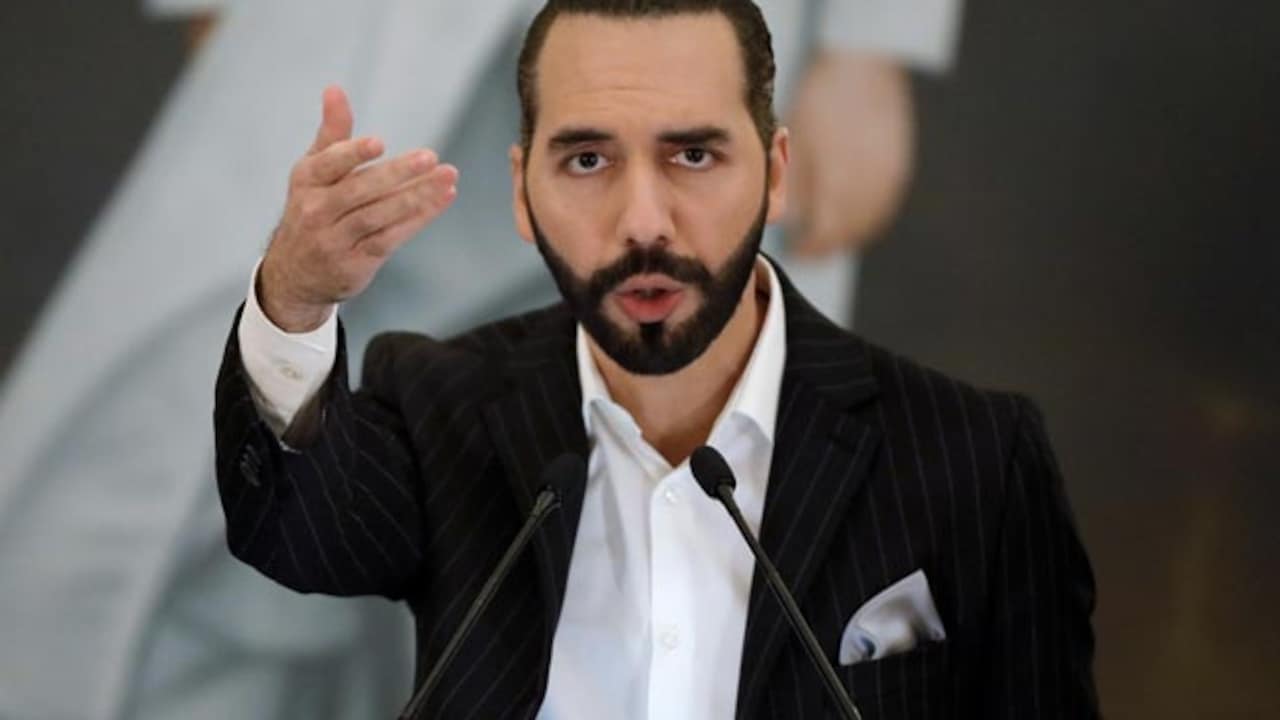
One word. Seven letters. Four million views before sunset.
When Nayib Bukele, the president of El Salvador, replied to a formal human rights warning from Amnesty International with the single word "Ratioed," the internet erupted into applause, memes, and furious debate. On the surface, it looked like just another viral skirmish on X, the platform formerly known as Twitter. A tech-savvy head of state clapping back at an international watchdog using the vernacular of twenty-something gamers and TikTok commenters. Funny. Sharp. Modern. Meanwhile, you can read similar stories here: Inside the Cross-Border Trucking Crisis Turning Commercial Drivers Into Cartel Mules.
Look closer, though. Behind that seven-letter punchline sits one of the most consequential shifts in modern political communication—a moment where internet culture collided head-on with constitutional law, mass incarceration, and the survival of institutional accountability.
To understand why a single slang word matters so much, you have to step away from the glowing screen in your hand and walk down a humid, sun-baked street in Soyapango, a densely populated municipality just outside San Salvador. To explore the complete picture, we recommend the recent article by Associated Press.
The Weight of a Quiet Street
Consider a hypothetical resident—let us call her Elena—who has spent the past twenty years running a small pupusa stand near a bus terminal. For two decades, Elena paid "rent" not to her landlord, but to teenage boys carrying illegal firearms who worked for MS-13 or Barrio 18. Every Friday afternoon, her stomach knotted as she counted out crumpled bills, knowing that missing a single payment meant watching her shop burn or her son disappear. Crossing an invisible boundary two blocks away could cost a life. Fear was the air she breathed.
Then came March 2022. After gang violence claimed eighty-seven lives in a single weekend, Bukele declared a state of exception. Soldiers in tactical gear rolled into neighborhoods like Elena’s. Within months, tens of thousands of suspected gang members were arrested, stripped of due process protections, and packed into newly built mega-prisons like the Terrorism Confinement Center, known as CECOT.
For the first time in twenty years, Elena opened her stall on a Friday without looking over her shoulder. She kept her money. Her son walked home after dark. If you asked Elena what she thought of Nayib Bukele, she would not recite international treaties. She would tell you that she can finally sleep.
Now, cross the street in that same neighborhood and meet a second hypothetical figure—let us call him Mateo. Mateo is twenty-two, works in a warehouse, and has a small tattoo on his forearm that he got at sixteen because he liked the way it looked. Under the state of exception, constitutional rights to legal counsel, prompt judicial hearings, and freedom from arbitrary detention were suspended. Police faced arrest quotas. An anonymous phone call or a suspicious tattoo was enough to put a young man in handcuffs. Mateo was swept up in a midnight raid, disappeared into a prison system holding more than eighty thousand detainees—roughly two percent of El Salvador’s adult population—and left waiting months or years without ever seeing a judge.
Elena’s relief and Mateo’s disappearance exist in the exact same country, at the exact same moment. That agonizing contradiction is the real terrain where Amnesty International and Nayib Bukele collided.
What "Ratioed" Actually Means
Before we trace the collision, it helps to decode the weapon Bukele used. In internet slang, getting "ratioed" happens when a social media post receives vastly more replies, quote-tweets, or disapproving comments than likes. In the unwritten rules of online platforms, a ratio functions as a rough-and-ready verdict from the crowd. It says: Nobody agrees with you. The room has turned against you. You lost.
Historically, heads of state responded to criticism from organizations like Amnesty International or Human Rights Watch with stiff, carefully vetted diplomatic communiqués. Ambassadors summoned reporters. Foreign ministries issued three-page rebuttals citing sovereignty, national security statutes, and procedural frameworks. Those statements were boring by design. Diplomacy was built to lower the temperature, slow down reactions, and keep disagreements tethered to verifiable facts.
Bukele, a former advertising executive who wore a backwards baseball cap to address the United Nations General Assembly, threw that playbook into the shredder.
When Amnesty International posted its critique warning of systematic human rights violations, arbitrary detentions, and deaths in state custody in El Salvador, the organization spoke the slow, formal language of international law. It cited reports, testimonies, and legal conventions ratified decades ago. It expected a debate over evidence.
Bukele did not offer evidence. He did not address a single documented case of an innocent citizen dying behind bars without trial. He simply typed "Ratioed."
And the algorithm did the rest.
The Illusion of the Crowd
I remember watching that exchange unfold in real time, scrolling through the replies with a strange mix of fascination and dread. Within minutes, thousands of accounts—some genuine Salvadoran supporters, others coordinated digital cheerleaders and international admirers—flooded Amnesty International’s post to prove the president right. The reply count soared past the likes. Screenshots circulated like trophies. Headlines crowned Bukele the master of digital politics.
That is where the trick happens. And if you have ever spent too long arguing online, you know how intoxicating—and deceptive—that trick can be.
Think of a courtroom trial. Imagine a prosecutor lays out forensic evidence, witness statements, and bank records showing that a defendant stole millions of dollars. Instead of answering the evidence, the defendant turns toward the gallery, points at the spectators cheering his name, and declares himself innocent because more people clapped for him than for the prosecutor.
In a courtroom, a judge would bang a gavel and call that absurd. Truth is not decided by applause meters. Human rights are not popularity contests. By definition, constitutional protections exist specifically to shield unpopular minorities, accused individuals, and powerless citizens from the anger of the majority.
On social media, however, the applause meter is the entire architecture. Platforms reward velocity, outrage, and tribal victory. A nuanced report documenting due process violations takes twenty minutes to read and leaves you heavy-hearted. A one-word zinger takes half a second to digest and delivers an immediate rush of dopamine. When a president reduces a grave legal accusation to a meme, he transforms a question of human rights into a spectator sport.
Suddenly, you are no longer asking whether Mateo got a fair trial. You are asking who won the internet today.
A Pattern Older Than the Internet
Strip away the smartphones and the Gen Z vocabulary, and Bukele’s move follows an ancient political instinct. Strong leaders throughout history have always sought ways to bypass institutions—courts, legislatures, free presses, international monitors—by claiming a direct, mystical bond with "the people."
In the twentieth century, that bond was forged through balcony speeches, radio broadcasts, and mass rallies in public squares. In the twenty-first century, the public square fits inside a six-inch glass rectangle.
Bukele understood earlier than almost any other world leader that social media is not merely a megaphone for traditional politics; it is an entirely new arena of legitimacy. By styling himself as the "World’s Coolest Dictator"—a phrase he famously put in his own X bio as a sarcastic jab at his critics—he disarmed opposition before it could even land a punch. How do you warn the public about creeping authoritarianism when the leader in question jokes about it first, speaks like a streamer, and mocks serious institutions with internet slang?
It is disarming. Deliberately so.
When Amnesty International speaks, it carries the institutional weight of decades of documenting torture in military juntas, political prisoners in authoritarian states, and abuses across democratic nations alike. Yet online, an organization built on careful verification looks slow, humorless, and out of touch next to a charismatic leader fluent in meme warfare. By replying "Ratioed," Bukele signaled to his followers that international monitors are not serious arbiters of justice—they are just another annoying account getting dunked on in the timeline.
The Invisible Stakes Behind the Laugh
It is easy to dismiss a viral tweet as harmless theater. Politicians trade insults every day. Why get worked up over one word?
Because language shapes what a society is willing to tolerate.
When public discourse turns into a game of ratios and viral dunks, accountability quietly erodes. Consider what disappears when institutional criticism is laughed off rather than answered:
First, facts lose their authority. If an organization documents dozens of detainees dying in custody without medical care or judicial review, those findings demand investigation. If a leader can wave them away by pointing to engagement metrics, no government ever has to answer for what happens behind prison walls.
Second, nuance becomes treason. In a polarized online arena, you are forced into one of two camps. Either you celebrate the dramatic drop in El Salvador’s homicide rate—which plummeted from one of the highest in the world to among the lowest in the Western Hemisphere—or you are accused of siding with ruthless killers. There is no room left to hold two truths at once: that breaking the stranglehold of violent gangs saved countless innocent lives, and that suspending constitutional rights without oversight destroys innocent lives too.
Third, other leaders take notes. Politics is a copycat business. Across Latin America and beyond, politicians facing rising crime and impatient voters have watched Bukele’s skyrocketing approval ratings—frequently hovering above eighty percent—with open envy. They see that dismantling judicial independence and ignoring human rights monitors carries almost no political penalty when wrapped in slick digital branding.
Living Inside the Echo Chamber
If you spend enough time observing online political battles, you start to recognize the quiet exhaustion that settles in afterward. Everyone is shouting. Nobody is listening. Metrics replace morality.
I think back to our two hypothetical neighbors in Soyapango—Elena at her pupusa stand and Mateo in a crowded prison cell. Neither of them cares about follower counts or quote-tweet ratios. Elena cares that her neighborhood is safe after years of extortion and bloodshed. Mateo’s mother cares that her son has been locked away for months without a lawyer, a hearing, or a shred of evidence presented against him.
Their realities are real, heavy, and irreconcilable through clever slogans.
A functioning democracy—or any just society—requires institutions strong enough to protect Elena from gang violence and protect Mateo from state overreach. Building that balance is slow, frustrating, unglamorous work. It does not trend on X. It rarely generates viral clips. It demands patient courts, independent journalists, transparent prisons, and leaders willing to answer hard questions instead of mocking the people who ask them.
The next time a powerful official dismisses a serious accusation with a meme, a smirk, or a piece of internet slang, pause before laughing or hitting share. Look past the engagement numbers. Ask yourself who is locked in a room without a voice while the crowd outside cheers the score.
A ratio can win an argument on the internet in five seconds flat, yet it has never once unlocked a prison door or proven an innocent person free.