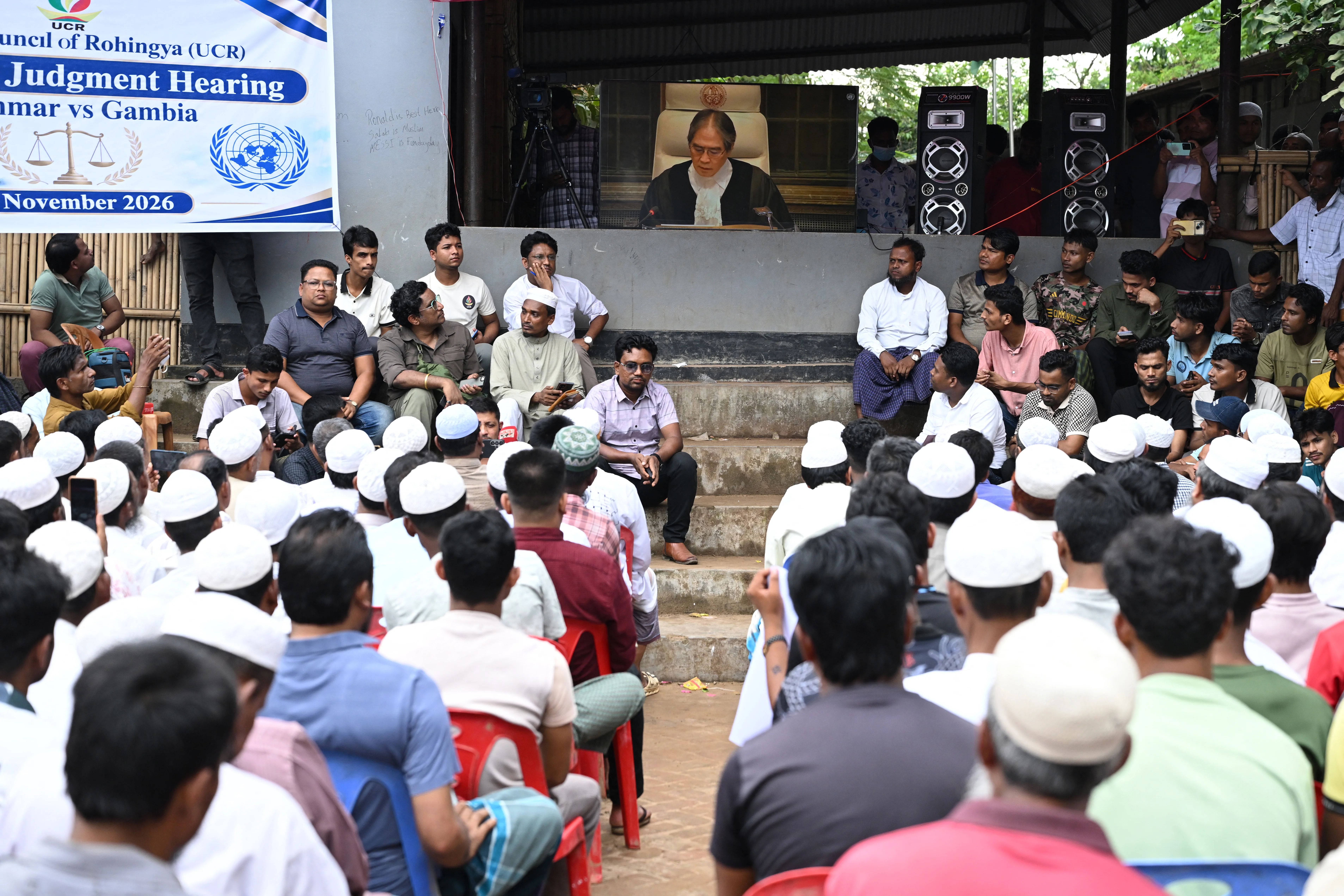
The International Court of Justice (ICJ) adjudication of The Gambia v. Myanmar transforms a localized counterinsurgency narrative into a binding test of state responsibility under the 1948 Convention on the Prevention and Punishment of the Crime of Genocide. Standard news reporting treats a merits ruling on genocide as a moral verdict; in international law, it is a structural determination of state liability that triggers mandatory obligations of cessation, non-repetition, and reparation across the international system. Understanding the mechanics of this ruling requires separating political rhetoric from the strict evidentiary thresholds of public international law, examining how the Court evaluates dolus specialis (specific intent) at the state level, and mapping the enforcement bottlenecks inherent to the United Nations system.
The Architecture of State Responsibility Under the Genocide Convention
Unlike the International Criminal Court (ICC), which prosecutes individual commanders and politicians for criminal guilt, the ICJ adjudicates disputes between sovereign states. When The Gambia initiated proceedings in November 2019, it invoked erga omnes partes standing—the legal doctrine that every party to the Genocide Convention has a collective interest in ensuring compliance, regardless of whether its own nationals were harmed. The ICJ affirmed this standing at the preliminary objections stage in July 2022, establishing a critical precedent: any signatory state can haul another signatory before the World Court to enforce human rights treaties of a universal character. In related updates, we also covered: Aerodynamic Envelope Failures and Weight Distribution Mechanics in Regional Aviation.
To establish that Myanmar breached its obligations under the Convention, the Court applies a dual-layer analytical framework:
- The Actus Reus (Prohibited Acts): Under Article II of the Convention, the applicant must prove the commission of at least one of five enumerated acts: killing members of the group, causing serious bodily or mental harm, deliberately inflicting conditions of life calculated to bring about physical destruction, imposing measures intended to prevent births, or forcibly transferring children.
- The Mens Rea (Dolus Specialis): The applicant must prove that these acts were committed with the specific intent to destroy, in whole or in part, a national, ethnical, racial, or religious group, as such.
In standard criminal trials, prosecutors rely on direct orders or explicit policy documents to prove intent. States rarely leave explicit blueprints of extermination. To solve this evidentiary problem, the ICJ relies on the inference standard established in Bosnia and Herzegovina v. Serbia and Montenegro (2007) and refined in Croatia v. Serbia (2015). Under this standard, when direct evidence of a state plan is absent, specific intent can be inferred from a pattern of conduct only if that pattern is the only reasonable inference that can be drawn from the acts in question. USA Today has also covered this important subject in extensive detail.
Separating Ethnic Cleansing from Genocidal Intent
The central legal friction in the Rohingya case lies in distinguishing forced displacement (ethnic cleansing) from physical or biological destruction (genocide). Myanmar’s defense strategy historically rested on framing the August 2017 "clearance operations" in Rakhine State as proportionate counter-terrorism responses to attacks by the Arakan Rohingya Salvation Army (ARSA). Even if the Court rejects the counter-terrorism justification, finding that the Tatmadaw (Myanmar’s military) intended to expel the Rohingya across the border into Bangladesh does not automatically satisfy the legal threshold for genocide.
To clear the Croatia v. Serbia evidentiary bar, the ICJ evaluates the totality of state conduct across four operational vectors:
- Disproportionality of Force: The scale of military deployment—utilizing light infantry divisions designed for conventional warfare against a lightly armed insurgency—demonstrates an objective beyond neutralizing combatants.
- Systematic Destruction of Infrastructure: The targeted burning of Rohingya villages while leaving adjacent ethnic Rakhine settlements intact indicates a deliberate effort to render the territory uninhabitable for a specific demographic.
- Demographic and Legal Erasure: Decades of bureaucratic disenfranchisement, beginning with the 1982 Citizenship Law and culminating in the revocation of temporary identity cards, stripped the Rohingya of legal personhood prior to the kinetic violence.
- Hate Speech and Dehumanization: Public statements by senior military officials, including Commander-in-Chief Min Aung Hlaing, referring to the "unfinished business" of the Bengali problem, establish the ideological context linking state apparatus to physical violence.
When the Court determines that these vectors converge to leave physical destruction as the sole reasonable inference, state responsibility attaches directly to Myanmar under Article 4 of the International Law Commission’s Articles on State Responsibility, which attributes the conduct of state organs—including the armed forces—to the state itself.
The Evidentiary Pipeline and Standard of Proof
In cases involving charges of exceptional gravity, the ICJ requires evidence that is "fully conclusive." Because the Court lacks its own investigative police force, it relies heavily on corroborated third-party fact-finding. In The Gambia v. Myanmar, the evidentiary foundation rests on the reports of the UN Independent International Fact-Finding Mission on Myanmar (IIFFMM) and subsequent data collected by the Independent Investigative Mechanism for Myanmar (IIMM).
The Court assigns probative weight to evidence based on a strict hierarchy of reliability:
- Primary Documentary and Satellite Evidence: Geospatial imagery confirming the sequential destruction of over 390 villages, combined with leaked military directives and telecommunications intercepts, provides objective verification independent of witness memory.
- Corroborated Witness Testimony: Thousands of consistent accounts gathered from refugees in Cox’s Bazar, Bangladesh, establishing identical operational patterns—separation of men and boys, systematic sexual violence, and arson—across geographically distinct townships.
- State Admissions and Omissions: Myanmar’s failure to comply with the January 2020 Provisional Measures Order—which required the preservation of evidence and the submission of regular compliance reports—serves as a secondary indicator of bad faith, though non-compliance with provisional measures constitutes a distinct breach of Article 41 of the ICJ Statute rather than proof of genocide itself.
A critical limitation in this evidentiary model is the temporal lag between the commission of atrocities and the merits judgment. Because ICJ proceedings span years, physical evidence degrades, witnesses disperse, and the political authority of the respondent state may fracture. Following the February 2021 military coup in Myanmar, the question of who legally represents the state before the Court created a procedural bottleneck, ultimately resolved by allowing the junta's agents to appear while strictly avoiding recognition of the junta as the legitimate government—a distinction that preserves the state's continuous legal personality regardless of domestic regime change.
Enforcement Mechanics and the Security Council Bottleneck
A merits ruling by the ICJ is final, binding on the parties under Article 59 of the Court's Statute, and without appeal. However, the ICJ possesses no independent enforcement arm. The institutional architecture of the United Nations separates adjudication (the ICJ) from enforcement (the Security Council).
Under Article 94(2) of the UN Charter, if any party to a case fails to perform the obligations incumbent upon it under a judgment rendered by the Court, the other party may have recourse to the Security Council. The Council may then make recommendations or decide upon measures to give effect to the judgment. In practice, this mechanism encounters a structural veto.
- Geopolitical Insulation: Permanent members of the Security Council with strategic, economic, or energy infrastructure interests in Myanmar—specifically China and Russia—have historically shielded the military regime from Chapter VII enforcement resolutions, arms embargoes, and referrals to the ICC.
- The Uniting for Peace Alternative: When the Security Council is paralyzed by a veto, legal pressure shifts to the UN General Assembly under Resolution 377 A (V), known as "Uniting for Peace." While General Assembly resolutions are non-binding, they establish collective legitimacy for unilateral or regional sanctions, credential rejections, and diplomatic isolation.
Consequently, the immediate impact of an ICJ genocide ruling is rarely kinetic intervention or immediate regime compliance. Instead, the ruling operates through decentralized enforcement mechanisms across international finance, trade, and parallel judicial bodies.
Downstream Legal and Economic Ripples
Once the World Court formally classifies state conduct as genocide, the legal baseline shifts for every third-party state and international institution. Under Article I of the Genocide Convention, all 153 contracting parties bear an affirmative duty to prevent and punish genocide. In Bosnia v. Serbia, the ICJ clarified that the duty to prevent is one of conduct, not result: a state must employ all means reasonably available to it to prevent genocide so far as possible, and this obligation activates the moment the state learns of a serious risk that genocide will be committed.
A definitive merits ruling removes any plausible deniability regarding the existence of that risk, triggering four concrete operational consequences:
1. Complicity Liability for Third-Party States
Under Article III(e) of the Genocide Convention, complicity in genocide is a punishable act. For states continuing to supply aviation fuel, dual-use surveillance technology, or weapons components to the Myanmar military, an ICJ genocide judgment elevates their exposure to secondary legal liability. Foreign ministries and state-owned enterprises face heightened legal risk of being named as co-respondents in subsequent erga omnes partes litigation if material support continues unabated.
2. Sovereign Asset Freezes and Financial De-risking
International financial institutions, sovereign wealth funds, and correspondent banks operate under strict anti-money laundering (AML) and Environmental, Social, and Governance (ESG) compliance frameworks. A formal genocide determination by the UN's principal judicial organ forces compliance departments to reclassify transactions involving Myanmar state-owned enterprises—such as the Myanma Oil and Gas Enterprise (MOGE)—as severe human rights violations. This triggers automated de-risking, freezing foreign currency reserves and starving the military apparatus of hard currency liquidity without requiring a UN Security Council resolution.
3. Acceleration of Universal Jurisdiction Prosecutions
While the ICJ determines state responsibility, domestic courts in third-party states exercise universal jurisdiction over individual perpetrators. Prosecutors in jurisdictions such as Argentina, Germany, and Turkey rely on ICJ factual findings as authoritative judicial notice. By establishing the contextual elements of genocide—specifically the existence of a state-level destructive policy—the ICJ lowers the evidentiary burden for national prosecutors building criminal cases against individual Tatmadaw officers traveling abroad or holding foreign assets.
4. Binding Reparations and Restitution Frameworks
Under the principles of state responsibility articulated in the Chorzów Factory case, a state that commits an internationally wrongful act must wipe out all the consequences of the illegal act and re-establish the situation which would, in all probability, have existed if that act had not been committed. In the context of the Rohingya, reparations extend beyond financial compensation. They legally require the restoration of full citizenship rights, the repeal of discriminatory legislation, the restitution of confiscated land in Rakhine State, and verifiable security guarantees for the voluntary repatriation of over one million refugees currently housed in Bangladesh.
Strategic Allocation of Legal and Diplomatic Capital
For policymakers, human rights litigators, and institutional risk analysts, treating an ICJ merits ruling as a self-executing victory guarantees strategic failure. Because the Myanmar military derives its domestic survival from territorial control rather than international legitimacy, direct compliance with ICJ reparations orders will not occur voluntarily under the current junta structure.
Stakeholders seeking to translate the legal judgment into operational reality must bypass the Security Council veto and execute a three-part pressure strategy:
- Target Chokepoint Liquidity: Concentrate sanctions and secondary compliance enforcement on foreign currency revenue streams—specifically state-owned extractive industries and offshore banking intermediaries—using the ICJ ruling as the legal predicate to compel European and Asian financial regulators to block correspondent banking access.
- Condition Future Reconstruction Capital: Establish a binding international escrow framework stipulating that any future multilateral development aid, debt relief, or foreign direct investment into Myanmar—whether directed to a future civilian government or negotiated during a political transition—is legally contingent upon verifiable compliance with the ICJ’s restitution and citizenship restoration mandates.
- Synchronize Parallel Tribunals: Integrate the ICJ’s evidentiary record directly into ongoing ICC proceedings (which cover the cross-border crime against humanity of deportation into Bangladesh) and universal jurisdiction dockets, ensuring that individual military commanders face permanent international arrest warrants that fracture the internal cohesion of the officer corps.