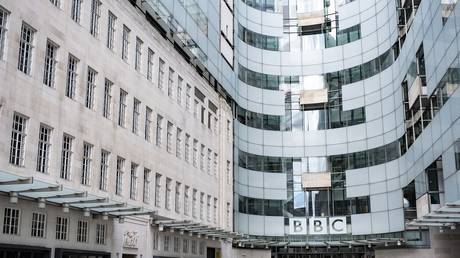
The coffee machine in the basement of New Broadcasting House has a specific, metallic hum. It is the sound of 4:00 AM shifts, of breaking news cycles, and of a century of public service. But lately, that hum has been drowned out by a heavier silence. It is the silence of empty desks and the "red pen" of a balance sheet that no longer balances.
When the BBC announced it would be cutting 500 jobs by March 2026, the headlines focused on the numbers. Five hundred. It sounds like a rounded, manageable statistic in a boardroom. But behind that number are five hundred people who, until yesterday, believed they were the stewards of the national conversation. They are the sound engineers who know exactly how to mic a cathedral, the local reporters who find stories in the damp corners of forgotten towns, and the archivists who keep the nation's memory in temperature-controlled basements. For another perspective, see: this related article.
The British Broadcasting Corporation is currently caught in a pincer movement. On one side, the license fee—the primary lifeblood of the institution—has been frozen, effectively starving the beast during a period of rampant inflation. On the other, the digital migration has turned into a frantic scramble. People aren't sitting around the wireless anymore. They are scrolling. They are streaming. They are elsewhere.
The Human Geometry of a Cut
Consider a hypothetical producer named Sarah. She has spent fifteen years at a local radio station in the North of England. Sarah isn't a "star." She doesn't have a seven-figure salary or a face that appears on billboards. She is the person who answers the phone when a lonely pensioner calls in just to hear a human voice. She is the one who verifies a tip about a local council scandal before it hits the airwaves. Related reporting on this trend has been shared by TIME.
When Sarah’s role is "redefined" or eliminated to save costs, the loss isn't just her salary. It is the loss of her Rolodex. It is the loss of the trust she built over a decade with the local police chief, the school principal, and the woman who runs the corner shop. When you remove Sarah, you remove a thread from the fabric of that community. Multiply Sarah by five hundred, and the fabric begins to fray.
The BBC’s Director-General, Tim Davie, spoke of a "devastating" financial strain. This isn't hyperbole. The organization is facing a funding gap of nearly £500 million. To bridge that chasm, the corporation is forced into a brutal triage. They are cutting the very things that make them local to save the things that make them global. It is a survival strategy that feels, to many inside the walls, like an identity crisis.
The High Cost of Staying Relevant
The shift is toward "digital first." It sounds modern. It sounds inevitable. But the transition is expensive. Building a platform that can compete with the algorithms of Netflix or the reach of YouTube requires more than just good intentions; it requires a massive redirection of capital.
The irony is thick. To fund the future, the BBC must dismantle the present. They are selling off iconic buildings and thinning out the ranks of their most experienced journalists. The goal is to be leaner and more agile, but there is a point where lean becomes skeletal.
There is a psychological weight to this. For decades, a job at "The Beeb" was a vocation. It was a golden ticket to a world of intellectual rigor and creative freedom. Now, it feels like a precarious ledge. The morale inside the building hasn't just dipped; it has evaporated. You can see it in the way people walk through the lobby—shoulders hunched, eyes avoiding the monitors that used to display their pride.
The Invisible Stakes
Why should the average viewer care? If you have Disney+ and a Spotify subscription, does the fate of a few hundred BBC staff matter?
It matters because of the "market failure" of information. Commercial broadcasters exist to deliver eyeballs to advertisers. They are incentivized to produce what is popular, not necessarily what is important. The BBC, for all its flaws and occasional bureaucratic bloat, exists to produce what is necessary.
Who covers the boring but vital local council meetings when the local BBC reporter is gone? Who produces the niche documentaries about medieval history or climate science that don't have "viral potential"? Who provides the emergency broadcasts when the private networks are showing reality TV reruns?
The "devastating" wave of job cuts is a signal that the buffer between the public and the noise of the open market is shrinking. We are trading depth for reach. We are trading the local for the universal. And in doing so, we are losing the nuances that define us.
A Legacy in the Balance
The financial strain is real, driven by a government-mandated freeze that many see as a slow-motion strangulation. The BBC is being asked to do more with significantly less, all while fighting a culture war that treats its very existence as a relic of a bygone era.
But a nation is more than its GDP. A nation is the stories it tells itself. If the storytellers are being handed their P45s in batches of five hundred, the narrative becomes thinner. The static grows louder.
This isn't just about jobs. It's about the value we place on a shared reality. When the cuts reach the bone, the body stops moving. The BBC is currently deciding which limbs it can live without. The tragedy is that once those limbs are gone, they don't grow back.
The next time you hear that familiar pips on the hour, or watch a breaking news report from a conflict zone halfway across the world, remember the five hundred. Remember the producers, the researchers, and the technicians who aren't there anymore. The screen might still be bright, and the audio might still be clear, but the heart of the machine is beating a little slower today.
The red light in the studio stays on for now. But the shadows in the hallway have never been longer.