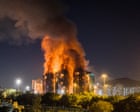
When a high-speed or regional passenger train leaves the tracks, the immediate human toll is measured in hours of agonizing silence outside emergency triage centers. Families gather behind police cordons, clutching phone chargers and printed photographs, waiting for hospital registries to update while rescue crews cut through mangled aluminum. Yet beneath the immediate grief of a deadly Spain train crash lies a cold, mechanical reality that rarely makes the front page during the first forty-eight hours. Modern rail disasters almost never happen because of a single catastrophic failure; they occur when multiple layers of automated safety engineering, human oversight, and infrastructure maintenance fail simultaneously.
Understanding why relatives are left waiting in limbo requires looking directly at how contemporary railway networks manage passenger manifests, emergency response protocols, and the physics of derailments. Unlike commercial aviation, where every seat is tied to a verified government identification number prior to boarding, regional and commuter rail networks operate on open-access ticketing models. When an accident occurs, authorities do not immediately possess a definitive list of who was aboard. This structural gap in passenger tracking is the primary reason families endure days of uncertainty following major rail incidents.
The Myth of the Instant Passenger Manifest
In the aftermath of any major transit accident, the public expects emergency services to produce an immediate, accurate accounting of victims. On a railway, that expectation collides with operational reality.
High-speed long-distance services in Spain, operated by Renfe and private competitors like Iryo and Ouigo, require seat reservations and ticketed names. Even then, passengers frequently switch cars, move to the café carriage, or board at intermediate stations without scanning through airport-style security gates. On regional commuter lines—the Cercanías or Media Distancia networks—tickets are often unreserved, bought from vending machines minutes before departure, or validated via contactless transit cards that carry no personal identity data at all.
When carriages telescope into one another or overturn down an embankment, identification becomes a slow, forensic process. Emergency responders cannot simply cross-reference a digital boarding pass against a hospital admission sheet. Instead, forensic teams must rely on DNA matching, dental records, and personal effects recovered from the wreckage, a process governed by strict judicial protocols under Spanish law.
The investigative magistrate assigned to the disaster oversees every step of victim identification. Until a judge formally signs off on a forensic match, police and hospital administrators are legally barred from confirming a fatality to waiting families. That legal firewall protects against the catastrophic error of misidentifying a victim, which has plagued poorly managed disaster responses globally, yet it inflicts an agonizing wait on relatives standing outside municipal sports centers converted into family assistance hubs.
Why Trains Leave the Tracks
Once the immediate rescue phase transitions into recovery, investigators from Spain’s Railway Accident Investigation Commission (CIAF) begin reconstructing the final seconds before impact. While public speculation immediately gravitates toward driver error, decades of rail safety analysis demonstrate that human mistakes are usually the final link in a much longer chain of systemic vulnerabilities.
Railway safety relies on the Swiss Cheese Model of accident causation. Every safety system—track sensors, cab signaling, automatic braking, speed restrictions, and driver training—acts as a slice of cheese. Each slice has holes, representing minor flaws or blind spots. A disaster only happens when the holes across multiple slices align at the exact same moment.
The Physics of a Curve and Braking Distances
A passenger train is an exercise in extreme momentum. A standard eight-car electric multiple unit weighing roughly 400 metric tons traveling at 160 kilometers per hour carries immense kinetic energy. Steel wheels riding on steel rails generate remarkably low rolling resistance, which makes rail transport energy-efficient, but it also means friction is minimal when emergency braking is required.
Under optimal dry-rail conditions, a train traveling at high speed requires well over a kilometer to come to a complete stop. If an obstruction appears on the line, or if a train enters a sharp curve above its design threshold, the driver cannot simply steer away or slam on the brakes to avoid the physics of centrifugal force.
When a train exceeds the critical speed for a given curve radius, the lateral forces exerted by the wheel flanges against the outer rail overcome the downward force of gravity. The inside wheels lift off the track. Within fractions of a second, the lead bogie climbs over the railhead, and the entire train derails. The trailing carriages, still propelled forward by their own momentum, jackknife into the derailed front cars. This accordion effect—known in rail engineering as telescoping—causes the highest concentration of fatalities and traps survivors beneath twisted structural beams.
Signaling Gaps and Legacy Infrastructure
Spain boasts one of the most advanced high-speed rail networks in the world, equipped with the European Rail Traffic Management System (ERTMS). Under ERTMS Level 1 and Level 2, trackside transponders called balises communicate continuously with the train’s onboard computer. If a driver fails to slow down for an approaching curve or a red signal, the computer overrides the human operator and applies the emergency brakes automatically.
However, rail networks are patchworks of different eras. Where high-speed corridors transition onto conventional, older tracks—often near urban junctions, mountain passes, or regional spurs—the signaling technology frequently steps down to legacy systems like ASFA (Anuncio de Señales y Frenado Automático).
Legacy systems were designed decades ago to assist drivers, not replace them. In older configurations, trackside beacons transmit information only at discrete points rather than continuously. If a speed restriction relies on a temporary trackside sign due to maintenance work, or if a transition zone lacks automated speed-supervision enforcement, the entire burden of compliance falls back onto the cab crew. History has shown that when a train crosses the boundary between continuous automated protection and legacy manual control, cognitive overload and routine habituation can turn a minor lapse in attention into a fatal derailment.
The Maintenance Deficit Nobody Sees
Infrastructure degradation rarely looks dramatic until it fails. Track geometry shifts millimeter by millimeter under the daily pounding of thousands of axles.
Ballast—the crushed stone bed supporting the wooden or concrete sleepers—gradually breaks down into dust, losing its ability to drain water and hold the tracks in alignment. Heavy rainfall can wash out sub-grade soil beneath the ballast, creating invisible voids. When a heavy locomotive passes over a compromised section at full line speed, the track deflects downward, altering the gauge between the rails and destabilizing the suspension.
Consider a hypothetical example of how a minor maintenance backlog escalates. Suppose a regional line experiences a series of small electrical faults in an axle counter—a device that detects whether a section of track is clear of trains. To keep commuter schedules running on time, signallers are authorized under emergency protocols to bypass the faulty sensor using manual block procedures, relying on radio confirmation from drivers to verify track occupancy. If a controller misreads a train number during a shift change while a driver is distracted by a secondary cab alarm, two trains can be routed onto the same single-track section. Neither piece of equipment failed catastrophically on its own; rather, normalized workarounds stripped away the automated safety net.
Budget allocation across European rail networks frequently favors ribbon-cutting expansions of flagship high-speed lines over the unglamorous work of replacing aging switches, upgrading drainage culverts, and retrofitting legacy signaling on regional corridors. Commuters riding older regional lines often travel on infrastructure where modernization has been deferred across multiple budget cycles.
Inside the Rescue and Forensic Bottleneck
When emergency dispatchers receive the first automated crash alert—often triggered by a sudden loss of traction power on the overhead catenary wires—firefighters, civil guard units, and medical teams race toward access points that are rarely built for heavy rescue vehicles.
Rail corridors cut through rural terrain, deep rock cuttings, viaducts, and tunnels. Getting hydraulic cutting tools, portable lighting towers, and heavy cranes to the wreckage requires coordinating with railway electrical engineers to ground the 25,000-volt overhead lines. No firefighter can safely touch a derailed carriage until the electrical current is confirmed dead and earthed. Those vital minutes feel like an eternity to trapped passengers and waiting families, yet rushing in prematurely risks electrocuting the entire rescue team.
Once structural stabilization begins, urban search-and-rescue specialists work through compartments seat by seat. Modern railcars are built with reinforced crashworthiness zones—crumple zones at the ends of carriages designed to absorb impact energy while keeping the central passenger cabin intact. However, when a carriage rolls onto its side or strikes a concrete bridge abutment, interior luggage racks, unlatched heavy suitcases, and torn seating frames become lethal projectiles.
The Legal Reality of Crash Investigations
In Spain, a fatal rail crash immediately triggers two parallel, independent investigations that often move at very different speeds:
- The Judicial Investigation: Led by an investigating judge (Juez de Instrucción), this inquiry seeks to establish criminal liability—negligence, manslaughter, or breach of safety protocols. The judge has the power to seize maintenance logs, impound rolling stock, subpoena telecom records, and issue gag orders (secreto de sumario) to prevent leaks from tainting witness testimony.
- The Technical Safety Investigation: Conducted by the CIAF, this inquiry follows European Union Rail Safety Directives. Its sole mandate is to determine the technical and operational root causes of the crash to prevent future accidents, explicitly avoiding the assignment of legal blame or financial liability.
Because the judicial investigation carries criminal penalties, railway employees, union representatives, and corporate executives often become guarded immediately after a crash. Data recorders—the hardened black boxes mounted in the locomotive cab that log speed, throttle position, brake pipe pressure, horn activation, and signal aspects—are impounded by court police. Decoding and validating this telemetry against physical evidence on the tracks takes weeks of laboratory analysis.
For families waiting in hotel lobbies and community centers, this institutional caution feels like stonewalling. Officials speak in measured, clinical phrases because a single premature statement from a transport ministry spokesperson can compromise a criminal prosecution or trigger massive state liability claims before the facts are verified.
The Structural Flaws in Crisis Communication
Every major transit disaster exposes a recurring failure in how institutions communicate with victims' families. While operational command centers focus on clearing wreckage and restoring rail service to a vital economic corridor, family liaison protocols often lag behind.
Emergency psychologists emphasize that ambiguity is uniquely destructive to human grief. When families are told simply to wait without clear explanations of why identification takes forty-eight or seventy-two hours, rumors fill the information vacuum. Unverified lists circulate on social media; local news outlets broadcast conflicting casualty figures based on anonymous sources at regional hospitals; frantic relatives call dozens of emergency wards only to be blocked by patient privacy regulations.
Best-practice disaster management dictates establishing a single, centralized Family Assistance Center isolated from press cameras, staffed by dedicated forensic liaisons who provide scheduled, transparent briefings—even when the update is simply an explanation of what forensic tests are currently underway. Yet in practice, municipal authorities, national rail operators, and regional health ministries frequently struggle to synchronize their databases during the chaotic first day of a crisis.
Accountability Beyond the Driver's Cab
When the final technical report is eventually published months or years later, the findings rarely match the simplistic narratives constructed in the immediate aftermath.
If a driver was speeding, investigators ask why the signaling system allowed the train to reach that velocity without intervening. If a track switch failed, they examine the maintenance contractor’s inspection logs, staffing levels, and whistle-blower complaints filed by track workers months prior. If passenger injuries were worsened by collapsing interior fixtures, they scrutinize European rolling-stock certification standards.
True rail safety is not achieved by punishing a single operator at the end of a broken chain; it is built by eliminating single points of failure before a train ever leaves the station. Every curve without automated speed enforcement, every deferred track-bed inspection, and every fragmented emergency communication protocol is a known risk sitting quietly on a balance sheet until physics demands payment.