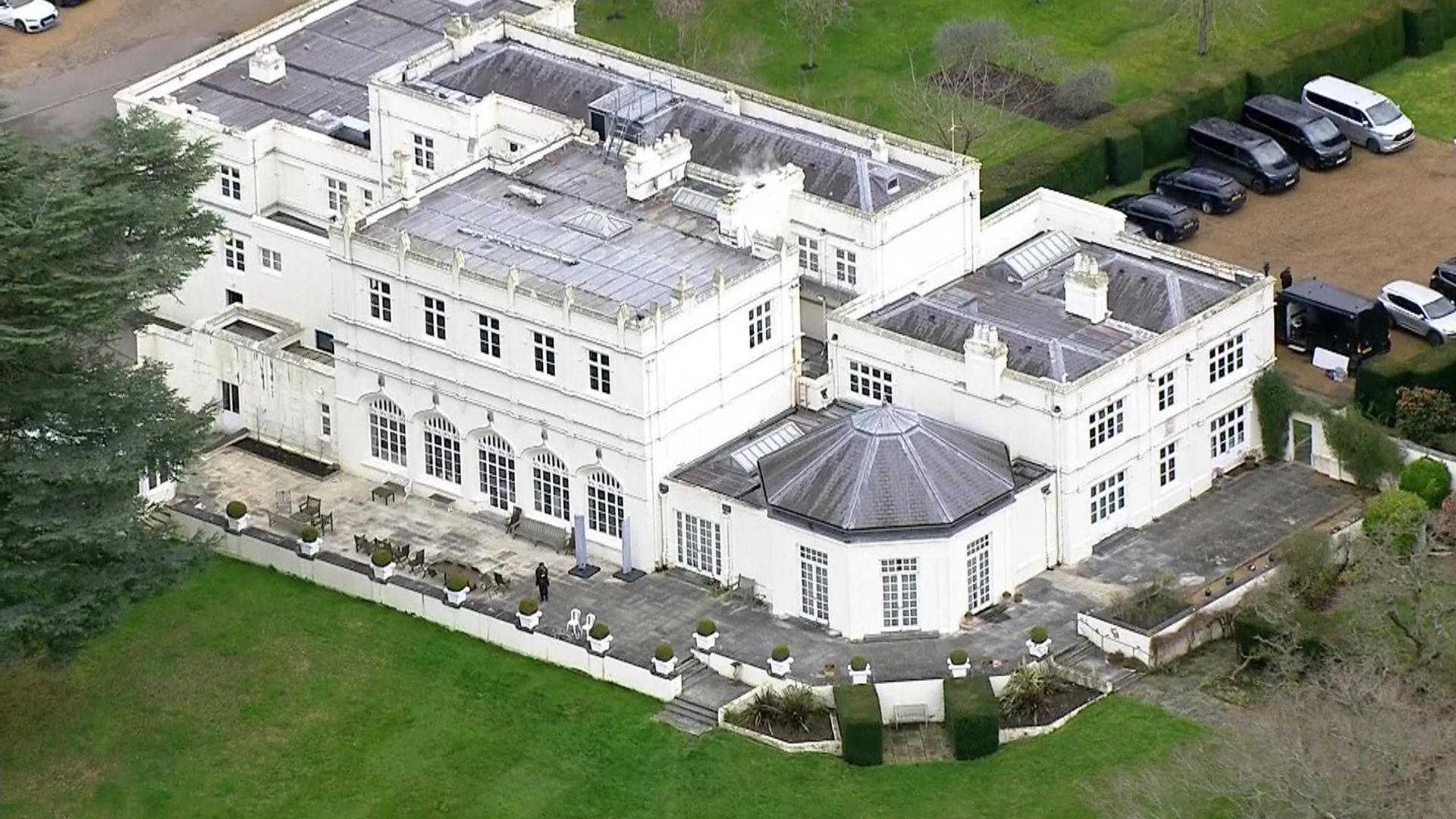
The British public loves to obsess over the wrong financial metrics. Every time a spreadsheet leaks out of the National Audit Office, the media rushes to print breathless breakdowns of what the House of Windsor spends on housing. We look at numbers like the £307,200 annual rent Prince William and Catherine pay for Forest Lodge in Windsor, or the shifting percentages paid for palace apartments, and we trick ourselves into thinking a normal landlord-tenant relationship is occurring.
It is a comforting fiction. It allows the public to believe that even the highest echelons of the state are subject to the same crushing forces of the modern rental market as everyone else.
The reality is a masterclass in accounting misdirection. The recent National Audit Office inquiry into royal residential property arrangements has exposed the entire concept of "royal rent" as an elaborate shell game. Looking at the raw numbers on a lease agreement misses the point entirely. The real story is not what the royals are paying; it is how the system ensures they never actually lose.
The Illusion of the Market Value Discount
Mainstream reporting focuses heavily on the concept of "adjusted rent." The official line from the Royal Household is that non-working royals occupying spaces within palaces—such as Princess Beatrice at St James's Palace or Princess Eugenie at Kensington Palace—are charged a rate set at roughly 60% of open market value.
The media treats this 40% discount as a reasonable concession to security. After all, living inside a high-security cordoned area requires intense vetting and restricts your lifestyle.
This argument is fundamentally flawed. In the real world, a high-security perimeter, private parkland, and guaranteed immunity from the prying eyes of the public are premium features that command astronomical premiums. If an ultra-high-net-worth individual wanted to lease a luxury asset wrapped inside a state-funded counter-terrorism perimeter in central London, they would pay millions above market value for the privilege.
Instead, the system turns this luxury upside down, treating an elite security apparatus as a tenant inconvenience that justifies a steep discount.
The data shows that even this highly generous 60% benchmark is treated more like a polite suggestion than a strict rule. The National Audit Office revealed that for years, rents for these non-working royals were pinned to outdated valuations from 2018 and 2020. Princess Eugenie’s rent for Ivy Cottage plummeted as low as 50% of its market value during the 2020–2021 period. While these rates have recently been adjusted upward to match 2026 valuations, the historical variance proves that the "market" has very little to do with what happens behind palace walls.
The Sovereign Shell Game
To truly understand why the headline rental figures are a myth, you have to follow the cash tracking. Who actually cuts the check for these subsidized rents?
For non-working royals like Beatrice, Eugenie, and the Prince and Princess Michael of Kent, the tenant does not pay the rent. King Charles III pays it. The funds are drawn from the Privy Purse, which is fueled primarily by the net revenues of the Duchy of Lancaster.
Supporters of the monarchy use this point to shut down criticism. They argue that because the Privy Purse is the King's private income, no public money is being used to subsidize his extended family.
This defense relies on a deliberate misunderstanding of constitutional property mechanics. The Duchy of Lancaster is a vast portfolio of land, property, and commercial assets held in trust for the Sovereign. It exists solely because of the holder’s position as head of state. It is an asset inextricably linked to the Crown, operating under distinct tax exemptions and structural privileges that no private estate in the world enjoys.
When the King uses Duchy income to pay the Royal Household for his nieces' apartments, the money is simply moving from the monarch's left pocket to his right pocket. The Royal Household takes that rental income to offset the operational and maintenance costs of the palaces—costs that would otherwise be met by the taxpayer-funded Sovereign Grant.
Imagine a scenario where a private corporate CEO uses revenues from a company-owned subsidiary to pay rent on a luxury corporate apartment for his adult children, thereby reducing the parent company's reported operating overhead. Any auditor worth their salt would immediately call it out as a related-party transaction designed to obscure the true cost of executive compensation. Yet, when the state does it with palaces, it is spun as a benevolent act of family financial responsibility.
The Subletting Scandal and Free Capital
Nothing illustrates the breakdown of the traditional rental model better than the mechanics of the "peppercorn lease." For decades, the public took solace in the idea that disgraced or minor royals were bound by long-term leases that required substantial upfront investment.
Take the infamous case of Royal Lodge at Windsor. Andrew Mountbatten-Windsor held a 75-year lease signed in 2003. He paid no annual rent, instead providing a £1 million upfront payment and committing to £7.5 million worth of renovations.
The structural flaw in this arrangement became glaringly obvious when the spending watchdog revealed that the lease actively permitted subletting. The former prince spent years drawing an undisclosed private income by renting out three cottages sitting within his rent-free estate.
The Crown Estate—a self-funding public corporation that manages assets on behalf of the nation—effectively surrendered its own commercial revenue-generating potential to a private individual. The money generated from those sublets did not flow back into the public purse to offset national expenditure; it stayed in a private royal bank account until the properties were finally vacated in April 2026.
A similar mechanism was used at Bagshot Park, where the Duke of Edinburgh utilized his lease terms to rent out a stable block for private commercial gain until 2020.
When a standard citizen rents a home, they are paying for the right of consumption. When a royal leases an estate under a legacy grace-and-favour framework, they are frequently being handed a capital-generating asset wrapped in a nominal rental agreement.
The Forest Lodge Refurbishment Paradox
Even when royals do play the role of "model tenants" by paying substantial, un-discounted sums, the math remains heavily tilted.
Consider the Prince and Princess of Wales’s recent acquisition of Forest Lodge in Windsor. The couple signed a 20-year lease in July 2025, committing to a healthy £307,200 a year, paid quarterly. On paper, this looks like a clean, above-board commercial transaction.
The catch lies in the ledger entries immediately preceding their move-in date. Before the family took possession of the Grade II-listed Georgian house, gardens, paddock, and accompanying cottages, the Crown Estate poured £396,993 into refurbishments and repairs.
In the standard commercial property sector, a landlord might absorb minor redecoration costs to secure a long-term tenant. They do not routinely spend well over the average price of an entire English home just to prep a property for a tenant who isn't even paying a security deposit. Because the internal refurbishment costs are slated to be picked up by the tenants moving forward, the upfront capital injection by the Crown Estate serves as a massive state-backed subsidy to ensure the asset is handed over in pristine, bespoke condition.
The True Cost of Royal Real Estate
The common mistake is evaluating these real estate dynamics through the lens of modern consumer finance. We ask if £300,000 a year is "fair rent" for a country estate, or if a 64% market value rate for a palace cottage is a "good deal."
These are the wrong questions. The entire system is insulated from the economic realities of asset depreciation, capital gains taxation, and liquidity constraints that govern the lives of ordinary citizens. The royal property ecosystem functions as a closed loop where public infrastructure, private ducal revenues, and historic state assets are constantly leveraged to preserve dynastic wealth and comfort.
Stop looking at the rental figures published in annual transparency reports as evidence of fiscal modernization. They are not a reflection of what the royal family costs to house. They are a carefully curated balance sheet designed to legitimize the occupation of public heritage sites by a single family. The moment you treat these leases like standard tenancy agreements is the moment you lose the structural plot.