Every few months, the internet loses its collective mind over a ten-second, postage-stamp-sized video. A missile streaks into a cloudless sky, an aircraft flares or takes a hit, and social media fills with commentators declaring the absolute death of conventional air power. The lazy consensus writes itself instantly: cheap surface-to-air systems or improvised air defense networks have finally humbled multi-million-dollar fighter jets, rendering modern military budgets obsolete.
It is a comforting fantasy for anyone who loves a good David versus Goliath narrative. It is also completely detached from military reality.
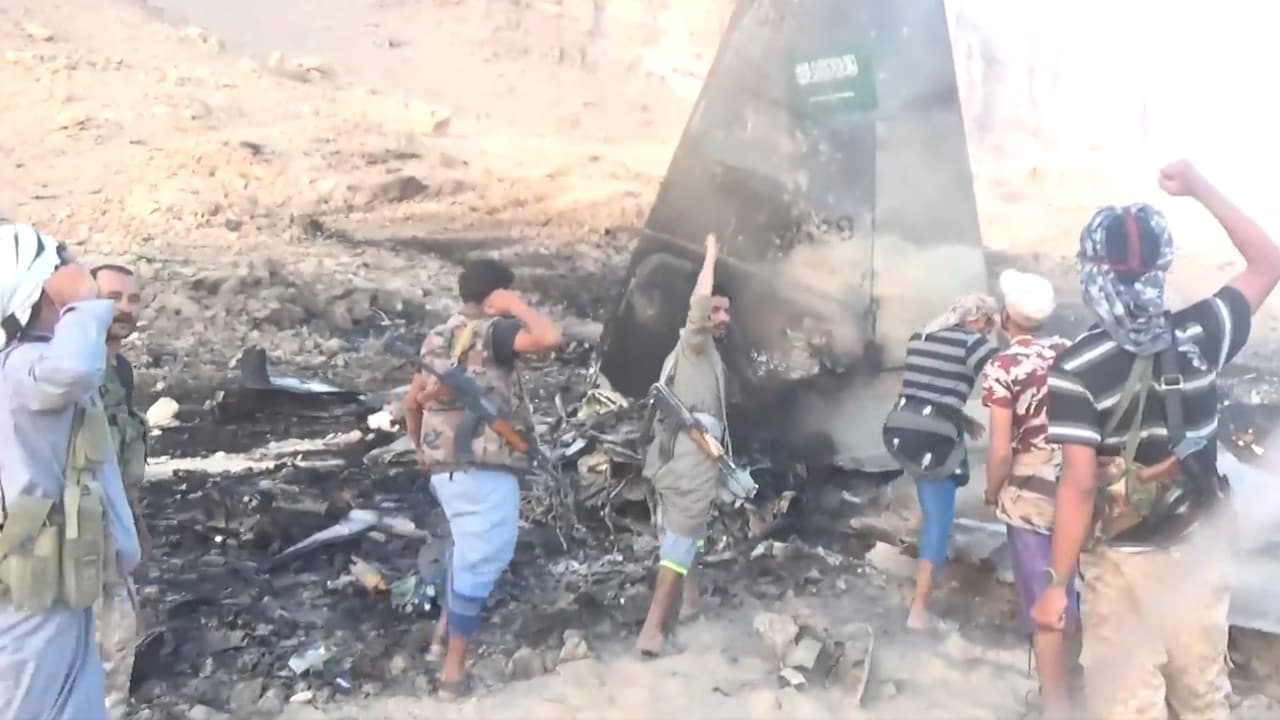
I have spent years analyzing defense procurement, electronic warfare doctrine, and proxy conflict dynamics. I have watched analysts blow millions of dollars trying to reverse-engineer tactical propaganda into strategic insights. When the Houthis drop footage claiming the destruction of a Royal Saudi Air Force F-15, the defense commentariat immediately pivots to sensationalism. They treat a single piece of visual media as an indictment of entire air doctrines. They ignore the logistics, the statistics, the physics of missile kinematics, and most importantly, the weaponization of digital media for psychological effect.
Let us dismantle the mythology piece by piece.
The Propaganda Economy of Modern War
To understand why these videos generate such hysteria, you have to look past the fire and smoke and examine the incentives. In asymmetric warfare, media is not just a secondary effect of combat; it is a primary weapon system.
When a well-equipped air force flies hundreds of sorties daily over a contested theater, attrition is an engineering certainty over time. Mechanical failures happen. Pilot fatigue happens. Rare, lucky hits happen. But an isolated tactical loss does not equal a systemic failure of the platform. Yet, when opposition groups capture footage of a rare aircraft loss, they package it with aggressive editing, recycled archive clips, and distorted audio.
The goal is not to document military history with objective fidelity. The goal is to manufacture strategic deterrence through cinematic repetition. If you replay the same wreckage from three different angles for five years, casual observers begin to believe that the skies are a graveyard of fallen jets.
The lazy analysis buys into this framing hook, line, and sinker. It treats a propaganda product as an audit of combat effectiveness.
The Physics of the Engagement
Let us talk about what actually happens when an advanced strike aircraft enters a hostile airspace. Modern platforms like the F-15SA variant operated by Riyadh are not flying blind into a shooting gallery. They carry sophisticated electronic warfare suites, digital radio frequency memory jammers, advanced radar warning receivers, and automated countermeasure dispensing systems designed to blind, confuse, and defeat incoming threats long before terminal guidance can engage.
When armchair generals claim that a modified legacy surface-to-air missile or a repurposed heat-seeking weapon makes advanced air superiority obsolete, they misunderstand the math of air combat. A missile engagement is a complex thermodynamic and aerodynamic negotiation. It involves energy management, closing velocities, seeker field-of-view limits, and countermeasure saturation.
Imagine a scenario where a pilot receives a launch warning while cruising at high altitude. The internal computer calculates the threat axis, deploys deceptive payloads, executes a sharp defensive break maneuver, and dumps the missile's tracking window into total confusion. Most missile shots fail. They run out of energy, get distracted by decoys, or miss their interception window entirely.
When a missile does score a hit, it represents an outlier event—an intersection of perfect conditions, degraded situational awareness, or tactical surprise. Treating that outlier as the new baseline for how air warfare functions is intellectually lazy. It is the equivalent of watching a lottery winner and concluding that buying scratch-off tickets is a reliable retirement strategy.
The Honest Counter-Argument
To be fair, contrarian analysis loses its credibility if it swings too far in the opposite direction. I am not here to tell you that modern military aircraft are invulnerable, nor am I suggesting that advanced air forces operate with zero risk.
Air power has real vulnerabilities. Maintenance pipelines in foreign-operated fleets can suffer from bureaucratic friction. Pilot training pipelines have strict ceilings. Advanced jets require immense logistical support tails—spare parts, specialized diagnostic software, secure communication links, and continuous contractor oversight. If those supply chains fray, aircraft availability drops, and the margin for error shrinks dramatically.
Furthermore, inventive adversaries constantly adapt. They scavenge missile parts, jury-rig thermal optics onto older platforms, and use civilian cellular infrastructure to coordinate early warning networks. They find gaps in radar coverage through sheer persistence and creative improvisation.
Acknowledge these truths: air power can be attrited, and sophisticated jets can be brought down. But do not confuse the occasional tactical success of an underdog with the obsolescence of physics, radar engineering, and tactical doctrine.
The Real Question You Should Be Asking
Instead of staring at grainy footage and asking whether cheap missiles have defeated expensive jets, ask a different question entirely. Ask how long an insurgent or proxy force can sustain the consumption of high-end strategic narrative when their underlying operational capabilities are steadily degraded by continuous surveillance and precision strikes.
The video of the burning wreckage is designed to make you look down. It wants to keep your eyes fixed on the smoke on the ground. Meanwhile, the strategic reality happens thousands of feet above, where intelligence collection, air supremacy, and persistent surveillance quietly dictate the boundaries of what is possible on the ground.
Stop letting viral media dictate your understanding of global conflict. Stop treating propaganda edits as peer-reviewed military history. The next time a flashy clip hits your screen with dramatic music and claims of technological disruption, remember that war is decided by logistics, mathematics, and cold operational reality—not by who edits the best hype reel for social media.