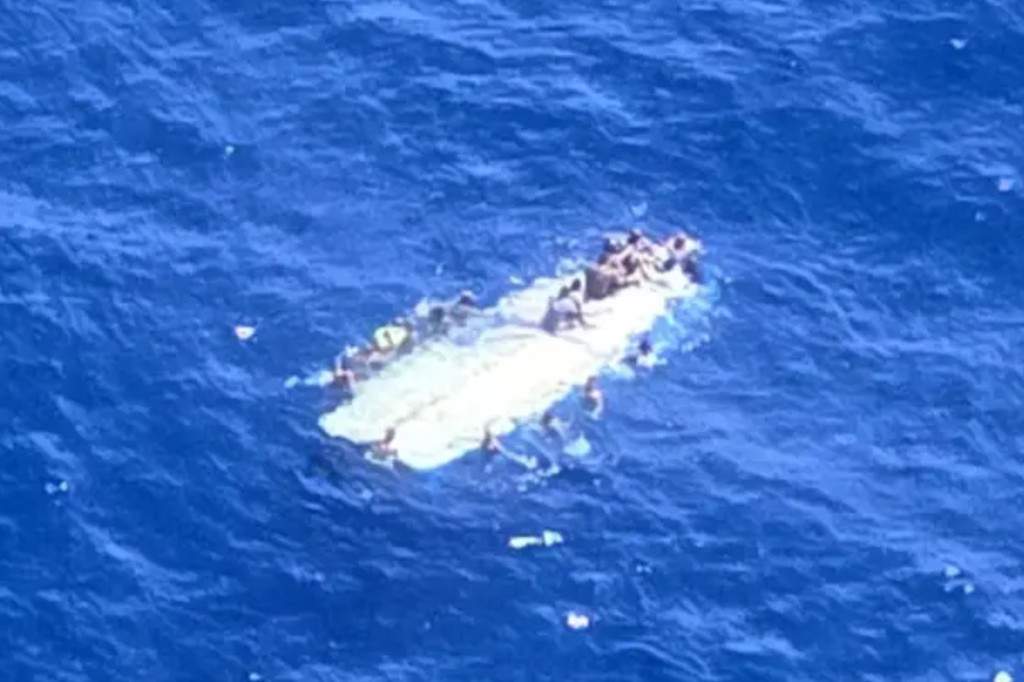
Every time a wooden rust bucket breaks apart in the Mona Passage, the headlines follow a depressingly familiar script. Two dead. Forty rescued. Several missing. Condolences pour in from regional politicians, coast guard spokesmen issue stern warnings about the perils of illicit maritime transit, and the public clucks its tongue over reckless captains pushing overloaded vessels into notoriously treacherous waters.
It is a comfortable narrative. It places the blame squarely on the shoulders of greedy human smugglers and desperate passengers making a terrible gamble.
It is also dangerously incomplete.
Focusing solely on the seaworthiness of these makeshift vessels or the criminal negligence of smugglers misses the entire structural architecture driving the crisis. We treat these maritime tragedies as isolated accidents of navigation when they are actually the predictable, mathematically certain output of a broken economic and immigration framework. When legal, safe pathways across a body of water are choked off by bureaucratic barbed wire, illegal maritime routes do not disappear. They simply industrialize.
Let us look at the mechanics of the Mona Passage. Separating the Dominican Republic from Puerto Rico, this 80-mile stretch of water is one of the most punishing marine corridors in the Caribbean. Strong currents, erratic winds, and deep trenches make it hazardous for commercial freighters, let alone overloaded fiberglass skiffs powered by undersized outboard motors.
When you read reports of a capsizing, the automatic assumption is that better vessel inspection or harsher penalties for captains will solve the problem. That logic belongs in a fantasy novel. I have spent years analyzing illicit supply chains and shadow migration networks, and the iron law of logistics remains absolute: risk is priced into the journey, and demand always finds the path of least resistance.
When border enforcement hardens without expanding legal transit capacity, smuggling operations do not shrink; they professionalize. They adopt high-risk tactics, launch at night without lights, and use disposable, unregistered hulls that cost a fraction of a proper vessel because the operators expect to lose a percentage of their capital to confiscation. Every time enforcement agencies seize a boat or increase patrols along coastal departure points, they do not stop the flow. They merely force traffickers to upgrade their risk profile, packing more people onto flimsier crafts to maintain profit margins.
The lazy consensus is that if we just stop people from getting on the boat, everyone wins. But why are they getting on the boat in the first place?
Economic desperation in the region is not a random weather event. It is compounded by unequal visa regimes, stagnant regional labor markets, and the
Stop Blaming the Weather When Boats Sink Off Puerto Rico
news
ยอด
Every single time a vessel goes down in the Mona Passage, the media machinery spins into motion with the exact same tired script. A tragedy hits the wire. Two dead, forty rescued, several missing. The headlines point fingers at treacherous seas, rogue currents, and unpredictable weather. It is a comforting narrative for bureaucrats and coast guard PR teams. It shifts the blame to acts of God so nobody has to answer for the structural rot underneath.
Stop buying the lie that the ocean is the primary culprit here.
I have spent years analyzing maritime enforcement, migrant transit corridors, and gray-market logistics in the Caribbean. When a overloaded watercraft capsizes between the Dominican Republic and Puerto Rico, the root cause is almost never a sudden meteorological surprise. It is a predictable economic equation driven by risk arbitrage, absolute enforcement failure, and an underground economy that treats human cargo as disposable inventory.
The Economics of Desperation
Let us look at the mechanics of these crossings. The prevailing narrative treats every passenger on these ill-fated vessels as an innocent, helpless victim of circumstance. That is half-true and entirely misleading. They are actors participating in a high-stakes, black-market transaction.
When you criminalize movement entirely without providing legal pathways for labor demand, you do not stop the flow. You simply outsource the operation to violent cartels and amateur smugglers who cut every possible safety corner to maximize margins.
Imagine a scenario where a smuggler packs sixty people onto a twenty-foot wooden yola with a single, unreliable outboard motor. Why do they do it? Because if they use a seaworthy vessel with proper fuel reserves and safety gear, the asset gets seized by authorities, or the overhead eats the profit margin entirely. The business model relies on cheap, disposable hulls. The capsizing off Puerto Rico is not an accident of nature. It is a feature of the system we built through prohibitive, blind border policies.
The Geography of Neglect
The Mona Passage is one of the most hazardous stretches of water in the region, yes. Winds funnel between islands, and Atlantic swells collide with Caribbean currents. Everyone who steps onto a boat in Nagua or Samaná knows this.
Yet the authorities pretend that interdiction at sea is a solution. Coast guard cutters sweep the corridor, playing a perpetual game of high-seas cat and mouse. What is the actual result of this enforcement strategy? It forces smugglers to take more dangerous, clandestine routes, launch at night without navigation lights, and overload vessels even further to offset the risk of interception.
We are subsidizing the exact catastrophes we claim to prevent. Every time enforcement ramps up without addressing the root economic pull and push factors, the smugglers adapt by taking deadlier risks. They trade safety for stealth.
Dismantling the Rescue Myth
Look closely at the aftermath of these incidents. The headlines celebrate the forty rescued as a victory. Forty saved out of sixty or seventy. We praise the response time while ignoring the fact that the response only matters because the departure was guaranteed in the first place.
Search and rescue operations in the Caribbean are severely constrained by vast distances and limited assets. By the time a distress call bounces through relay stations, the vessel has usually disintegrated in the surf or gone down in the deep channel. Relying on rescue as a safety net is like designing a skyscraper without fire escapes and praising the ambulance drivers for working overtime.
The uncomfortable truth is that the local infrastructure in western Puerto Rico and the eastern Dominican Republic is caught in an endless loop of crisis management. Billions go toward tracking and intercepting vessels, while virtually nothing goes toward dismantling the financial networks that fund these voyages or addressing the economic desperation that makes people pay thousands of dollars for a seat on a floating coffin.
What Real Reform Looks Like
If we actually wanted to stop bodies from washing up on Puerto Rican shores, we would stop treating this as a weather problem or a simple law enforcement puzzle.
First, we need to legalize and regulate regional labor mobility. When you create legal, transparent conduits for temporary workers, the black-market smuggler loses his customer base overnight. Nobody pays a cartel extortion rates to risk drowning if they can buy a ferry ticket legally.
Second, we need to target the supply chain of these operations. Smugglers do not build these crude wooden boats in secret caves; they buy marine engines, fuel drums, and fiberglass supplies in plain sight. Cutting off the hardware supply is infinitely more effective than chasing shadows in the middle of a forty-mile strait at midnight.
Until policymakers stop hiding behind the excuse of rough seas and bad weather, these tragedies will keep recurring with algorithmic precision. The ocean is indifferent. Our policies are negligent.
Stop mourning the weather. Start fixing the market.