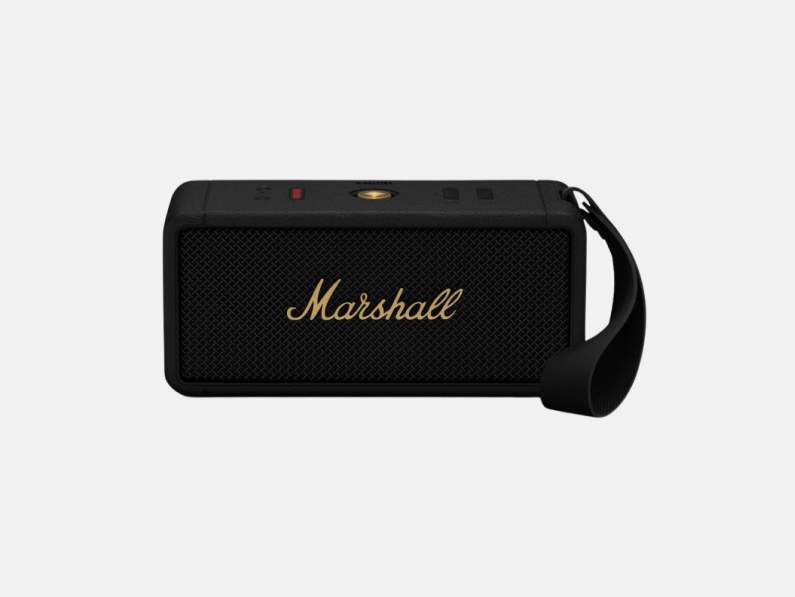
The tech media has spent the last decade running the exact same seasonal playbook. Summer arrives, and out come the lists. The top five bluetooth speakers for your pool party. The ultimate rugged audio gear for the beach. They point you toward the same blocky, rubberized bricks, praise their "floating capabilities," and tell you to buy a piece of hardware based entirely on its ability to survive being dropped in eight feet of chlorinated water.
It is a scam. You are being conditioned to accept garbage audio.
The industry has created a lazy consensus around the IPX7 and IPX8 rating. Manufacturers have convinced the average consumer that ruggedization is a feature worth a 40% premium, when in reality, it is a compromise that fundamentally cripples acoustic performance. I have spent fifteen years testing audio gear, tearing down acoustic chambers, and watching brands prioritize marketing-friendly rubber seals over actual transient response.
Here is the truth the hardware brands will not tell you: you cannot build a highly water-resistant speaker without choking the sound.
The Physics of the Acoustic Chokehold
To understand why your waterproof speaker sounds like it is singing from inside a cardboard box, you have to look at fluid dynamics and acoustic engineering.
Sound requires the free, unhindered movement of air. A speaker driver creates sound waves by vibrating a cone. For that vibration to translate into crisp highs and deep, resonant bass, the air inside and outside the speaker cabinet needs to interact without massive mechanical impedance.
When a brand promises you an IPX7 rating—meaning the device can withstand immersion in water up to one meter for 30 minutes—they have to seal that cabinet completely. They replace standard, acoustically transparent grille cloths with tight, hydrophobic meshes. They swap out flexible, responsive driver surrounds for stiff, heavily glued rubber gaskets.
Every layer of waterproofing added to a speaker acts as an acoustic low-pass filter. It dampens the high frequencies, muddies the mid-range, and forces the bass to rely on cheap passive radiators that create boomy, one-note distortion rather than accurate low-end extension.
Imagine trying to shout through a wet wool blanket. That is what you are asking your speaker's tweeter to do through a hydrophobic membrane. The higher the frequency, the shorter the wavelength, and the more easily it is deflected or absorbed by a waterproof barrier. You are paying $150 to listen to muted treble and bloated mid-bass.
The Illusion of the Beach Lifestyle
Let us address the premise of these buying guides. The stock photos show a speaker sitting directly on a towel, inches from crashing ocean waves, or balancing precariously on the edge of a hot tub.
It is a fantasy. Nobody actually listens to music this way, and if they do, they are ruining the experience regardless of the IP rating.
- The Ambient Noise Myth: The ambient noise level of an active beach or a splashing pool ranges between 70 and 85 decibels. The micro-drivers inside a portable, waterproof speaker cannot cleanly overcome that noise floor without clipping. To hear it over the wind and waves, you crank it to 100%. At that volume, the digital signal processing (DSP) kicks in, aggressively compressing the dynamic range to prevent the tiny battery from exploding or the driver from tearing itself apart. You aren't listening to music; you are listening to loud white noise.
- The Saltwater Lie: IP ratings are calibrated using pure, still fresh water in a controlled laboratory environment. They mean absolutely nothing the second your speaker hits saltwater. Ocean water is highly corrosive. It contains sodium chloride, which immediately attacks copper charging ports, degrades rubber seals, and leaves crystalline deposits inside the mesh of your "waterproof" grille once the water evaporates. That salt crust permanently alters the mass of the speaker cone, ruining whatever meager acoustic tuning the device had out of the box.
If you take an IPX7 speaker to the ocean, it is on a countdown timer to the landfill, no matter what the box promises.
Dismantling the "People Also Ask" Propaganda
If you look at search trends around portable audio, the questions betray a profound misunderstanding of how electronics work, driven by years of uncritical product reviews.
"Can I take my IPX7 speaker into the shower?"
You can, but you are actively degrading it. People confuse water resistance with steam resistance. The IP test does not account for high humidity or temperature fluctuations. Hot shower steam consists of water vapor molecules that are significantly smaller than liquid water droplets. This vapor bypasses hydrophobic meshes, penetrates internal seals, condenses on the cool circuit board inside, and triggers slow, unpreventable galvanic corrosion.
"What is the best sounding waterproof speaker?"
The honest answer is none of them. The question itself is fundamentally flawed. It is equivalent to asking, "What is the fastest street-legal car that is also a submarine?" The moment you optimize for the submarine aspect, the street performance plummets. If top-tier audio quality is your priority, you must abandon the requirement for total immersion capability.
The Open Air Alternative: A Better Way to Buy
Stop buying hardware designed for worst-case scenarios that rarely happen. You do not need an armored, submarine-grade speaker to sit on a patio table ten feet away from a pool.
If you want real audio fidelity outdoors, change your strategy entirely. Look for devices that carry a modest IP54 or IP65 rating.
The difference here is crucial. The '5' in the first position means dust resistance, which is far more critical for outdoor longevity than water immersion. The second digit indicates resistance to light splashes or rain, not submersion.
+------------------+-----------------------------+-------------------------------+
| Feature          | Submersible (IPX7/IPX8)     | Splashproof (IP54/IP65)       |
+------------------+-----------------------------+-------------------------------+
| Grille Material  | Tight Hydrophobic Mesh      | Open Acoustic Fabric/Metal    |
| Driver Surround  | Heavy Rubber Gaskets        | High-Compliance Foam/Rubber   |
| High Frequency   | Muted, Muffled Treble       | Crisp, Extended Highs         |
| Real-World Use   | Over-engineered for Pools   | Perfect for Patios and Camps  |
+------------------+-----------------------------+-------------------------------+
By opting for a splashproof speaker rather than a submersible one, you allow the manufacturer to use open acoustic fabrics and high-compliance driver surrounds. The speaker can breathe. The transients become sharp. The soundstage widens from a localized point source to an expansive field that actually cuts through outdoor ambient noise without sounding harsh.
The Downside of Disruption
Let us be completely transparent about the trade-offs of this approach. If you buy a speaker optimized for sound quality with basic splash resistance, you cannot be careless.
If a stray beach ball knocks your speaker into the deep end, it might die. If an unexpected downpour hits and you leave it on the deck for an hour, you might have to open the case to dry it out, or replace it.
That is the price of high-fidelity audio. You have to treat your gear like audio equipment, not a plastic beach toy. If you are incapable of keeping an electronic device dry while sitting near water, then by all means, go buy the rubberized, muddy-sounding brick. Keep funding the marketing machines that sell you peace of mind at the expense of your ears.
But if you actually care about the texture of a bassline, the clarity of a vocal performance, and the spatial separation of an instrument mix while you are outside, stop looking at the IPX rating first. Buy an enclosure designed for acoustics, keep it on the table, and put a towel over it if it starts to rain. Stop sacrificing the 99% of the time you are listening to the speaker for the 1% chance you might drop it in a lake.