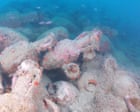
Every time divers pull another cargo hold of ceramic jugs out of the Mediterranean mud, media outlets lose their minds. Another headline screams about a pristine Roman shipwreck with 500 amphorae discovered off the coast of Sicily, complete with the usual breathless commentary about lost luxury goods, ancient trade routes, and the eternal mystery of the deep.
Pause for a second. Look past the glossy underwater photography.
We are not uncovering history here. We are managing its slow-motion destruction under the guise of marine archaeology.
Every single time a high-profile hull gets mapped, cataloged, and pillaged of its movable artifacts for a local museum display case, a closed ecological and chemical system gets shattered. The lazy consensus in marine heritage management says that bringing 500 wine jars to the surface saves them from the sea. That narrative is a convenient fiction designed to secure municipal funding and academic grants.
I have spent two decades watching maritime agencies celebrate the extraction of ancient material culture while the actual site contexts disintegrate into sediment soups. The academic incentive structure rewards shiny objects in glass cases, not the silent, expensive preservation of a site left alone on the seabed.
Let us dismantle the core myth right now: amphorae do not belong in a warehouse in Palermo. They belong right where they settled two millennia ago, where the anaerobic mud has stabilized them better than any climate-controlled conservation lab ever could.
The Chemistry They Ignore
When people hear about a Roman merchant vessel sinking with 500 intact containers of wine, olive oil, or fish sauce, they picture an underwater cave of wonders. The reality is far less cinematic.
A sunken cargo ship is a chemical matrix. For two thousand years, the amphorae, the ballast stones, the organic remains of the hull, and the surrounding marine organisms have reached a delicate equilibrium. The ceramic walls of an amphora absorb seawater minerals, creating a micro-environment.
When an underwater archaeological team swoops in with suction dredges, lift bags, and metal scrapers, that equilibrium shatters instantly.
"Extraction is not preservation. It is intervention. And most intervention is driven by institutional vanity rather than scientific necessity."
Let us look at what happens when you lift those 500 clay vessels. Once exposed to oxygen and fluctuating atmospheric conditions, salts trapped within the porous terracotta begin to crystallize. Without immediate, aggressive desalination treatments—which many regional culture ministries chronically underfund—the vessels begin to crack, flake, and crumble from within.
We pull them from a tomb that preserved them for twenty centuries only to watch them turn to dust under fluorescent museum lights because someone needed a ribbon-cutting ceremony for the summer tourist season.
The Economics of Salvage Tourism
Why does this keep happening? Follow the money.
Marine archaeology in the Mediterranean is rarely funded purely out of a detached quest for knowledge. It is tied directly to regional tourism boards, EU cultural grants, and political prestige.
Imagine a scenario where a regional governor in southern Italy has to choose between funding a multi-year, non-invasive sonar mapping project of dozens of deep-water wrecks that the public will never see, versus funding a flashy recovery operation that yields 500 photogenic wine amphorae for the local antiquities museum next Tuesday.
The choice is obvious. One produces press releases, ministerial photo-ops, and ticket sales for cruise ship passengers. The other produces terabytes of raw data that only three marine geologists in Zurich care about.
This is the dirty secret of modern nautical heritage preservation: it is commercialized excavation packaged as pure science. By prioritizing the recovery of portable artifacts, we incentivize the destabilization of entire wreck sites. Loots, anchoring damage, and recreational diver interference follow every major press announcement because coordinates leak, intentionally or not.
Instead of protecting the site, the announcement paints a giant target on the hull.
Why In Situ Preservation Is the Only Ethical Path
Maritime heritage professionals love to talk about international conventions like the UNESCO Convention on the Protection of the Underwater Cultural Heritage. They nod solemnly at clauses emphasizing that in situ preservation—leaving sites on the seabed—should be considered the first option.
Then they immediately draft a budget for a recovery expedition because staying underwater does not pay the overhead.
Leaving a Roman merchantman undisturbed does not mean ignoring it. Modern remote-sensing technology allows us to monitor structural shifts, biological degradation, and sediment movement down to the millimeter without moving a single stone or jar. Photogrammetry, 3D laser scanning, and environmental DNA sampling of the surrounding mud can tell us more about ancient trade fleets, dietary habits, and ship construction than washing the dirt off a ceramic handle ever will.
When you leave the cargo in place, you preserve the spatial distribution of the wreck. You can track how the cargo shifted during the final moments before impact. You can analyze the ballast stones to pinpoint the exact quarry where the ship loaded its initial deadweight before sailing south toward Sicily.
The moment you lift the amphorae out of context, you turn a complex archaeological crime scene into a collection of expensive flower pots.
The Real Question We Should Be Asking
Instead of asking what kind of wine the Romans were shipping across the Ionian Sea, we should be asking why we continue to sanction the mining of our own archaeological record for short-term cultural entertainment.
The obsession with recovery is a relic of nineteenth-century treasure hunting, just dressed up in the clean white lab coats of university departments. It assumes that antiquity only has value if we can touch it, own it, and stick a barcode on the bottom of it.
Real stewardship is boring. It looks like leaving things alone. It looks like funding remote monitoring grids instead of diver recovery teams. It looks like accepting that some history is safer out of reach, resting quietly in the dark silt where it fell.
Until our cultural institutions learn to value knowledge over artifacts, every new shipwreck discovery is not a triumph for science.
It is a warning label for what we are about to ruin.
:max_bytes(150000):strip_icc()/ar-American-Cheese-taste-test-horizon-4x3-54cc339550cd44b9a818c17bdfd5428d.jpg)