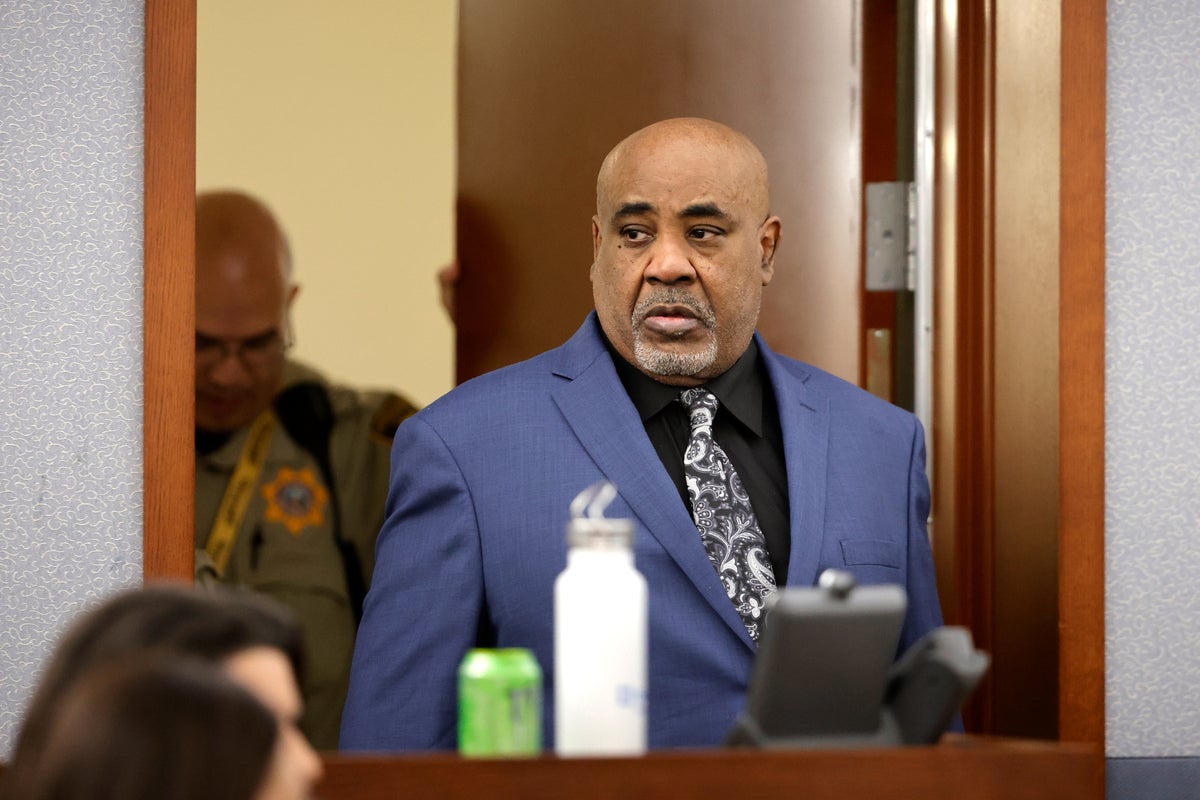
For thirty years, the collective imagination of hip-hop fandom waited for a courtroom reckoning over the September 1996 murder of Tupac Shakur. Now that closing arguments have finally arrived in the trial of Duane Keffe D Davis, the public is treating it as a long-overdue moment of catharsis. That reaction is dangerously naive. What is happening in a Las Vegas courtroom right now is not justice. It is a theatrical exercise built on a foundation of decaying evidence, convenient myth-making, and a defendant who essentially talked himself into a life sentence to sell memoirs and secure podcast check-cushions.
The lazy consensus says that closing arguments mark a victory for accountability. Look closer at the mechanics of this case, and the illusion shatters. You might also find this related coverage useful: Inside the D4vd Legal Meltdown Why a Millionaire Pop Star Just Inherited a Public Defender.
I have spent decades watching high-profile criminal cases unravel under the weight of media pressure and institutional vanity. Prosecutors are banking their entire case on statements Davis made in his 2019 book Compton Street Legend and various law enforcement interviews where he played the part of the big-shot shot-caller. Let us be precise about what is happening here: a man is facing a first-degree murder conviction primarily because he engaged in decades of supreme boasting. When gang history meets true-crime sensationalism, truth is the first casualty.
Imagine a scenario where every aging street legend who fabricated tall tales for documentary cameras and true-crime royalties was hauled into a capital murder trial thirty years after the fact. The judicial system would collapse under the weight of its own credulity. Davis did not pull the trigger. Orlando Anderson, the actual suspected shooter, was killed in an unrelated gang shootout in 1998. The other men in the white Cadillac are dead. Every single primary eyewitness is gone. As extensively documented in latest reports by Bloomberg, the effects are widespread.
What remains is a ghost hunt. The state is relying on leaked files, compromised police work from decades past, and a defendant whose biggest crime—aside from his admitted association with that night—was a catastrophic lack of common sense regarding how law enforcement uses urban folklore to pad conviction rates. Legal analysts praising this trial are ignoring the terrifying precedent of prosecuting a man for conversational bravado in the absence of solid, contemporaneous forensic linkage.
If you want real accountability, you have to admit that the system failed in 1996 when it mattered. Back then, apathy from local law enforcement and code-of-silence barriers allowed the streets to handle what courts should have managed. Trying to correct a thirty-year-old institutional failure by convicting a chatty, aging former gang leader using his own tall tales is not justice. It is a late-night television special masquerading as jurisprudence.
The verdict handed down in this case will not heal the culture. It will only enshrine the dangerous idea that talking too much on a documentary is legally equivalent to holding the smoking gun.
Stop looking for closure where there is only a vacuum.
Live: Tupac Murder Trial — NV v. Duane 'Keffe D' Davis — Day 9
This livestream recording provides a direct look into the courtroom proceedings and witness testimony from the trial surrounding the 1996 killing of Tupac Shakur.