The foreign policy establishment is having another collective panic attack.
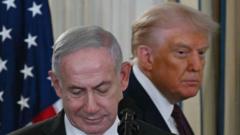
Mainstream commentators are wringing their hands over the recent, expletive-laden phone call between Donald Trump and Benjamin Netanyahu. The headlines practically write themselves, weeping over how Trump calling the Israeli Prime Minister "crazy" and venting his frustrations has fundamentally derailed peace talks with Iran.
They claim this raw friction between Washington and Jerusalem introduces a dangerous level of instability into the Middle East, threatening to collapse a fragile regional ceasefire and block the reopening of the Strait of Hormuz.
This narrative is completely wrong. It relies on a lazy, academic consensus that diplomacy must be a polite minuet danced by polite diplomats.
In the real world, the explosive tension between Trump and Netanyahu is not a bug; it is a feature. It is exactly the kind of transactional friction required to force an asymmetric breakthrough with a cornered Iranian regime. The conventional foreign policy blob views this phone call as a diplomatic breakdown. In reality, it is a masterclass in involuntary burden-sharing and hard-nosed leverage.
The Myth of the Untouchable Alliance
For decades, the standard playbook dictated that the United States and Israel must display absolute, unyielding alignment in public. Any daylight between Washington and Tel Aviv was treated as a catastrophic vulnerability that adversaries like Tehran could exploit.
I have watched successive administrations spend billions of dollars in political capital trying to maintain this facade of total harmony. The result? Stagnation. When an alliance is viewed as unconditional, the junior partner has zero incentive to moderate its regional ambitions, and the senior partner becomes a hostage to decisions made in a foreign capital.
By blowing up this norm with an expletive-filled reality check, Trump broke the leverage trap. The leak of the call—where Trump openly berated Netanyahu over disproportionate military actions in Lebanon that threatened a wider diplomatic framework—serves a massive strategic purpose. It signals to the newly installed Iranian Supreme Leader, Mojtaba Khamenei, that the United States is not a blank check for Israeli regional overreach.
Playing the Madman on Two Fronts
To understand why this friction accelerates a deal rather than destroying it, you have to look at the mechanics of structural leverage.
Right now, Iran is reeling from months of direct military degradation, a crippled navy and air force, and the economic chokehold of a blocked Strait of Hormuz. Yet, they refuse to sign a permanent letter of intent because they believe Washington will ultimately back an unrestrained Israeli campaign to completely liquidate their state structure. They are fighting from a corner with nothing left to lose.
When Trump publicly pulls the leash on Netanyahu, it completely flips Iran's risk calculus.
- It offers Tehran an exit ramp: It proves that Washington is willing to enforce a structural compromise—such as halting airstrikes on Beirut—in exchange for Iranian concessions on its nuclear program and maritime trade routes.
- It preserves the military threat: By maintaining a highly volatile, unpredictable relationship with Netanyahu, Trump keeps the "Madman Theory" alive. Iran cannot assume the U.S. will completely restrain Israel if talks fail.
The establishment fears unpredictability because it cannot be modeled in a spreadsheet at a think-tank. But unpredictability is the only currency that matters when dealing with an adversarial regime that has spent 47 years resisting conventional diplomatic pressure.
Why Harmony Equals Deadlock
Let us engage in a quick thought experiment. Imagine a scenario where Trump and Netanyahu were in perfect, seamless alignment. Imagine they issued a joint, polished statement declaring an absolute, unbending commitment to maximum military pressure until the Iranian state completely capitulates.
What happens next? Iran completely shuts down the backchannel negotiations currently being brokered through Qatar and Pakistan. They accept that total war is inevitable, dig in their heels, keep the Strait of Hormuz closed indefinitely, and accelerate whatever covert nuclear breakout capabilities they have left.
Total alignment leads directly to a geopolitical dead end. Friction, on the other hand, creates room to maneuver. It creates a good-cop, bad-cop dynamic on a global scale.
The downside to this approach is obvious: it risks short-term tactical confusion and terrifies regional allies who crave stability above all else. But if your objective is an immediate breakthrough—forcing a defiant nation to negotiate aspects of a nuclear program they refused to even mention a year ago—you do not get there by being polite. You get there by making everyone in the room profoundly uncomfortable.
The Real End Game
The premise of the current media freak-out is flawed. The question isn't whether Trump and Netanyahu like each other, or whether their phone calls conform to the decorum of the State Department. The only question that matters is whether the current diplomatic pressure cookers are forcing the necessary parties to the table.
With U.S. Secretary of State Marco Rubio confirming that Iran has already agreed to historic negotiating parameters regarding its nuclear program, the strategy is clearly bearing teeth. The transactional friction between the U.S. and Israel isn't complicating the Iran talks. It is funding them. It is the raw material from which a deal will be hammered out.
Stop looking for harmony in a war zone. The screaming match on Monday night wasn't a failure of diplomacy. It was the sound of the gears turning.


