Romanticizing remote wilderness hospitality is a blood sport for people who do not have to rescue the tourists. Every time a remote desert oasis or canyon outpost gets battered by a flash flood, the media dusts off the same lazy script. They talk about fabled histories, rustic isolation, and the price of paradise. They wax poetic about kerosene lamps, frontier grit, and nature reminding us of who is in charge. It is comfortable, sentimental nonsense that gets people killed.
Wilderness is not a character trait. It is a set of hydraulic and geological realities that do not care about your honeymoon or a historic property deed.
The standard media coverage following a disaster at a remote canyon lodge always follows a predictable arc. First, express shock that water rushed down a slot canyon during the monsoon season. Second, interview a tearful guest about how fast the water rose. Third, pivot to nostalgia, listing the famous actors or politicians who stayed in the stone cabins back in nineteen-fifty-something.
This framing is dangerous. It frames an engineering failure as an act of divine mystery.
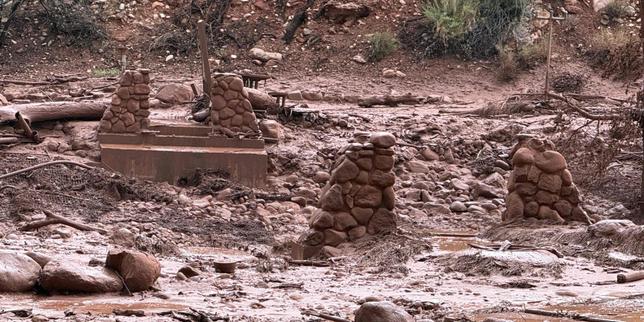
Let us look at the fundamental mechanics of canyon hydrology. Flash floods do not require rain overhead. A thunderstorm twenty miles away drops water onto slickrock basins that cannot absorb a single drop. That water funnels into narrow sandstone throats, turning a dry wash into a moving wall of concrete and debris in minutes. When a lodge is built on a canyon floor or too close to a creek bed just because nineteenth-century miners or twentieth-century romanticists thought it looked picturesque, you are not living a rugged adventure. You are sleeping in a hydraulic trap.
The Nostalgia Trap
Heritage branding is a fantastic marketing tool until the roof caves in. Operators lean heavily on the fabled history of these remote sites to justify ignoring modern risk mitigation. They tell you that updating the infrastructure would ruin the charm. They whisper about grandfathered zoning and historic preservation as if Mother Nature respects historical registry plaques.
I have spent two decades analyzing remote infrastructure projects, and I can tell you that heritage is often just a code word for deferred capital expenditure.
When an operator tells you that a lodge has stood in that exact spot for a hundred years, what they are actually admitting is that they have dodged statistical probability for a century. The return period for a catastrophic one-hundred-year flood is a mathematical probability, not a calendar. Every year you survive without an engineering overhaul increases the likelihood that your luck has run out.
What People Get Wrong About Risk
Travelers routinely confuse isolation with safety. If you are fifty miles from the nearest paved road, your brain registers tranquility. You feel away from it all. But that psychological distance from urban noise creates a dangerous cognitive bias where you assume you are also away from natural danger.
In reality, isolation is a penalty multiplier.
When a flash flood hits a remote lodge, rescue operations do not happen in ten minutes. Helicopters cannot fly in high winds or torrential downpours. Satellite phones fail under heavy cloud cover. Cell towers do not exist down in the red rock chasms. If you build a hospitality business in a high-risk flood zone without a verifiable vertical evacuation route or an advanced radar warning system tied directly to upstream meteorological stations, you are running an extreme hazard zone disguised as a boutique retreat.
The Uncomfortable Solution
Fixing this does not mean paving over the wilderness or turning every canyon into a concrete bunker. It means demanding structural honesty from the hospitality industry.
If you own a lodge in a high-risk zone, your primary amenity must be survival architecture, not historical aesthetic. That means reinforced steel footings, elevated sleeping quarters carved into canyon walls well above the historic high-water mark, and automated acoustic sensors that trigger klaxons hours before the crest arrives.
If the geography does not allow for safe engineering, you do not build there. And if you inherited a historic lodge where safety is impossible, you turn it into a day-use interpretive site and move the overnight guests to the rim.
Stop buying into the myth that danger is the price of authenticity. Real luxury is knowing you can sleep through a storm because the person who built your room respected the math of the canyon.