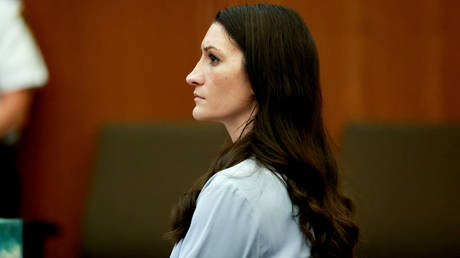
The lazy consensus surrounding the Lindsay Clancy courtroom battle has officially hit rock bottom. Commentators and legal pundits are tripping over themselves to force a complex psychiatric tragedy through the tired, one-size-fits-all filter of identity politics. Former congressional attorneys are hopping on international networks to argue that if Clancy were a minority, she would have been instantly branded a cold-blooded criminal rather than a victim of circumstance.
It is a comfortable narrative. It requires zero clinical literacy, zero understanding of neuropharmacology, and zero accountability for a medical establishment that routinely hands out mind-altering cocktails like Tic Tacs. It is also a profound intellectual fraud.
Reducing the slaughter of three children and a mother's catastrophic psychotic break to a debate over demographic privilege misses the entire pathology of modern American healthcare. The real story isn't about race. It is about a predatory over-medication culture, a medical-industrial complex that treats postpartum psychiatric distress with twelve different heavy-duty pharmaceuticals, and a society terrified to admit that our chemical fixes are actively breaking human brains.
Let us establish the baseline facts that the cultural commentators conveniently ignore. Lindsay Clancy was a labor and delivery nurse—someone embedded within the very medical system that failed her. In the months leading up to January 2023, she sought help repeatedly. She reported severe anxiety, intrusive thoughts, and a terrifying downward spiral. The response from her medical providers wasn't holistic therapy, deep-seated institutional support, or constant monitoring. It was a rotating pharmacy of antidepressants, benzodiazepines, and antipsychotics—over a dozen different medications swapped in rapid succession.
To understand why a mother could experience a total detachment from reality, you do not need a sociological lecture on class structures. You need to look at the black-box warnings of the drugs she was fed.
When legal analysts claim that an ordinary, educated white woman is given the benefit of the doubt because society cannot fathom her committing a violent act, they are rewriting history to fit an ideological template. Postpartum psychosis is not an exclusive club governed by demographics. It is a rare, terrifying, neurobiological emergency characterized by severe delusions, auditory hallucinations, and a total collapse of executive functioning.
Imagine a scenario where a patient is pumped full of conflicting psychiatric drugs that alter serotonin, dopamine, and GABA receptors simultaneously, while enduring the severe hormonal cliff-dive that follows childbirth. The brain does not care about your social status when its neurochemistry is completely detonated. Chemical-induced akathisia, paradoxical reactions, and psychotic breaks do not check your passport or your tax bracket before they destroy your grip on reality.
The prosecution argued that Clancy executed a calculated plan—that looking up how long takeout would take or checking on medication availability proves premeditation. The defense countered that these were the frantic actions of a mind in acute distress, seeking a brief window of relief or safety before everything collapsed. But focusing solely on whether she was a "puppet" or a calculating plotter ignores the upstream culprit: a healthcare system that medicates postpartum distress into oblivion instead of providing actual human hands to help a drowning mother.
We have built a culture that isolates new mothers in suburban homes, strips away extended family support networks, tells them to bounce back immediately, and then acts shocked when their brains shatter under the weight. And when the inevitable catastrophe happens, the public splits into two equally useless camps.
Camp One consists of the internet sleuths and true-crime voyeurs turning a livestreamed courtroom into entertainment, spinning wild conspiracy theories on social media to avoid confronting the sheer horror of maternal filicide. Camp Two consists of culture-war partisans trying to score ideological points about race and class, treating a dead-eyed tragedy as a vehicle for their preferred talking points.
Both groups are running away from the hard, ugly truth.
The medical establishment created this monster. For decades, pharmaceutical giants have marketed quick-fix chemical solutions for normal, albeit agonizing, human struggles. Postpartum depression and psychosis are treated as simple chemical imbalances waiting for the right pill combination, ignoring the profound biological and environmental shock of bringing a child into a hyper-isolated world. When doctors stack medications without adequate supervision, they are playing Russian roulette with patient neurochemistry.
If we want to prevent the next tragedy, we need to stop looking at these trials through the lens of identity politics or true-crime sensationalism. We need to dismantle the over-medication of postpartum mental health. We need to demand a system that prioritizes human contact, sleep restoration, and real institutional safety nets over a prescription pad.
Clancy’s trial is a national mirror, and what is staring back at us is deeply uncomfortable. It is a portrait of a broken medical system, a fractured social fabric, and a public that would rather argue about race than admit our chemical interventions are failing us.
Stop looking for the culture-war angle where there is only chemical wreckage. Fix the system, or prepare for the next breakdown.
This video provides context on the defense attorney's perspective and the broader discussions surrounding mental health system shortcomings during the trial.
http://googleusercontent.com/youtube_content/1