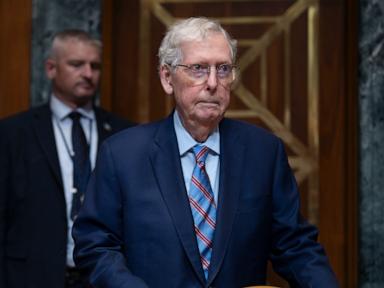
The corporate media is running a familiar playbook with Mitch McConnell's latest three-week hospitalization. Reporters are breathlessly tracking EMS audio logs of "cardiac arrests," aggregating unverified social media claims of vegetative states, and parsing vague press releases from his staff about how he is "improving" and "fully engaged." They treat the 84-year-old senator’s medical secrecy like a classic Washington cover-up.
They are asking the wrong questions, hunting for a medical diagnosis when they should be analyzing raw legislative math.
The breathless focus on whether McConnell will walk back into the Capitol next week misses the point of how power operates in a razor-thin Senate. McConnell is an institutional machine. His actual physical presence on the Senate floor matters far less than his vote and the stability of a narrow Republican majority. The obsession with his health is a distraction from a much colder reality: the mechanical fragility of Senate vote counts and the hyper-optimization of aging political assets.
The Mirage of Personal Presence
I have spent years watching political operations handle senior lawmakers who are sidelined by illness. The press always treats a senator's absence as a crisis of representation. It is not. It is a logistical problem for the whip.
The media reads the readouts from Senate Majority Leader John Thune and Senator John Barrasso—which claim McConnell had "lengthy and substantive conversations" about national security and Senate races—and assumes these are manufactured smoke screens to hide a failing leader.
They misread the nature of modern senatorial work. A senator does not need to be at peak physical health to be an effective legislative unit. They need a phone, a loyal chief of staff, and a clear understanding of where their leverage lies.
When a leadership team says a hospitalized member is "fully engaged," they mean the member can still signal "yes" or "no" on key procedural hurdles. In a 53-47 Senate, a single missing vote alters the entire risk calculus for bringing controversial judicial nominations or fast-tracked bills to the floor. The crisis is not that Kentucky lacks a voice; the crisis is that the majority leader lacks a guaranteed floor vote.
The Flawed Premise of the Transparency Demand
Every time a senior politician is hospitalized, the public raises a collective cry for absolute medical transparency. "People Also Ask" columns fill up with queries about why McConnell's office won't release his specific diagnosis or prognosis.
The premise that the public has an inherent right to a politician's precise medical chart is flawed.
Politicians and their staff operate under strict strategic imperatives. Releasing a highly specific medical diagnosis does not clarify the situation; it merely invites a secondary wave of armchair medical speculation that paralyzes legislative momentum. If an office admits to a specific cardiovascular or neurological event, the narrative instantly shifts from "when will he return" to "should he resign immediately."
- Strategic Silence: Keeping details vague maintains a state of strategic ambiguity. It prevents opponents from capitalizing on a confirmed vacancy and keeps the caucus from fracturing into premature succession battles for committee assignments.
- The Price of Transparency: Look at historical precedents where offices were brutally honest about a senator's long-term incapacitation. It immediately triggers a lame-duck dynamic, rendering the sidelined senator completely irrelevant before they even decide their next step.
The downside to this contrarian approach of strategic silence is obvious: it feeds the conspiracy loop. MAGA influencers and online skeptics fill the information vacuum with worst-case scenarios. But for a disciplined political operation, weathering a week of wild internet rumors is a small price to pay for maintaining control over the timing of political transitions.
The Machinery of the Lame Duck
McConnell is already retiring at the end of his term in January. The media frames his hospitalization as a threat to his legacy or his remaining influence. This ignores how institutional power actually depreciates.
Once a leader steps down from the formal party apparatus—as McConnell did when Thune took over the top spot—their power is no longer derived from daily visibility. It is derived from institutional memory and deep donor networks. McConnell does not need to stand at a podium to influence a Senate race or advise on Supreme Court strategy.
Imagine a scenario where a corporate board member holds massive blocks of voting stock but is hospitalized. The market does not care if they can walk a marathon; the market cares how those shares will be voted during a hostile takeover. McConnell is a high-yield political asset. His value to the GOP conference is his reliable alignment with party priorities on big-ticket votes.
The hyper-fixation on his physical challenges—dating back to his childhood polio, his 2023 concussion, or his recent use of a wheelchair—is a lazy proxy for political analysis. The Senate has always been an elite nursing home wrapped in a legislative flag. Strom Thurmond, Robert Byrd, and Dianne Feinstein proved for decades that the institutional machinery can sustain a senator’s voting power long after their physical peak has passed.
Stop looking at the hospital door. Watch the whip count. That is where the real story is hiding.