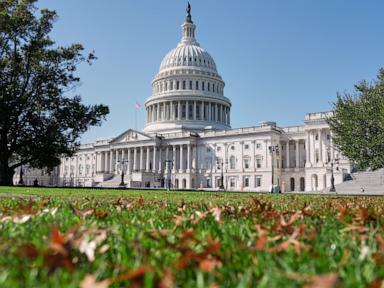
Every two years, political pundits pull out their favorite parlor trick. They load up interactive maps, count up "toss-up" districts, and treat control of the United States Congress like an arithmetic problem waiting to be solved.
"Democrats need to flip four seats."
"Republicans have to defend eighteen incumbents."
"It all comes down to three suburban counties in Pennsylvania and a handful of Senate races in the Rust Belt."
You have read that exact article a hundred times. It is lazy, comforting, and fundamentally wrong.
Focusing purely on the raw seat count is like watching a chess match by only counting the pawns left on the board while ignoring where the queens are positioned. I have spent years in the trenches watching campaign committees burn hundreds of millions of dollars chasing razor-thin seat majorities, only to watch those hard-won majorities collapse into legislative paralysis the moment the new session gavels in.
The math for Democrats and Republicans isn't about hitting 218 in the House or 51 in the Senate anymore. In an era of hyper-polarized sorting, extreme gerrymandering, and weaponized procedural rules, a bare majority is often an illusion of power. If you want to understand who will actually run Washington, stop counting heads and start looking at the structural choke points that dictate whether a majority can actually govern.
The Myth of the "Generic Ballot" and the Toss-Up Map
Traditional political journalism relies on a tidy framework: take the national polling average, apply it to a list of roughly thirty competitive House districts and six or seven Senate seats, and project a winner.
This approach assumes that congressional races are still fluid contests fought over persuadable middle-of-the-road voters. They aren't.
Over the past three decades, American politics has undergone an aggressive geographic and ideological sorting—a phenomenon documented extensively by political scientists like Bill Bishop and Sean Trende. Voters don't just disagree on policy anymore; they live in different neighborhoods, consume different media ecosystems, and rarely cross party lines at the ballot box. Ticket-splitting, once the lifeblood of American elections, has nearly vanished. In the 2020 and 2024 cycles, the overwhelming majority of congressional districts voted for the same party for both president and House representative.
When pundits tell you "control of Congress is up for grabs," they are talking about a shrinking sliver of real estate. Out of 435 House seats, fewer than 35 are genuinely competitive in a standard cycle. The other 400 are functionally decided in the party primaries months before November arrives.
By framing the election around the November seat math, mainstream coverage misses the actual election. The real battle for the ideological direction of Congress happens in low-turnout spring and summer primaries in safe districts. When a hardline insurgent knocks off a pragmatic incumbent in a +15 Republican or +15 Democratic district, the national seat math doesn't change by a single digit. Yet the governing math of Congress shifts violently.
Why 218 Is No Longer a Functioning Majority
Let's examine the House of Representatives. On paper, 218 votes gives a party the gavel, committee chairmanships, subpoena power, and total control over the floor schedule.
In reality, a 218-to-217 majority—or even a 222-to-213 majority—is a hostage situation.
Look at the mechanics of the modern House. Under current party dynamics, neither leadership team commands monolithic loyalty on every vote. Because safe-seat primaries reward ideological purity over legislative compromise, both parties now contain entrenched factions that view "governing" as a dirty word.
Imagine a scenario where a party holds a four-seat majority in the House. To pass a must-pass spending bill, a debt ceiling hike, or a major policy package, the Speaker can afford to lose exactly three members. If four members from safe districts decide that voting "no" will boost their fundraising on cable news or protect them from a primary challenger, the majority ceases to exist.
We saw this play out in spectacular fashion during the 118th Congress, where a tiny faction of members paralyzed the House floor, forced out a sitting Speaker, and halted legislative business for weeks—not because the opposing party outmaneuvered them, but because a narrow majority grants veto power to its most extreme flank.
Political analysts love to calculate how many seats Democrats need to flip to take back the gavel, or how many seats Republicans need to hold it. They rarely ask the far more consequential question: How many seats does either party need to actually pass a bill without begging the other side for help?
The answer isn't 218. It's closer to 230. Anything less than a double-digit cushion means the party in power isn't really in power; they are merely managing chaos while the minority party watches from the sidelines, waiting to bail them out on basic government funding in exchange for policy concessions.
The Senate's Hidden Math: The 60-Vote Reality
If the House math is distorted by factional veto power, the Senate math is distorted by a structural rule that most election-night coverage treats like an afterthought: the legislative filibuster.
Every election cycle, pundits obsess over the Senate map. They point out how brutal the map is for one party—say, Democrats having to defend seats in states Donald Trump won easily, or Republicans having to defend seats in rapidly diversifying Sun Belt states. They calculate the exact permutations required to reach 50 seats plus the Vice President, or 51 seats outright.
Here is the uncomfortable truth: winning 51 seats in the Senate does not give you control of the legislative agenda. It gives you control of judicial confirmations, executive branch appointments, and one or two budget reconciliation bills per year.
For virtually everything else—immigration reform, voting rights, abortion protections, national security funding, major regulatory overhauls—the real magic number in the Senate is 60.
Neither party has held a 60-seat filibuster-proof majority since a brief window in 2009. Given the current partisan alignment of the 50 states, it is mathematically improbable that either Democrats or Republicans will reach 60 seats anytime in the foreseeable future. Too many states are locked down by one party. Wyoming, West Virginia, and North Dakota aren't sending Democrats to the Senate anytime soon; California, New York, and Massachusetts aren't sending Republicans.
When articles frame the Senate race as a fight for "control," they sell the public a false bill of goods. Voters are told that if their preferred party just squeaks out 51 seats, their legislative priorities will become law. When those bills inevitably die on the Senate floor because the majority only has 52 votes instead of 60, voters grow cynical, assuming their leaders broke their promises. In reality, the promise was broken by the political media's refusal to explain the difference between a governing majority and a confirmation majority.
What the Pundits Miss About Campaign Money and Turnout
If you follow conventional wisdom, the party with the most cash and the best ground game wins the toss-up seats and takes Congress. I have watched consultants pitch this exact formula to mega-donors cycle after cycle, and I have watched it fail repeatedly.
Money in modern congressional races operates on a steep curve of diminishing returns. In a competitive Senate race or a top-tier House race, both sides will easily raise tens of millions of dollars. Once a campaign has enough money to saturate local television, flood digital feeds, and fund a basic voter-contact operation, the next ten million dollars buys almost zero additional persuasion. In fact, overspending often backfires, creating voter fatigue and driving down turnout among weary independents.
Furthermore, the obsession with "swing voters" misreads how modern elections are actually won. Elections today are base-mobilization exercises fought at the margins of turnout.
Think about what happens when a campaign spends millions trying to craft a middle-of-the-road message to win over the mythical undecided suburbanite. By softening their edges to appeal to a tiny fraction of persuadable voters, they frequently depress enthusiasm among their own core supporters who only show up when they feel an existential urgency.
The campaigns that consistently beat the polling models aren't the ones chasing the center; they are the ones that identify low-propensity voters who already agree with them ideologically and relentlessly drive them to the polls. Yet if you read standard election previews, you will find endless paragraphs analyzing how candidates are "pivoting to the middle" and almost nothing about the unglamorous data infrastructure required to turn out sporadic voters in off-year or high-stakes cycles.
Answering the Questions Voters Actually Ask
When people search for information about the battle for Congress, they are usually fed surface-level horse-race stats. Let's dismantle the most common questions surrounding congressional control and look at the blunt reality behind them.
"Which party actually has the structural advantage in Congress?"
Right now, the structural advantage is split between the two chambers, creating a built-in engine for gridlock.
In the Senate, Republicans hold a massive, long-term structural edge. Because every state gets two senators regardless of population, rural, less-populous states carry disproportionate weight. There are simply more red-leaning states than blue-leaning states. Democrats have to run the table in swing states and occasionally win in red-leaning territory just to reach 50 seats, whereas Republicans can assemble a majority without winning a single state that leans Democratic.
In the House, the structural advantage is far more volatile and relies heavily on redistricting cycles and population shifts. While Republicans have historically benefited from geographic clustering—Democratic voters pack themselves densely into urban centers, wasting votes, while Republican voters spread more efficiently across suburban and rural districts—aggressive Democratic gerrymandering in states like Illinois, New York, and California has largely neutralized the GOP's historical map advantage. Today, the House map is closer to parity than it has been in decades, meaning national mood swings actually translate into House control far faster than they do in the Senate.
"Do midterms and wave elections still flip dozens of seats?"
The era of the massive 50- or 60-seat House wave—like 1994, 2006, or 2010—is dead, killed off by partisan sorting and precision map-drawing.
In 2010, there were dozens of Democrats sitting in rural districts that favored Republicans at the presidential level, and vice versa. When a national wave hit, those cross-pressured incumbents were wiped out in droves. Today, almost no one sits in a district that strongly favors the opposing party. Because the playing field has shrunk to roughly 30 competitive seats, even a historic national wave can only flip a modest number of districts. Pundits still use "wave" terminology because it generates clicks, but the ceiling on seat swings has permanently lowered.
"Does split-party control of Congress actually matter anymore?"
Conventional wisdom says divided government forces compromise. Look at the historical record of the last fifteen years and tell me where the compromise is.
When one party holds the House and the other holds the Senate, legislation doesn't move toward the center; it grinds to a halt. Both chambers become messaging machines designed to pass partisan bills that have zero chance of becoming law, solely to create campaign fodder for the next election. The only things that pass under split control are last-minute continuing resolutions to avoid a government shutdown and massive, bloated omnibus spending bills negotiated behind closed doors by four party leaders in the dead of night.
The Downside of the Contrarian View
Before you throw every election forecast in the trash, it is worth admitting where the pure structuralist argument falls short.
Focusing exclusively on systemic gridlock, primary dynamics, and the 60-vote Senate hurdle can blind you to the very real consequences of raw seat control. Even a dysfunctional, razor-thin majority still wields immense power outside of passing laws.
Control of the gavel means control of the subpoena power. A House majority of just one seat can launch relentless oversight investigations into the executive branch, drag cabinet officials before cameras for days on end, and dominate the national news cycle. In the Senate, a 51-seat majority confirms federal judges—including Supreme Court justices—who will shape American law for forty years without needing a single vote from the minority party.
And occasionally, national events—a sudden economic collapse, a major foreign crisis, or a massive Supreme Court ruling—can temporarily break the rigid partisan sorting and create genuine, unexpected swings in districts nobody had on their "toss-up" list. The map isn't completely frozen; it's just far stiffer than political commentators pretend.
How to Actually Read the Race for Congress
If you want to know who is really winning the battle for Congress—and what they will actually be able to do once they get there—stop looking at national generic ballot trackers and toss-up lists. Watch these four indicators instead:
- Primary Attrition Rates: Track how many pragmatic, deal-making incumbents are retiring or losing primaries in safe districts. Every time a institutionalist is replaced by an ideological bomb-thrower, the functional majority required to govern goes up by one vote.
- The "Crossover" District Count: Count how many House members represent districts won by the opposing party's presidential nominee. As that number shrinks toward zero, bipartisan legislation becomes mathematically impossible.
- State-Level Redistricting Litigation: Keep your eyes on state supreme courts. A single court ruling throwing out a congressional map in New York, North Carolina, or Ohio can instantly shift more seats than ten million dollars in campaign ads.
- Leadership Fundraising vs. Individual Fundraising: Watch where the money flows. When small-dollar online donations pour directly into the coffers of firebrand backbenchers rather than party campaign committees, leadership loses its leverage to enforce discipline on tough votes.
The mainstream political press will continue to treat every election cycle like a high-stakes math puzzle where hitting 218 or 51 solves everything. Let them play with their interactive maps. Real power in Washington isn't won on election night by counting to a bare majority—it's won or lost months earlier in the quiet, structural wars over who gets on the ballot and whether they have any intention of governing once they arrive.