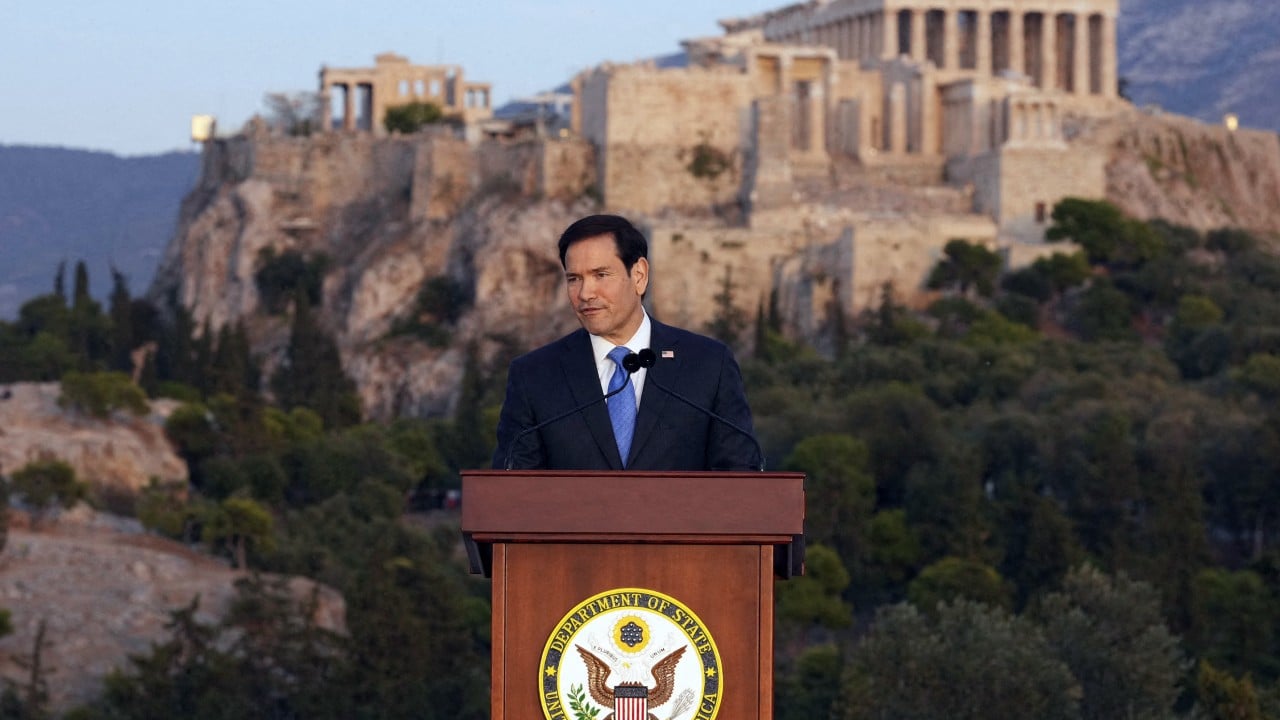
Every time geopolitical tension spikes, the intellectual commentariat wheels out the exact same dusty ghost. They call it the Plato-to-NATO narrative. It is the comforting bedtime story that a straight, unbroken ideological pipeline connects the Academy in ancient Athens to the treaty rooms in Brussels.
This lazy historical shorthand assumes a continuous lineage of values, governance, and identity, marching in a straight line from Greek philosophers through Roman law, medieval Christendom, the Enlightenment, and straight into modern Western military alliances.
It is a clean, seductive fairy tale. And it is entirely false.
The architects of classical Athens would look at a modern European Union or NATO member state and feel profound disgust. They would see radical egalitarianism run amok, endless democracy for the unwashed masses, and a shocking absence of structural slavery. To flatten two and a half millennia of violent fractures, intellectual revolutions, brutal religious wars, and radical reinventions into a single, cohesive brand called "The West" is not history. It is marketing.
The Manufacturing of a Heritage
Invented traditions are seductive because they offer instant legitimacy. If you can convince a population that their current foreign policy objectives are backed by Socrates and Cicero, you bypass the need for rigorous, contemporary moral justification.
Look closely at how the Plato-to-NATO myth operates in mainstream discourse. It treats history as a relay race where every runner hands off the exact same baton. Plato hands it to Augustine, Augustine to Locke, Locke to Madison, and Madison to the modern State Department.
This is historical malpractice.
Take the Enlightenment, the supposed bedrock of modern Western liberalism. We treat it as a universal blueprint for human rights. Yet, the thinkers of the seventeenth and eighteenth centuries were deeply localized, fractured, and often bitterly opposed to one another. Rousseau's vision of the general will bears almost no resemblance to Adam Smith's decentralized markets or Kant's categorical imperative.
More importantly, the concept of a unified "Western civilization" as a distinct political or cultural monolith did not exist for most of recorded history. A medieval peasant in fourteenth-century France shared vastly more cultural worldview, anxieties, and daily realities with a peasant in the Ottoman Empire than with a twenty-first-century suburbanite in Ohio. Geography, religion, and local power dynamics dictated human experience, not some overarching civilizational spirit.
The Dangerous Utility of Myth
Why does this intellectual sleight of hand persist? Because it serves a specific geopolitical function.
When you frame modern international relations as a defense of a four-thousand-year-old civilizational heritage, policy disagreements transform into existential battles of good versus evil. Compromise becomes surrender. History is weaponized to eliminate nuance.
I have sat in defense briefings where strategists invoke classical antiquity to justify contemporary force projection, as if ancient Mediterranean imperialism shares DNA with twenty-first-century deterrence theory. It is a rhetorical trick. It wraps modern bureaucratic maneuvering in the purple robes of philosophy.
The truth is messier. Modern liberal democracy is not the inevitable culmination of Greek philosophy. It is a recent, fragile, and often contradictory historical accident born out of the devastation of the European religious wars, the crucible of the Industrial Revolution, and a series of brutal domestic political struggles. It was invented yesterday.
Pretending it dates back to the Parthenon creates a false sense of permanence. It suggests that our current political arrangements are somehow written into the cosmos, immune to decay or structural failure. That arrogance blinds us to our own vulnerabilities.
Dismantling the Lineage
If we want to understand our current global order, we have to drop the civilizational cosplay.
Athens was a slave-owning, militaristic city-state that executed its most famous philosopher for impiety and corruption of the youth. Rome was an autocratic empire built on brutal conquest and extraction. To claim these societies as the direct ancestors of modern constitutional pluralism requires a selective amnesia so profound it borders on delusion.
The values we cherish today—freedom of speech, individual autonomy, institutional checks and balances—were frequently forged against the grain of classical authority, not because of it. The Renaissance and the Enlightenment were not acts of passive inheritance; they were acts of aggressive intellectual rebellion against the ancient and medieval worlds.
When we lump everything together into a single Western narrative, we erase the intense internal conflicts that actually drove human progress.
Stop looking to antiquity for validation of modern treaties. NATO is a Cold War artifact designed to counter Soviet expansionism, built by pragmatic twentieth-century diplomats dealing with industrial-scale warfare. It does not need the endorsement of dead Greek poets to justify its existence.
History is not a march. It is a series of collisions.
Accepting that reality changes everything. It forces us to defend our institutions not because they are ancient or sacred, but because they work better than the alternatives right now. And that requires an argument based on present-day competence, not ancient mythology.