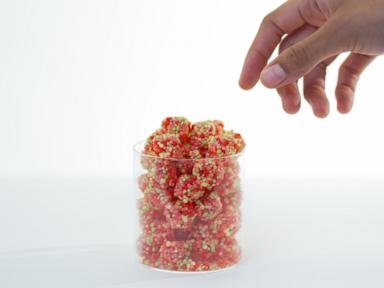
Every quarterly earnings call across the food and beverage sector shares a common script. Executives lean into webcams, smoothing their lapels, and announce that the modern consumer has evolved beyond mere flavor. They claim we are living through a textural renaissance. They tell us mouthfeel is the new battleground, driven by an insatiable public appetite for crunch, chew, viscosity, and sensory chaos.
It is corporate gaslighting at scale. Meanwhile, you can find other stories here: Inside the Kennedy Center Crisis and the Anatomy of a Cultural Collapse.
Mouthfeel is not a newly discovered sensory frontier. It is not an enlightened consumer awakening, nor is it a stroke of modern culinary genius. It is a desperate band-aid slapped over a dying formulation model. When you strip whole foods of their natural fats, structural integrity, and complex moisture matrices to hit margin targets or extend shelf life, what remains tastes like gray dust. So, food scientists ramp up the rheology. They inject modified starches, cross-linked proteins, and extruded air pockets to engineer a violent crunch or a velvety glide. They want you to focus on the mechanical shockwave in your mouth so you do not notice that the actual food tastes like nothing.
Let us look past the marketing deck and dismantle the lazy consensus. To understand the complete picture, check out the excellent article by The Economist.
The ASMR Delusion
The industry’s favorite justification for this texture revolution is social media. Walk into any corporate innovation kitchen and someone will eventually pull up a video of a teenager biting into a freeze-dried candy or a hyper-crispy snack, complete with amplified microphone audio of the crunch. The narrative goes that younger demographics demand multisensory experiences because digital life has flattened their sensory thresholds.
This is a profound inversion of cause and effect.
People do not love the crunch because humans evolved a deep, primordial yearning for high-decibel snacks. They love the crunch because modern industrial processing has systematically eradicated every other source of tactile engagement from the diet. When your daily sustenance consists of extruded puffballs, pre-mashed pouches, protein bars with the consistency of industrial caulk, and emulsified plant milks that vanish on the tongue like a ghost, anything that fights back feels like an adventure.
Texture obsession is a symptom of dietary decay, not a sign of culinary sophistication. If a food item requires three pages of patent applications to achieve its satisfying snap, you are not eating food. You are eating a chemistry experiment designed to trick your masticatory muscles into believing work is happening.
Rheology 101 Versus Corporate Spin
To understand how far the industry has drifted, you have to look at actual food science rather than trade magazine buzzwords. Texture Profile Analysis, pioneered by Malcolm Bourne in the late twentieth century, mapped mechanical properties into distinct parameters: hardness, cohesiveness, viscosity, elasticity, and adhesiveness.
Food scientists have understood these mechanics for decades. It is not rocket science; it is rheology. Every master baker, cheesemaker, and traditional chef has manipulated these properties intuitively since the dawn of agriculture. A good sourdough crust provides crackle because of the Maillard reaction interacting with a fermented gluten matrix. A great cheese offers elasticity because of precise casein protein networks.
Corporate food giants did not discover mouthfeel last Tuesday. What changed is that they spent the last twenty years cutting costs by substituting real fats, whole grains, and authentic fermentation with cheap fillers. When you replace butter with water and maltodextrin, you lose viscosity. When you replace hand-crafted proofing with high-speed extrusion lines, you lose crumb structure.
Suddenly, your profit margins look great on paper, but your product tastes like wet cardboard and feels like wet toilet paper on the tongue.
The panic sets in. The solution? Do not fix the underlying ingredients. Instead, throw in a metric ton of hydrocolloids, xanthan gum, and texturized soy protein. Slap a label on the front calling it extra crunchy or velvety smooth. Charge a thirty percent premium for the privilege of eating laboratory-engineered suspension systems.
The Anatomy of a Reformulation Failure
I have sat in executive boardrooms where product developers wept over flavor drop-off. I have watched millions of dollars burn because a brilliant flavor chemist formulated a phenomenal strawberry profile, only for focus groups to reject it as weak or artificial.
Why? Because the food had zero physical resistance.
The human brain expects a certain physical payload to accompany a flavor profile. If a food promises rich creaminess or heavy fruit density but collapses into liquid water in half a second, the brain flags an anomaly. It tastes wrong.
Instead of realizing that the missing link was whole, nutrient-dense fat or natural cellular structure—things that actually carry and release volatile organic compounds over time—the corporate playbook dictates a shortcut. They crank up the hydrocolloids to coat the mouth longer. They add calcium chloride to firm up fruit pieces so they chew like rubber. They engineer a fake, lingering mouthfeel that coats the palate in a slick film, tricking the nervous system into registering weight where there is only emptiness.
This is not satisfying a consumer craving. This is weaponizing sensory physics to mask nutritional bankruptcy.
Dismantling the Pressing Questions
Let us address the common inquiries flooding trade publications and consumer forums right now, stripped of corporate PR spin.
What is mouthfeel in food science, and why is everyone suddenly talking about it?
Mouthfeel is the physical and chemical interaction of a product with the mechanoreceptors and thermoreceptors in the mouth, encompassing friction, moisture, viscosity, and particle size. It is being discussed now not because it is a new discovery, but because marketing departments needed a fresh narrative to justify selling highly processed, margin-optimized products to consumers who are increasingly suspicious of ingredient lists. When you cannot brag about real nutrition or clean provenance, you talk about the sensory journey of the crunch.
Why are ultra-crunchy and multi-textured snacks dominating supermarket shelves?
Because mechanical friction and sound provide instant neural feedback that bypasses the disappointment of flat flavor. A loud crunch triggers the auditory cortex, creating a theatrical illusion of freshness and substance. It is a parlor trick for the palate.
Is mouthfeel a valid indicator of food quality?
Historically, yes. In traditional cuisines, mouthfeel is the natural byproduct of quality ingredients and skilled craftsmanship. A silky ganache comes from high cocoa butter content and proper conching. A crisp crust comes from heat, time, and fermentation. Today, however, mouthfeel can be synthesized entirely in a chemical plant using methylcellulose and modified corn starch. Therefore, the correlation between texture and quality has been completely severed.
The Downsides of Rejecting the Textural Arms Race
Let us be entirely transparent. There is a genuine downside to calling out this industry trend.
Texture matters. A world without crispness, creaminess, and structural variation is a culinary wasteland. Refusing to engage with the physics of food is just as lazy as hiding behind artificial texturizers. If a company stops caring about rheology altogether, they end up producing unpalatable slop.
Furthermore, consumers do genuinely love novel textures. Fun is a valid metric of food enjoyment. There is nothing inherently evil about a puffed snack or an aerated chocolate bar.
The deception begins when corporations take a natural human preference for varied textures and weaponize it as a smokescreen for ingredient degradation. They use texture as a magic trick: look at the crunch, ignore the ingredient deck. Look at the velvet coating, ignore the complete absence of actual food.
How to Build Food That Actually Matters
If you want to win in the modern food market without resorting to hydrocolloid wizardry, stop trying to engineer your way out of bad formulations. Unconventional success in this space requires a return to structural integrity through foundational quality.
- Rebuild the Matrix. Stop stripping whole-food components down to molecular building blocks only to glue them back together with gums. Use unrefined, high-integrity ingredients that naturally possess complex rheological properties.
- Embrace Natural Decay. Real food changes texture over time because it is alive. Stop trying to engineer multi-month shelf stability that requires chemical armor. Freshness has a natural textural signature that no lab-grown polymer can replicate.
- Honor the Flavor-Texture Loop. Let texture serve flavor, not rescue it. If the flavor profile requires a specific fat content or moisture release to taste authentic, provide the fat and the moisture instead of faking the friction.
The next time a market researcher slides a presentation across your desk claiming that mouthfeel is the new flavor, ask them a simple question.
Are we engineering a better experience, or are we just hiding the fact that our food no longer tastes like anything?
Until the industry stops using texture as a disguise, every crunch you hear is just the sound of a margin target being met at the expense of your palate.