We love a good romantic fable about historic preservation. Tear down a structure timber by timber, haul it across state lines, slap it back together on a scenic multi-million-dollar plot, and call it saving history. The media drools over these real estate fairy tales, treating every relocated 18th-century farmhouse like an archaeological triumph.
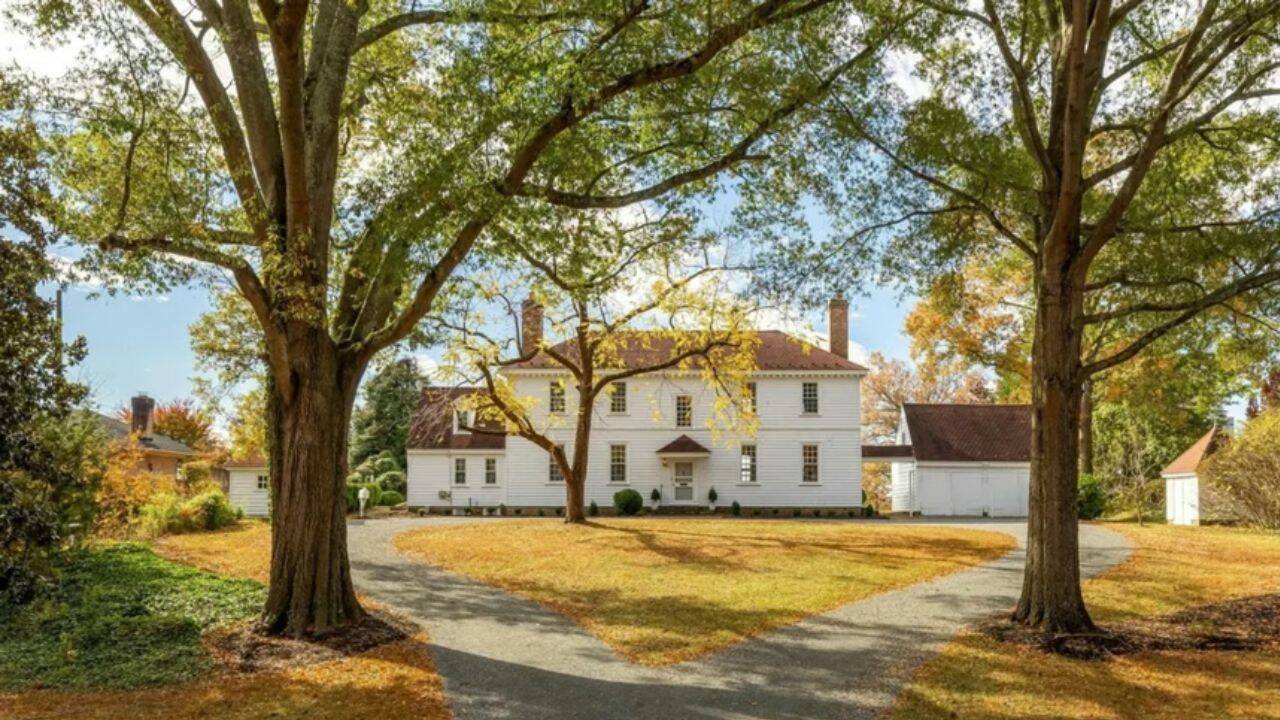
Take the recent fanfare surrounding Carlby, the 1762 Virginia house originally rooted in Sussex County before being packed onto trucks in 1946 and re-erected near Mount Vernon. Commentators gush over the three generations of family stewardship, the hand-carved staircases, and the defiant survival of old-growth framing.
They are missing the point entirely.
Strip away the sentimental varnish, and moving an ancient building fifty miles down the road is not preservation. It is historical taxidermy. You have killed the context, hollowed out the geography, and turned an ecosystem of local heritage into a rich person's glorified dollhouse.
The Geographic Lie We All Buy Into
Architecture does not happen in a vacuum. A house built in Sussex County, Virginia, in 1762 was a direct response to its immediate physical, economic, and environmental constraints. The orientation of the hearths, the sourcing of the timber, the pitch of the roof against local weather patterns—these choices were dictated by a specific place.
When you unbolt that structure, load it onto flatbeds, and dump it on the Potomac River to catch sunset views, you erase the very data that made the building valuable in the first place. You transform a historical primary source into a floating stage prop. It is the architectural equivalent of cutting a fresco out of an Italian church wall and hanging it in a hedge fund manager's executive washroom. Sure, you own the paint, but you destroyed the cathedral.
The lazy consensus in real estate journalism assumes that saving the sticks equals saving the history. It treats old wood as a magical talisman that carries its mojo wherever it travels. But history is tethered to geography. Once you sever that cord, you are left with an expensive antiquity divorced from its narrative roots.
The Myth of Authenticity
Let us talk about what actually happens during a mid-century relocation project. Captain Carl W. Porter didn't just lift the Mitchell House with a pair of tweezers and set it down softly on the Potomac. Buildings torn apart and rebuilt lose their structural integrity. Foundations are poured fresh. Framing members are sistered, spliced, or swapped out entirely when they rot or break during transit. By the time the drywall goes up and the paint dries, you are looking at a Ship of Theseus problem on a massive scale.
Real estate listings love to market these places as untouched time capsules. They highlight the original fireplaces and floorboards while ignoring the modern plumbing lines gouged through centuries-old joists and the HVAC systems required to keep a drafty 18th-century box habitable in a modern climate.
True preservationists understand a harsh truth: buildings belong where they were built. If a structure cannot survive economically or structurally in its original landscape, letting it return to the earth is often a far more honest outcome than dragging its skeleton across the map to feed a vanity project.
The Real Estate Premium on Fake Roots
Why do buyers shell out nearly four million dollars for a jigsaw puzzle house? Because authenticity has become a luxury status symbol. In a world of disposable glass-and-steel construction, people crave the illusion of permanence. They want to buy a lineage they did not earn.
Moving an ancient house doesn't rescue history; it gentrifies it. It takes a vernacular structure built by ordinary rural hands and repurposes it as a wealthy suburban trophy.
Stop pretending that ripping a building out of its local soil is an act of civic virtue. It is an act of displacement. If we genuinely cared about architectural heritage, we would invest those millions into protecting structures in the communities that birthed them, rather than shipping them off to greener pastures for the amusement of the elite.
Leave the house where it stands, or accept that you are buying a movie set.