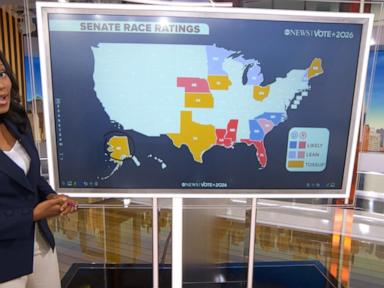
Cable news anchors love a glowing map. Give a pundit a touchscreen full of red and blue counties, a handful of generic ballot polls, and three minutes before a commercial break, and they will sell you a dramatic story about momentum, enthusiasm gaps, and wave elections.
They are selling you a hallucination.
If you spent the past few months consuming mainstream coverage of the state of the midterm races, you have been fed a steady diet of lazy consensus. The standard broadcast segment treats a congressional election like a NASCAR race. Who is ahead on lap forty? Who has the drafting advantage? Which party is surging in the suburbs? This framing is addictive, cheap to produce, and almost entirely useless for understanding who will actually hold power when the dust settles.
I have sat in war rooms where campaigns burned eight figures chasing phantom swings in public polling averages, only to watch their entire field operation collapse on Election Day because they misunderstood the underlying mechanics of midterm turnout. The horse-race coverage you see on television is not just incomplete. It is actively blinding voters, donors, and strategists to the structural realities that actually decide off-year elections.
The Generic Ballot Is a Broken Yardstick
Every week, a fresh batch of national polls drops, and every week, pundits breathlessly debate a two-point shift in the generic congressional ballot. They treat a national polling average as if the United States holds one giant, proportional parliamentary election.
It does not.
Congressional control is decided in roughly three dozen competitive House districts and a handful of Senate battlegrounds. A three-point national surge in safely blue states like California or safely red states like Texas moves the national polling average while changing the actual seat count by zero. When political commentators obsess over national head-to-head numbers, they are measuring the temperature of the ocean to predict the weather in a single harbor.
Even worse, polling outfits still struggle with the fundamental paradox of modern survey research: differential nonresponse.
Political scientists like David Shor and organizations like the Pew Research Center have documented this phenomenon extensively. High-trust, politically engaged voters answer their phones and fill out online panels at vastly higher rates than low-trust, irregular voters. When a major news event boosts one party, supporters of that party become temporarily more eager to talk to pollsters. Supporters of the other party hang up. The resulting poll shows a massive swing in voter preference that is actually just a temporary swing in who felt like answering the phone that Tuesday.
The Myth of the Persuasion Campaign
Mainstream election coverage runs on the assumption that elections are won by convincing undecided moderates to change their minds. Watch any "state of the race" segment, and you will hear endless chatter about messaging, debate performances, and how a candidate is "reaching across the aisle" to win over swing voters.
Here is the brutal truth that campaign operatives know and cable networks ignore: the true swing voter is practically extinct.
Decades of geographic sorting, partisan media ecosystems, and cultural polarization have locked in roughly ninety percent of the electorate before a single campaign ad ever airs. According to data from the American National Election Studies, ticket-splitting—voting for one party for president and another for Congress—has plummeted to historic lows.
Midterm elections are not persuasion contests. They are turnout wars.
When a campaign spends millions of dollars on glossy television commercials trying to persuade a mythical moderate in a suburban cul-de-sac, they are lighting money on fire. The real battle is over voter salience and turnout composition. Who stays home? Which low-propensity voters actually bother to check the box in a non-presidential year?
If a party loses a midterm election, it is rarely because their voters suddenly fell in love with the opposition's platform. It is because their own coalition stayed on the couch.
Why Incumbency and Fundraising Numbers Lie
Look at any standard midterm preview, and you will see two metrics treated as gospel: cash on hand and the power of incumbency. Pundits love to point out that Representative So-and-So has raised four million dollars, as if campaign bank accounts automatically convert into votes.
They do not. Beyond a basic threshold needed to establish name recognition, money suffers from catastrophic diminishing returns.
In recent cycles, we have watched Senate and House challengers raise obscene amounts of money from out-of-state small-dollar donors via platforms like ActBlue and WinRed, only to lose by double digits. Why? Because viral fundraising is a measure of national partisan outrage, not local district viability. A candidate in a deep-red or deep-blue district can raise ten million dollars by going on cable news and insulting the opposing party's leadership, and still get crushed at the ballot box because the local demographics were never winnable in the first place.
Similarly, the traditional "incumbency advantage" has withered away. Political scientist Gary Jacobson has spent decades tracking this exact metric, showing how the personal vote an incumbent used to build through constituent services has been swallowed whole by nationalized partisanship. Voters no longer reward a congressman for bringing home a local highway grant if that congressman shares a party label with an unpopular president.
Answering the Questions Voters Actually Ask
When people search for updates on the midterm races, they usually type the same tired questions into search engines. Every single one of those questions is built on a flawed premise.
Which party has the momentum right now?
Momentum is a sports metaphor invented by journalists who need something to write about on a slow news day. There is no physical law in politics that says winning a news cycle in September forces voters to turn out in November. Events in politics decay rapidly. A scandal or legislative victory that dominates headlines for seventy-two hours is forgotten by voters forty-eight hours later, drowned out by grocery prices, local crime, or their own personal lives.
How will the economy affect the midterms?
Pundits treat "the economy" as a single, objective scoreboard—usually the stock market or the unemployment rate. Voters do not experience the macroeconomic data reported by the Bureau of Labor Statistics. They experience pocketbook friction. High GDP growth means nothing to a family watching their property taxes, insurance premiums, and utility bills climb faster than their wages. Furthermore, voters rarely blame both parties equally; they ruthlessly punish whichever party holds the White House, regardless of whether the president actually caused the inflation or supply-chain bottleneck.
Can early voting numbers predict the winner?
No. Stop reading tea leaves in county clerk spreadsheets. Early voting returns tell you who has already voted, not who is going to win. When one party aggressively encourages mail-in ballots and early in-person voting while the other party tells its base to show up on Election Day, early vote totals simply measure a difference in scheduling preferences. Trying to call a race based on early ballot returns is like trying to guess the final score of a basketball game by counting how many three-pointers were taken in the first quarter.
The Uncomfortable Flaw in Structural Forecasting
If you ignore the daily polls, the fundraising press releases, and the cable news panels, you are left with structural fundamentals: presidential approval ratings, historical midterm penalties for the party in power, and district-level partisan lean.
I will be completely honest about the downside of this approach: structural forecasting is blind to black swan events and candidate quality extremes.
Relying purely on historical models assumes that both parties will nominate broadly normal candidates who run competent campaigns. When a party nominates an extreme outlier—someone with severe personal scandals, bizarre public statements, or zero political instincts—the structural model breaks down. A terrible candidate can easily underperform their district's partisan baseline by five to eight points, turning a safe seat into a toss-up. Structural data gives you the baseline gravity of a race, not the guarantee that a candidate will not strap on lead boots and jump off a cliff.
How to Actually Read the Midterm Map
If you want to understand the real state of the midterm races without getting played by media theatrics, throw away the national polls and track these four indicators instead:
- Special Election Overperformance: Forget hypothetical polling. Look at actual votes cast in special elections held over the preceding eighteen months. When a party consistently outperforms its historical baseline in low-turnout special elections, it signals a massive enthusiasm and mobilization advantage that polls routinely miss.
- Primary Turnout Disparities: Compare total raw votes cast in contested primaries within the same state. While primary electorate composition differs from November, a massive surge in raw primary participation on one side indicates an engaged, angry base ready to show up.
- Ad Reservation Cancellations: Ignore where campaigns say they are competing. Watch where the national party committees—the DCCC, NRCC, DSCC, and NRSC—quietly cancel their October television ad reservations. Party committees do not lie with their budgets. When they pull money out of a district six weeks before Election Day, they have seen internal data showing the race is either safely won or hopelessly lost.
- Local Ballot Initiatives: Check whether states have high-profile referendums on the ballot—such as abortion access, minimum wage hikes, or tax caps. Ballot measures act as artificial turnout engines, dragging irregular voters to the polls who would otherwise skip a midterm cycle entirely.
Stop letting television producers dictate what matters in an election. Turn off the cable news panels, ignore the daily polling noise, and follow the money, the special elections, and the turnout mechanics. Everything else is just entertainment.