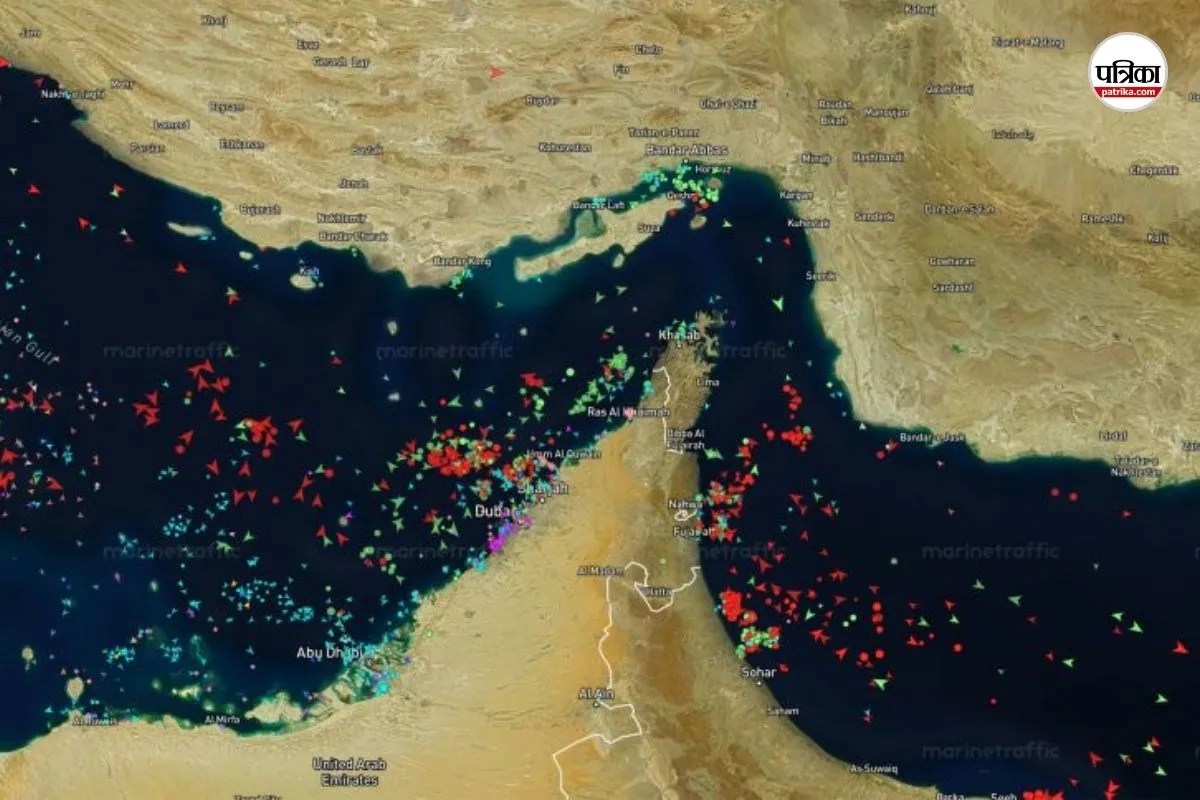
The headlines are screaming again. Iran threatens to shut down the Strait of Hormuz. Oil prices tick up. Analysts reach for their maps and point at that tiny, jagged neck of water like it is a noose around the neck of the global economy. The narrative is always the same: Iran has the "kill switch" for world trade, and if they flip it, we all go dark.
It is a fairy tale. You might also find this similar story insightful: The Faith of Luanda and the Limits of Power.
The "Hormuz threat" is the most overused, misunderstood, and logically bankrupt trope in modern geopolitics. Most reporting on this topic is lazy. It treats a complex naval theater like a schoolyard game of "stop and go." Having spent years tracking maritime logistics and the cold math of naval blockades, I can tell you that a permanent closure of the Strait is not just unlikely—it is physically and economically impossible for Iran to sustain.
The Geography Delusion
Mainstream media loves to tell you the Strait is "only 21 miles wide." They want you to visualize a narrow driveway that can be blocked by a few sunken ships or a handful of mines. This is a fundamental misunderstanding of maritime depth and channel dynamics. As discussed in recent coverage by The New York Times, the implications are notable.
The actual shipping lanes—the deep-water paths that tankers must use—are two miles wide in each direction, separated by a two-mile buffer zone. This isn't a hallway; it’s a massive aquatic highway.
To "close" this, Iran would need to maintain a constant, lethal presence across a massive surface area while being pounded by the combined air power of the U.S. Fifth Fleet, the Royal Navy, and local GCC forces.
- Mines are a nuisance, not a wall. While Iran has thousands of mines, modern mine-hunting technology—ranging from autonomous underwater vehicles (AUVs) to specialized helicopters—can clear paths faster than the sensationalists suggest.
- The "Sunken Ship" Myth. You cannot "block" the Strait by sinking a tanker. The water is deep enough that a sunken ship would simply become a new piece of reef for a tanker to sail right over or around.
The Economic Suicide Pact
The biggest hole in the "Hormuz is a weapon" argument is the identity of the victim. If Iran closes the Strait, who suffers first?
Iran.
Iran is a country under heavy sanctions, yet it still relies on maritime trade for its very survival. Roughly 90% of their own imports and their remaining "shadow" oil exports to China flow through that exact waterway. Closing the Strait is the equivalent of a man threatening to burn down his own house because he doesn't like his neighbor’s lawn ornaments.
China, Iran’s only major patron and the buyer of nearly all its "illicit" crude, would be the first to demand the Strait stay open. Beijing does not tolerate disruptions to its energy security. If Tehran truly shuttered the lanes, they wouldn't just be fighting the Americans; they would be alienating the only superpower keeping their economy on life support.
The Tanker War History Lesson
People love to cite the "Tanker War" of the 1980s as proof that Iran can disrupt the flow. They forget the actual data from that conflict. During the height of the Iran-Iraq war, over 500 ships were attacked.
Do you know how much oil flow was actually stopped?
Less than 2%.
Global shipping is remarkably resilient. Insurance premiums go up, routes shift, and "Operation Earnest Will" proved that the world will simply escort the tankers with destroyers. Iran knows this. They remember the 1988 "Operation Praying Mantis," where the U.S. Navy destroyed half of Iran’s operational fleet in a single day of "proportional" response. Tehran isn't looking for a repeat of that slaughter.
The Technology Gap: Asymmetric Warfare vs. Reality
We hear a lot about Iran’s "swarm boats" and anti-ship missiles. In a vacuum, a swarm of 50 fast-attack craft sounds terrifying. In reality, modern Phalanx CIWS (Close-In Weapon Systems) and electronic warfare suites turn these "swarms" into target practice.
Let’s look at the math of a missile strike. To successfully disable a modern double-hulled Very Large Crude Carrier (VLCC), you need more than a lucky hit from a shore-based battery. These ships are massive, cellularized steel islands. They are designed to survive collisions and explosions. A few holes in the hull do not a blockade make.
What They Are Actually Doing
The threats aren't about a blockade. They are about leverage and theater.
By threatening the Strait, Iran achieves three things that have nothing to do with actually stopping ships:
- Risk Premium. They force a $5 to $10 "fear tax" onto the price of every barrel of oil, which helps their bottom line.
- Domestic Posturing. It plays well to a hardline domestic audience to look like they are holding the world hostage.
- Negotiation Chips. They use the possibility of disruption to force Western powers back to the table on sanctions relief.
If they actually closed the Strait, they lose the leverage. A threat is only useful as long as it remains a threat. Once you pull the trigger, the game changes from diplomacy to total war—a war Iran cannot win and does not want.
The Real Vulnerability Nobody Talks About
If you want to worry about something, stop looking at the water. Look at the pumping stations and refineries.
The true "choke point" isn't the Strait; it’s the physical infrastructure on the coast. It is much easier to disable a loading terminal or a desalination plant with a drone than it is to hold a maritime passage against the world's most powerful navies. But that doesn't make for as good a headline as "World Oil Flow Cut Off."
The Strait of Hormuz is a geopolitical ghost story. It’s told to keep oil traders jumpy and taxpayers supportive of massive naval budgets.
The next time a "security expert" on cable news starts sweating over a map of the Persian Gulf, remember that ships have been sailing through those threats for forty years without stopping. The Strait isn't a door Iran can lock. It's a revolving door they are trapped in just as much as we are.
Stop falling for the theater. The blockade is a bluff, and it’s one that Iran can’t afford to call.