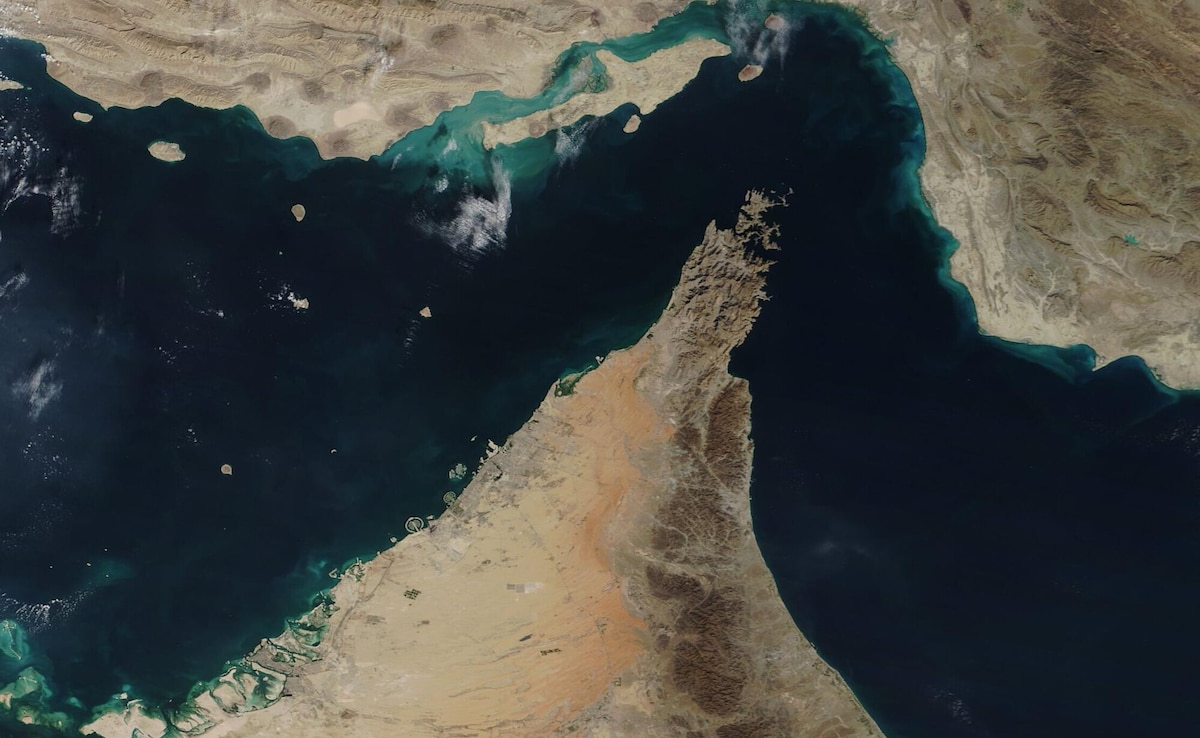
The world's most dangerous parking lot isn't a city street. It's a narrow strip of water between Oman and Iran. If you want to understand why your gas prices just spiked or why a regional conflict suddenly feels like a world war, you have to look at the Strait of Hormuz. This tiny choke point handles about 21 million barrels of oil every single day. That's roughly 20% of the world's liquid petroleum consumption.
We like to think the global economy is a solid, well-oiled machine. It isn't. It’s a fragile web held together by a few miles of seawater. When someone threatens to close that gate, they aren't just making a military move. They’re grabbing the world by the throat. This isn't about traditional warfare anymore. It’s about who has the most grip on the global supply chain.
Why the Strait of Hormuz is the Ultimate Pressure Point
Geopolitics used to be about occupying territory. Now, it's about holding the "off" switch to everyone else's prosperity. The Strait of Hormuz is that switch. At its narrowest point, the shipping lanes are only two miles wide in each direction. You can't just go around it easily.
If the Strait closes, the impact is instant. Shipping insurance rates skyrocket before a single shot is even fired. Oil tankers start idling in the Gulf, and refineries in Asia—which take the bulk of this crude—begin to panic. Countries like China, India, Japan, and South Korea rely on this specific route for the vast majority of their energy needs. When you control the Strait, you don't just control oil. You control the industrial heartbeat of the largest economies on earth.
Iran knows this. They’ve spent decades perfecting the art of "asymmetric pressure." They don't need a massive blue-water navy to fight the U.S. Fifth Fleet. They just need fast boats, sea mines, and shore-based missiles. It’s cheap. It’s effective. And it makes everyone else very, very nervous.
The Myth of Energy Independence
You'll often hear politicians brag about how the U.S. is now a net exporter of oil. They claim we don't need the Middle East anymore. That’s a dangerous oversimplification.
Oil is a global commodity. If the price goes up in Dubai, it goes up in Dallas. It doesn't matter if the oil in your car was pumped in West Texas. If 20% of the world's supply vanishes because a tanker got hit in the Gulf of Oman, every barrel on the planet becomes more expensive. We are tethered to the Strait of Hormuz whether we like it or not.
The New Rules of Diplomatic Weight
In the past, diplomacy was backed by the threat of invasion. Today, it’s backed by the threat of disruption. We see this everywhere. Russia uses natural gas to keep Europe in check. China uses rare earth minerals to keep the tech industry quiet. But the Strait of Hormuz remains the granddaddy of all pressure points.
Think about the "tanker wars" of the 1980s. Both Iraq and Iran attacked each other's exports to drain their rival's bank accounts. Fast forward to today, and the tactics have evolved. Now, it’s about seizing a vessel under a legal pretext or using "ghost" drones. These actions are designed to stay just below the threshold of starting a full-scale war while still sending a clear message: We can stop your money whenever we want.
How Markets React to the Choke Point
Wall Street traders don't look at the Strait of Hormuz and see a waterway. They see a volatility index. The moment a headline hits about an "incident" in the Gulf, the algorithms start buying oil futures.
- Insurance Premiums: Lloyd’s of London often classifies the area as a high-risk zone. This adds millions to the cost of a single voyage.
- Freight Rates: When risks go up, fewer captains want to make the trip. Supply drops, and shipping costs explode.
- Buffer Stocks: Countries are forced to keep massive strategic reserves just in case the "big one" happens.
This isn't just theory. We saw it in 2019 when several tankers were sabotaged. We see it every time tensions between Washington and Tehran hit a boiling point. The Strait is a barometer for the world’s anxiety.
The Infrastructure Trap
Could we build our way out of this? Not really. There are pipelines that bypass the Strait, like the Habshan–Fujairah line in the UAE or the Petroline in Saudi Arabia. But these lines can’t handle the full volume. They are like a small side street trying to absorb the traffic of a ten-lane highway.
Building enough pipeline capacity to truly replace the Strait would cost hundreds of billions. It would take decades. And those pipelines are just as vulnerable to sabotage as a ship is to a mine. We have built a world that depends on a single point of failure. It was a choice made for efficiency and profit, but it has created a massive security debt that we’re all paying interest on.
The Role of Technology in Modern Blockades
We aren't just talking about physical barriers anymore. The modern version of "closing" the Strait involves cyber attacks on port infrastructure and GPS jamming. Imagine a fleet of tankers that can't navigate or a terminal that can't process cargo because its software is held hostage.
Electronic warfare makes the Strait even more treacherous. If you can spoof a ship’s location so it wanders into territorial waters where it shouldn't be, you’ve created a legal incident without firing a bullet. This is the new frontier of influence. It’s quiet, it’s deniable, and it’s incredibly hard to stop.
What Happens if the Gate Actually Slams Shut
If the Strait of Hormuz were truly blocked for an extended period, the "Great Recession" would look like a minor dip. We are talking about a global energy shock that would likely trigger a worldwide depression.
Manufacturing would stall. Food prices would soar because modern agriculture is essentially a way of turning petroleum into calories. The political fallout would be even worse. Governments in developing nations would collapse under the weight of hyperinflation. This is why the U.S. and its allies keep such a massive military presence in the region. It’s not just about "defending freedom." It’s about keeping the blood of the global economy flowing.
Small Actors with Big Sticks
The most fascinating part of this dynamic is how it empowers smaller players. A nation doesn't need to be a superpower to cause global chaos. If you sit on the edge of a choke point, you have a seat at the table. You can demand concessions, trade deals, or military aid just by hinting that you might get "uncooperative" with shipping security.
This creates a perverse incentive. Instead of promoting stability, some actors find that keeping the world on edge is actually more profitable. Tension is their currency.
Living With the Choke Point
Don't expect this to change anytime soon. Even as the world moves toward green energy, we will be dependent on fossil fuels for decades. And even then, the Strait will still be a vital route for the chemicals and materials needed to build those green technologies.
The lesson of the Strait of Hormuz is that we live in a world of deep, uncomfortable connections. You can't opt out. You can't hide behind borders. Your local economy is tied to a two-mile-wide stretch of water half a world away.
Immediate Realities to Watch
Keep an eye on these indicators to know when the pressure is actually building:
- Bunker fuel prices in Fujairah: This is the heartbeat of regional shipping. If these spike, the pros are worried.
- The "War Risk" surcharges: Watch the announcements from major shipping lines like Maersk. They usually know what's happening before the news crews do.
- Drone activity reports: The frequency of "unidentified" aerial or sub-surface drones in the Gulf is a leading indicator of upcoming friction.
The Strait isn't just a geographical feature. It’s a permanent reminder that in the modern world, geography is destiny, and whoever controls the narrowest path wins.