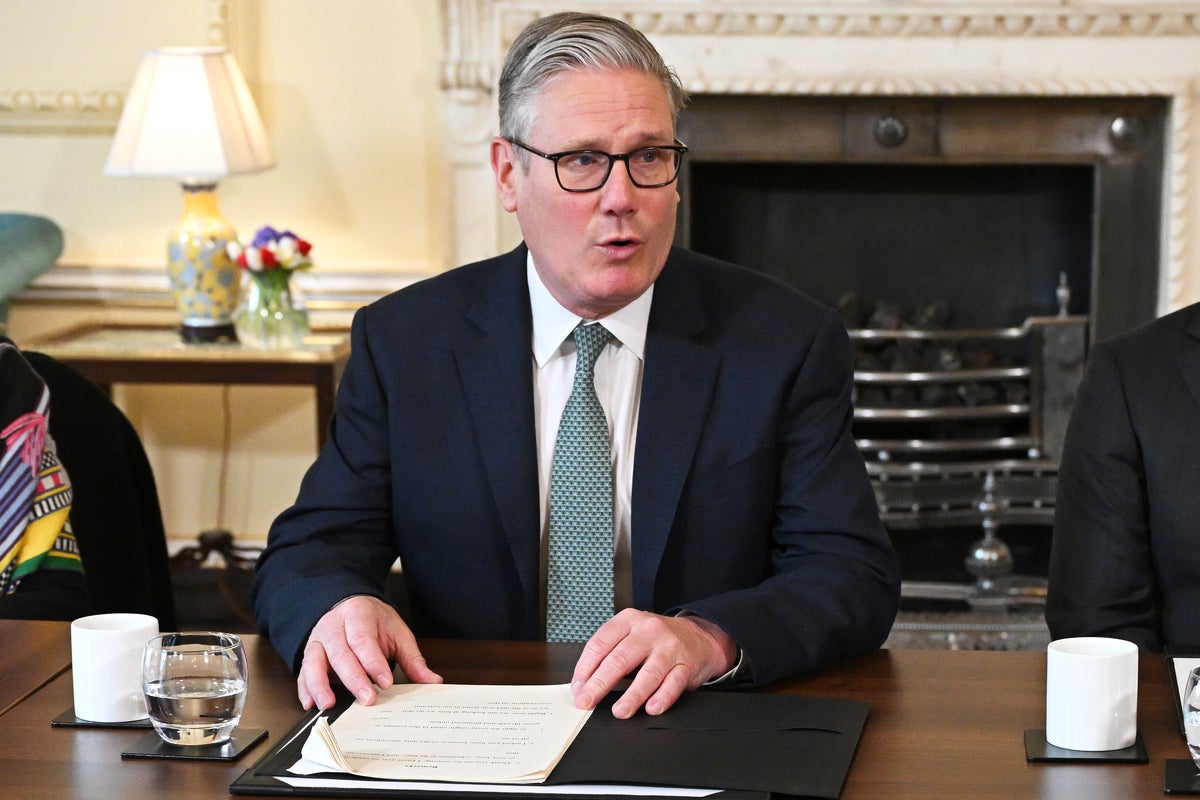
The global economy is currently staring down the barrel of a literal smoking gun. Following a series of escalations that saw the Trump administration green-light a naval blockade of the Strait of Hormuz, British Prime Minister Keir Starmer has signaled that the United Kingdom views the reopening of this waterway as a mandatory global responsibility. This isn't just a spat over shipping lanes. It is a fundamental breakdown of the maritime security order that has underpinned global trade since the end of the Second World War. If the world’s most vital energy artery remains constricted, the resulting price shocks will make the inflation of the early 2020s look like a rounding error.
The Crude Reality of the Blockade
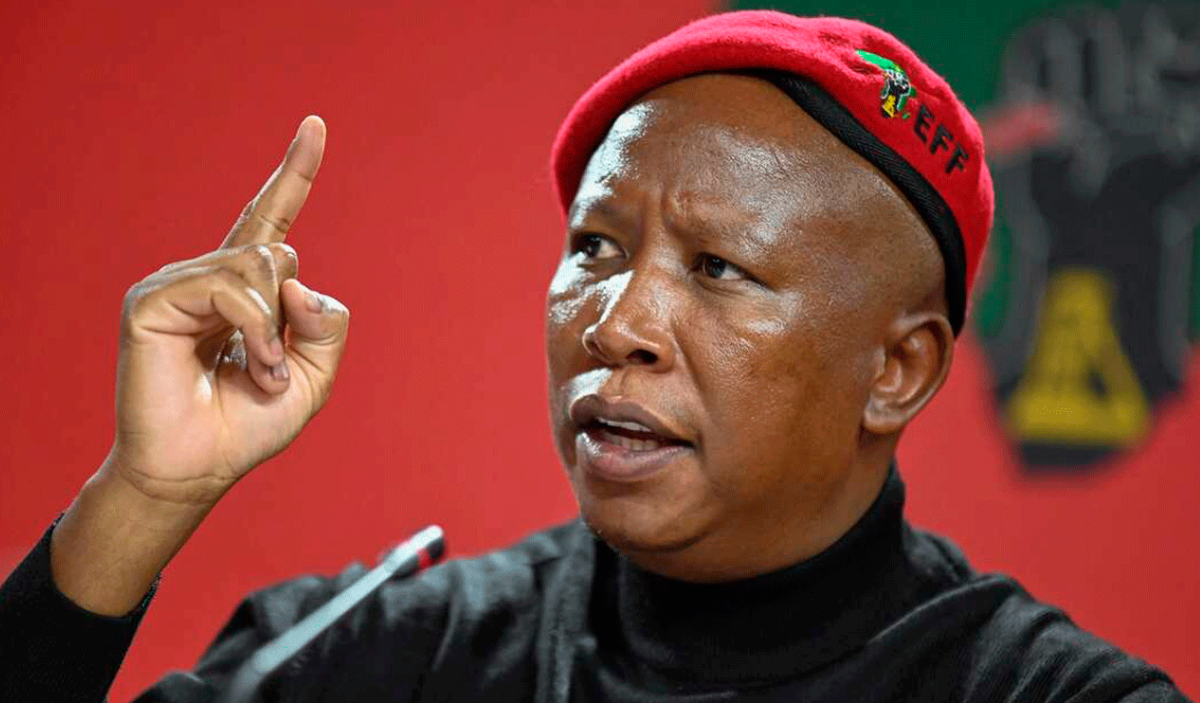
The Strait of Hormuz is a narrow chokepoint between Oman and Iran. It connects the Persian Gulf with the Gulf of Oman and the Arabian Sea. While it measures only 21 miles wide at its narrowest point, the actual shipping lanes are much tighter—two miles wide in each direction, separated by a two-mile buffer zone. This tiny strip of water carries roughly 20% of the world’s total petroleum liquids consumption. When you choke this vein, the heart of global industry begins to fail. Recently making waves recently: The Malema Sentencing Proves Firearms Laws Are Just Political Theater.
The Trump administration’s decision to support or initiate a blockade stems from a "maximum pressure" strategy aimed at neutralizing regional adversaries. However, the move has ignored the collateral damage to allies. Starmer’s intervention reflects a desperate European reality: without Middle Eastern crude and LNG, the continent's industrial base cannot survive. The UK is positioning itself as the voice of "strategic sanity," attempting to bridge the gap between Washington’s aggressive isolationism and the rest of the world’s need for functional supply chains.
Why the Market is Panicking
Traders don't care about rhetoric. They care about insurance premiums and physical delivery. The moment the blockade was signaled, war-risk insurance for tankers skyrocketed. Some underwriters have simply stopped covering vessels entering the Gulf. Additional details on this are detailed by The Washington Post.
- Supply Disruption: Approximately 21 million barrels of oil flow through the Strait every day. There are no viable land-based alternatives. Pipelines through Saudi Arabia and the UAE exist, but they can only handle a fraction of the total volume.
- LNG Dependency: Qatar, the world’s largest liquefied natural gas exporter, relies almost entirely on the Strait. For a Europe already stripped of Russian gas, the closure of Hormuz is an existential threat to heating and power generation.
- The Price Floor: Analysts suggest that a prolonged closure would send Brent crude well north of $150 per barrel.
The Starmer Doctrine versus the Trump Blockade
Starmer’s insistence that reopening the Strait is a "global responsibility" is a calculated piece of diplomacy. He is effectively telling Washington that the U.S. no longer has the right to unilateral action when that action threatens the sovereign economic stability of its closest partners. This creates a friction point within NATO that we haven't seen in decades.
The U.S. perspective is rooted in a different logic. The current administration views the Strait not just as a trade route, but as a lever of geopolitical power. By controlling the flow of oil, Washington believes it can dictate terms to both its enemies and its "vassal" states. It is a high-stakes gamble that assumes the global economy can absorb the shock. It cannot.
The Military Logistics of a Reopening
If Starmer intends to lead a "global" effort to reopen the Strait, what does that actually look like? It isn't just a matter of signing a treaty. It requires a massive naval presence to escort tankers through contested waters.
- Minesweeping Operations: The primary threat in the Strait is the deployment of "smart" sea mines. Clearing these is slow, dangerous work that requires specialized vessels.
- Point Defense: Tankers are slow, massive targets. A naval coalition would need to provide continuous air cover and anti-missile defense for every convoy.
- The Cost of Escorts: The operational cost of such a mission would run into the billions of dollars per month, likely requiring a "user fee" or tax on the very oil being protected.
The Overlooked Factor of Iranian Response
We often discuss the Strait as if it is a neutral pipe. It is not. Iran’s military doctrine has been built for forty years around the specific capability to close this waterway. They utilize "swarm" tactics—hundreds of small, fast-attack boats armed with cruise missiles and torpedoes. A conventional Western navy, built for deep-water engagements, struggles against this type of asymmetric warfare in a confined space.
Starmer’s call for a "global responsibility" implies that China and India should also step up. This is a crucial pivot. China is the largest consumer of Persian Gulf oil. If the UK can pull Beijing into a security arrangement to keep the Strait open, it would fundamentally shift the global power balance, moving it away from a U.S.-centric security model toward a multi-polar "protectorate of trade."
The Economic Aftershocks
If the blockade persists, the "Starmer Plan" will face its first real test when the lights go out in Manchester or the factories close in Munich. We are looking at a potential de-industrialization of Europe. When energy prices spike, energy-intensive industries—chemicals, steel, glass, and fertilizer—become uncompetitive overnight. This leads to job losses, which lead to social unrest, which leads to political instability.
The Trump administration appears to believe that U.S. energy independence (via fracking and domestic reserves) shields the American consumer from this chaos. This is a fallacy. Oil is a globally traded commodity. If the price of Brent crude hits $170, the price of West Texas Intermediate (WTI) will follow it up. The American driver will pay for the blockade at the pump, regardless of where the oil was pumped.
The Strategy of the New Coalitions
We are seeing the emergence of a "Coalition of the Dependent." These are nations like the UK, Japan, South Korea, and various EU members who lack domestic energy and are terrified of a world where trade routes are used as weapons of war. Starmer is the unofficial chairman of this group.
His challenge is that he lacks the hardware. The Royal Navy, while technologically advanced, is a shadow of its former self in terms of hull count. To truly enforce a "global responsibility" to keep the Strait open, Starmer needs the U.S. Navy to play ball, or he needs to forge an unlikely alliance with eastern powers. Both paths are fraught with the risk of total diplomatic failure.
The Technology of the Chokepoint
Modern warfare has changed the math of the Strait. In the 1980s "Tanker War," it took a lot to sink a double-hulled vessel. Today, precision-guided munitions and autonomous underwater vehicles (AUVs) mean that a single hit can be catastrophic.
$$P_{risk} = 1 - (1 - p)^n$$
In this simplified probability model, the risk of a successful strike ($P_{risk}$) increases exponentially with the number of low-cost drones or missiles ($n$) deployed, even if the probability of a single strike succeeding ($p$) is low. This is the math that keeps naval commanders awake at night. You can intercept 99 drones, but the 100th drone costs $20,000 and can disable a $200 million cargo.
The Illusion of Alternatives
There is frequent talk about the East-West Pipeline (Petroline) in Saudi Arabia or the Abu Dhabi Crude Oil Pipeline. Let’s be clear: these are stop-gaps. The Petroline can move about 5 million barrels per day. The UAE’s line can move 1.5 million. Combined, they don't even cover a third of what moves through the water. Furthermore, these pipelines are themselves vulnerable to sabotage and long-range drone strikes. There is no "Plan B" for the Strait of Hormuz.
The Diplomatic Trap
Starmer is walking a tightrope. If he pushes too hard against the Trump blockade, he risks a total breakdown in the "Special Relationship," which would have dire consequences for UK intelligence and defense. If he does nothing, he presides over an economic collapse at home.
The UK's strategy seems to be based on shaming the U.S. into a "freedom of navigation" stance. Historically, the U.S. has been the fiercest defender of open seas. By framing the blockade as a violation of this core American principle, Starmer is trying to use Washington’s own ideology against its current tactical decisions.
The Price of Failure
If the international community cannot find a way to de-escalate and reopen the waterway, we are looking at the end of the era of globalization. Trade relies on the assumption that the "highway" is free and safe. Once you introduce the idea that any nation can park a tank in the middle of that highway to settle a political score, the cost of doing business becomes prohibitive.
The "global responsibility" Starmer speaks of isn't just about oil; it’s about the survival of the rules-based order. If the Strait stays closed, the rules don't exist anymore. We return to a world of regional spheres of influence, where might makes right and the smallest spark in a narrow channel can burn down the entire global house.
The move now lies with the maritime powers. They must decide if they are willing to risk a hot war to prevent an economic cold death. There is no middle ground, no compromise that leaves the Strait half-closed. You either have a global market or you have a series of fortified islands.
Stop looking at the charts and start looking at the maps. The line between prosperity and a decade-long depression is currently drawn in the turquoise waters of the Middle East, and it is thinner than anyone cares to admit.