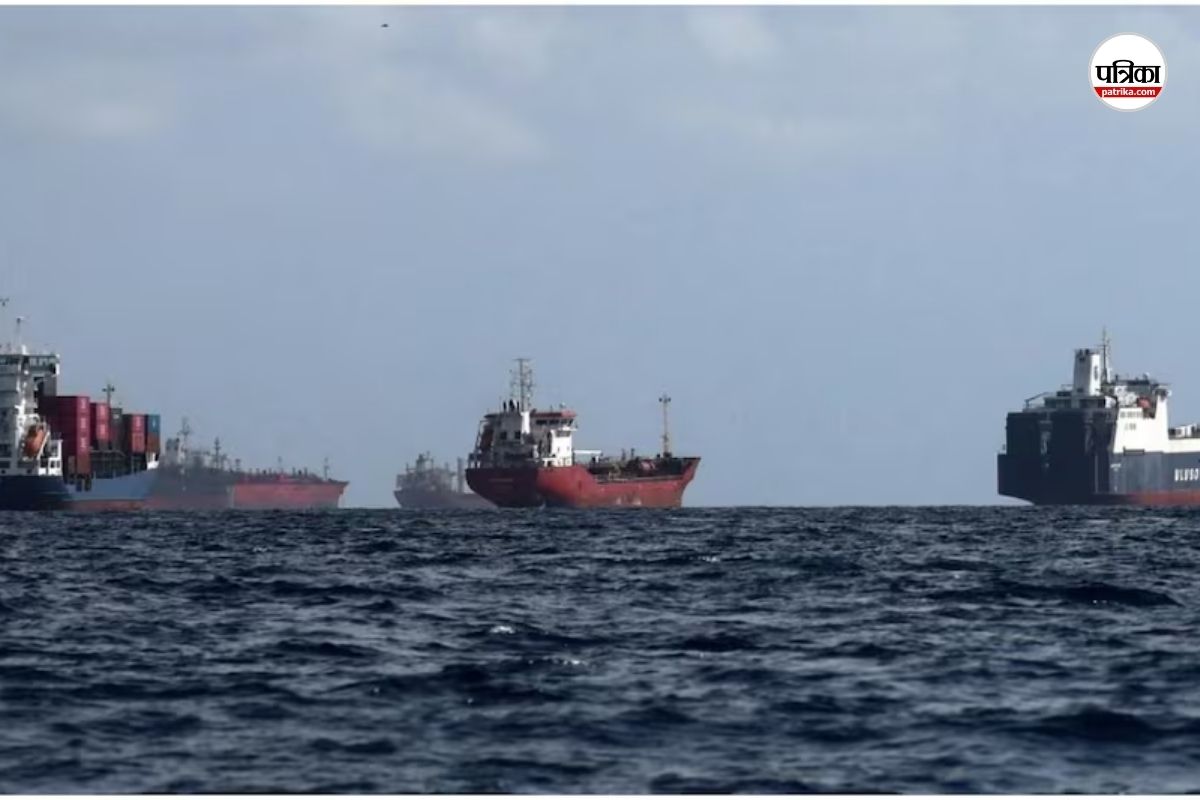
The Strait of Hormuz functions as the singular carotid artery of the global energy economy, facilitating the transit of approximately 20% of the world’s total petroleum consumption. India’s recent diplomatic hardening at the United Nations regarding attacks on commercial shipping in this corridor is not merely a statement of principle; it is a calculated response to a specific threat vector that endangers the domestic fiscal deficit and national energy security. When commercial vessels are targeted, the global supply chain experiences a non-linear increase in costs, driven by insurance premiums, rerouting delays, and the psychological "war risk" surcharge.
The Triad of Maritime Vulnerability
The current instability in the Strait of Hormuz and the wider Gulf region can be categorized into three distinct operational risks that India must mitigate to maintain its economic trajectory.
- Kinetic Interference: Direct physical strikes via Unmanned Aerial Vehicles (UAVs), anti-ship missiles, or limpet mines. These actions create immediate physical loss and environmental hazards.
- Navigation Denial: The threat of seizure or forced diversion of tankers. This disrupts the JIT (Just-In-Time) inventory models that Indian refineries rely on for operational efficiency.
- Insurance Inflation: The escalation of Protection and Indemnity (P&I) club rates. Even if a ship is not hit, the statistical probability of a strike forces a revaluation of premiums, which are ultimately passed to the Indian consumer via the pump.
India’s insistence on "zero tolerance" for these attacks stems from its position as the world’s third-largest oil importer. Any sustained disruption in the Strait creates a liquidity shock in the Indian economy.
The Cost Function of Maritime Insecurity
The economic impact of instability in the Strait is defined by a cascading cost function. To understand why India is taking a rigid stance, one must examine the variables that dictate the final price of crude at the Jamnagar or Vadinar terminals.
- Freight Rate Volatility: In periods of heightened tension, the availability of VLCCs (Very Large Crude Carriers) decreases as shipowners move assets to safer, lower-yield routes. This supply contraction spikes spot freight rates.
- The War Risk Premium: Underwriters define "Listed Areas" where additional premiums apply. Entering the Persian Gulf during a period of active drone or missile strikes can see these premiums jump from 0.01% to over 0.5% of the hull value in a matter of days.
- Strategic Petroleum Reserve (SPR) Drawdown: When sea lanes are threatened, the government must weigh the cost of depleting the SPR against the high cost of purchasing "risk-heavy" oil on the open market.
India’s diplomatic intervention at the UN serves as a "soft power" protective layer. By framing maritime security as a non-negotiable global public good, India seeks to internationalize the cost of protection, rather than bearing the security burden alone through expensive naval escorts like Operation Sankalp.
Structural Bottlenecks in Energy Transit
The Strait of Hormuz is a geographic chokepoint where the navigable channel is only two miles wide in each direction. This creates a high-density "kill zone" where traditional naval maneuvers are restricted. For India, the reliance on this specific geometry represents a single point of failure.
The mechanism of disruption here is not just military; it is psychological. A single successful hit on a commercial tanker creates a "choke effect" where other vessels pause transit, waiting for security guarantees. This pause leads to a backlog that can take weeks to clear, effectively creating a temporary embargo on exports from the Gulf.
India's strategy at the UN emphasizes that "freedom of navigation" is not a Western construct but a foundational requirement for South Asian industrialization. Without the predictable flow of hydrocarbons through Hormuz, the manufacturing goals of the "Make in India" initiative become physically impossible to fuel.
The Geopolitical Feedback Loop
The security of the Strait is inextricably linked to the broader tensions in West Asia. However, India’s positioning deliberately separates "political grievances" from "maritime safety." This distinction is critical. By treating the targeting of commercial ships as a violation of international law (UNCLOS) rather than a byproduct of regional conflict, India provides a framework for neutral intervention.
This approach addresses the "free rider" problem in maritime security. Often, nations benefit from the protection provided by major naval powers without contributing to the security architecture. India’s call for a collective international response is an attempt to formalize a shared responsibility model.
Naval Diplomacy as Economic Defense
The Indian Navy’s presence in the region is an extension of this diplomatic posture. While the UN speech provides the legal and moral high ground, the physical presence of stealth frigates and destroyers provides the deterrent.
- Operation Sankalp: This ongoing mission serves as a live-case study in de-risking. Indian-flagged vessels are provided with an "over-the-horizon" security umbrella, which directly lowers the risk assessment for Indian insurers.
- Intelligence Sharing: By coordinating with the Combined Maritime Forces (CMF) and other regional actors, India fills the information gap that attackers rely on.
The limitation of this strategy is the sheer volume of traffic. No navy can escort every vessel. Therefore, the goal of India’s UN message is to establish a normative barrier. If the international community agrees that commercial shipping is "off-limits," the political cost to the aggressor increases, even if the military cost remains low.
Quantifying the Strategic Shift
India’s traditional stance was one of non-interference. The shift to a "firm and loud" voice at the UN signifies a transition from a passive consumer of security to an active stakeholder. This change is driven by the realization that the "energy transition" to renewables is still decades away from removing the existential threat of a Hormuz closure.
The primary mechanism of India’s influence in this theater is its status as a massive market. For any regional power in the Gulf, India is a primary customer. By stating that attacks are "unacceptable" at the UN, India is subtly signaling to regional actors that their largest customers will not tolerate a destabilized marketplace.
Implementation of a Hard-Line Maritime Policy
For this diplomatic stance to hold weight, it must be backed by a three-tiered operational strategy.
- Legal Framework Strengthening: Pushing for stricter international sanctions against non-state actors and their sponsors who interfere with commercial transit.
- Technological Hardening: Encouraging the adoption of automated identification systems (AIS) that are resistant to "spoofing" and investing in ship-borne electronic warfare suites for commercial fleets.
- Diversification of Transit: Accelerating the development of the International North-South Transport Corridor (INSTC) and other routes that bypass the primary chokepoints of the Persian Gulf.
The objective is to create a "resilient supply chain" where the interruption of one node (Hormuz) does not lead to a systemic collapse of the Indian energy grid.
The strategic play here is to leverage India's growing naval capability and its status as a leading voice of the Global South to enforce a "Code of Conduct" in the Strait. This involves moving beyond reactive naval escorts toward a proactive, intelligence-led maritime governance model. India must now pivot toward bilateral security agreements with Gulf littoral states that specifically decouple commercial shipping from regional proxy wars. The endgame is the commoditization of maritime security—making it a standard, invisible utility rather than a volatile variable that fluctuates with every geopolitical tremor.