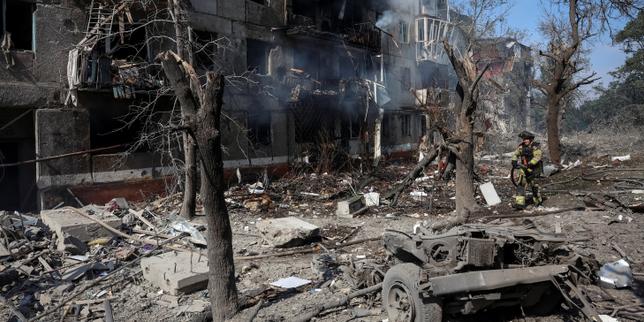
Modern statecraft frequently relies on the institutionalization of narrative divergence, where political utility supersedes operational truth. When heads of state articulate absolute momentum while frontline commanders absorb compounding tactical friction, a distinct structural pathology emerges. This divergence is visible in the theater of Donetsk, where the public projection of uninterrupted Russian strategic ascendancy starkly contrasts with the grueling, attritional reality of localized setbacks, logistical bottlenecks, and diminishing returns on mechanized assaults. To understand why official political declarations diverge so sharply from field reports requires examining the mechanics of centralized political signaling, the mathematics of attritional warfare, and the systemic constraints governing modern offensive operations in heavily fortified sectors.
The Political Imperative of Permanent Momentum
In highly centralized political systems, strategic communication serves a dual function: domestic narrative control and international signal deterrence. Vladimir Putin’s declarations of continuous tactical advancement are not merely descriptive statements of military progress; they are structural necessities designed to project inevitability. In protracted conflicts, political survival depends heavily on maintaining the perception of forward motion. Halting or acknowledging localized stagnation introduces cognitive dissonance among domestic audiences and signals vulnerability to external adversaries.
This creates an acute operational hazard known as feedback loop corruption. When political leaders demand perpetual victories, subordinate commanders face immense structural pressure to fabricate success, obscure losses, or accelerate operations before conditions are ripe. The operational consequence is predictable: premature deployments, inadequate reconnaissance, and an over-reliance on brute force over synchronization. The recent tactical reversals in the Donetsk sector—characterized by failed armored spearheads, high casualty rates relative to territorial gain, and effective defensive counter-positioning—demonstrate the limits of narrative-driven military planning. When strategy is subordinated to political optics, operational reality invariably reasserts itself through costly attrition.
The Cost Function of Attritional Warfare in Donetsk
The geography of the Donetsk oblast presents a punishing environment for offensive maneuver. Decades of industrial infrastructure, dense urban settlements, and engineered defensive lines transform every kilometer into a complex barrier. Evaluating the efficiency of an offensive operation requires analyzing the ratio of resource expenditure to territorial or strategic gain—a metric where Russian forces in Donetsk face severe degradation.
Attritional warfare operates on a strict economic ledger. Each mechanized assault expends scarce commodities: trained infantry, armored vehicles, artillery ammunition, and fuel reserves. While absolute numbers of personnel and equipment can be replenished through mobilization and industrial mobilization, the quality and experience of forces degrade non-linearly. Veteran units capable of complex combined-arms coordination are replaced by hastily trained conscripts, leading to declining operational efficacy per unit of force.
In Donetsk, the tactical objective has frequently devolved into high-cost frontal pressure against deeply entrenched positions. Lacking the element of operational surprise or overwhelming electronic warfare superiority, these assaults degenerate into artillery duels and infantry attrition. The calculus is straightforward: if the defending force maintains prepared firing positions and effective reconnaissance-strike complexes, the attacker's casualty rate will outpace their ability to translate tactical breakthroughs into operational depth. The recent reversals documented in the region highlight this exact mathematical limit. A breakthrough achieved at an unsustainable cost in armor and personnel ceases to be a victory; it becomes a self-inflicted depletion of strategic reserves.
Logistics and the Mechanics of Supply Chain Strain
Military history demonstrates that tactical defeats are almost always logistical failures masked as tactical ones. The operational tempo required to sustain continuous offensives across multiple axes in Donetsk places an extraordinary burden on supply chains. Modern high-intensity conflict consumes vast quantities of ammunition, spare parts, and fuel at rates that test even robust industrial bases.
The logistical architecture supporting operations in Donetsk suffers from distinct structural vulnerabilities:
- Railhead Dependency: Heavy artillery and armored formations rely heavily on rail networks for bulk transport. When these hubs are targeted or operating under constant interdiction threats, the final mile delivery shifts to vulnerable road transport.
- Maintenance Backlogs: Continuous combat accelerates mechanical wear on tracked and wheeled vehicles. Without secure, proximate repair depots and spare parts availability, the operational readiness rate of mechanized brigades drops precipitously.
- Expenditure-Replenishment Imbalance: Daily artillery consumption rates frequently exceed the domestic manufacturing output combined with foreign sourcing, forcing commanders to ration ammunition or accept diminished preparatory bombardment phases.
When logistics fail to keep pace with operational demands, frontline units lose their offensive momentum. They become vulnerable to counter-attacks because they lack the sustained fire support and mobility required to consolidate gains. The tactical setbacks observed in Donetsk reflect this friction point, where ambitions outrun logistical sustainment capacity.
Command Structures and the Absence of Decentralized Initiative
A primary differentiator between resilient military organizations and brittle ones is the locus of tactical decision-making. Rigid vertical command hierarchies, characterized by centralized control and a risk-averse officer corps, struggle immensely in dynamic combat environments.
Within the operational structure governing Russian forces in Donetsk, initiative is frequently stifled by top-down directives that prioritize political milestones over tactical pragmatism. When a plan encounters unexpected resistance—such as dense minefields, synchronized drone surveillance, or well-rehearsed artillery interdiction—subordinate commanders often lack the authority or the cultural latitude to pause, regroup, or adopt alternative maneuvers without explicit authorization from senior headquarters.
This rigidity generates operational delays. By the time permission filters down the chain of command to retreat from an untenable position or shift axes, the tactical window has closed, resulting in avoidable losses. Conversely, opposing forces operating with decentralized mission command can adapt rapidly to local vulnerabilities, exploiting overextended spearheads and executing targeted counter-thrusts that precipitate local collapses.
The Divergence Between Strategic Intent and Tactical Reality
The friction between political rhetoric and battlefield outcomes reveals a fundamental systemic vulnerability. When leadership bases its decision-making on sanitized reporting and ideological imperatives rather than objective operational assessments, strategic adjustments are delayed until crises become acute.
In the Donetsk theater, this manifests as a persistent cycle: political pressure demands visible territorial acquisition; subordinate commanders launch costly, uncoordinated assaults; high casualty rates and logistical strain lead to tactical stalemate or localized retreat; and the cycle restarts under renewed political demands for justification. Each iteration burns through irreplaceable capital—human, material, and strategic.
Recognizing this dynamic clarifies why localized reversals carry disproportionate weight. They are not merely isolated tactical anomalies; they are symptoms of a structural disconnect between how leadership perceives the conflict and how the laws of military science dictate its execution.
Strategic Outlook
The trajectory of operations in Donetsk will be determined by how quickly both sides adapt to the iron laws of logistics, attrition, and technological transparency. As long as political signaling dictates operational tempo, military units will continue to absorb the human and material costs of narrative maintenance.
Strategic endurance in a protracted war does not stem from proclamations of inevitable victory, but from brutal institutional honesty. Forces that systematically measure, analyze, and correct their operational deficiencies will outlast those that substitute political optimism for tactical capability. The recent setbacks in Donetsk serve as an empirical reminder that the battlefield remains an unsparing auditor of institutional reality, entirely indifferent to political rhetoric.