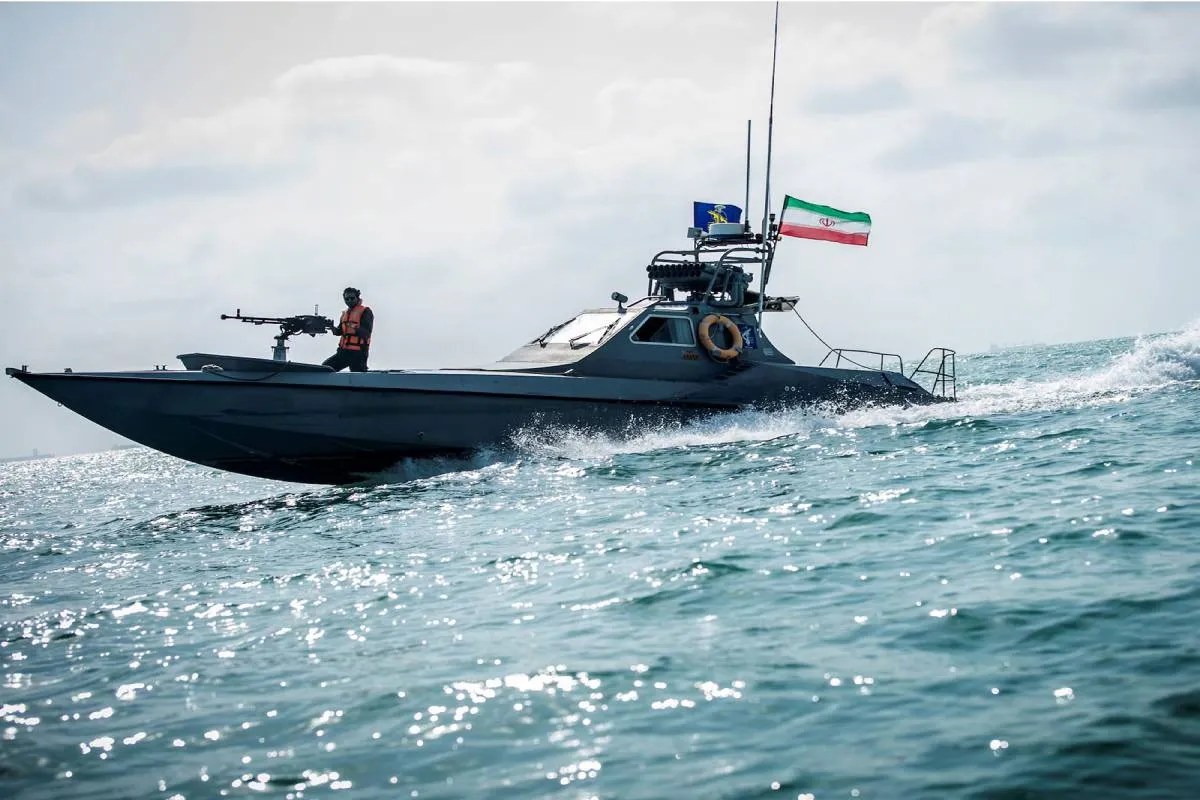
The Strait of Hormuz remains the world's most sensitive maritime choke point. When reports emerged that 25 major commercial vessels successfully transited this narrow waterway within a single 24-hour window, despite escalating regional tensions and aggressive rhetoric from Tehran, some analysts pointed to it as a failure of Iranian deterrence. That interpretation misses the underlying mechanics of global shipping and asymmetric naval warfare. The uninterrupted flow of traffic is not a sign of Iranian weakness. It is a calculated manifestation of how modern maritime security, state-sponsored gray-zone tactics, and global energy dependencies interact under acute stress.
Iran does not want a permanent blockade. Doing so would trigger an overwhelming international military response and instantly alienate its primary economic lifelines, including China. Instead, the strategy relies on calibrated volatility.
The Anatomy of the 24 Hour Surge
Shipping data reveals that maritime traffic through the strait does not move in a smooth, predictable stream. It clots and surges. When a high-risk window opens, or when naval escorts from international coalitions form up, commercial vessels move en masse.
The passage of 25 ships in a single day is an operational spike, not a permanent breakdown of a blockade. Commercial ship captains look for safety in numbers. By transiting concurrently, these vessels dilute the individual risk profile for each hull. Insurance underwriters at Lloyd's of London closely monitor these movements. Premium spikes for War Risk Cover dictate whether a fleet idles in the Gulf of Oman or makes a run for the Persian Gulf.
A high-volume transit day usually indicates that shipping companies have successfully coordinated their movements with international task forces. It shows that the protective umbrella of Western and regional navies is functioning at a tactical level. Yet, this operational success creates a false sense of normalization.
The Economics of Calibrated Terror
Tehran exerts control through the threat of disruption rather than the execution of a total embargo. A total shutdown of the strait would stop roughly 20% of the world's petroleum liquids. The economic fallout would be immediate.
Instead of a blunt blockade, the Islamic Revolutionary Guard Corps Navy utilizes targeted interdictions. They select specific vessels based on flag registry, corporate ownership, or destination. This creates a psychological tax on every shipping company operating in the region.
Consider the financial math behind a modern crude transit. A standard Very Large Crude Carrier carries roughly two million barrels of oil. If tension in the strait adds a premium to the insurance cost, that expense passes directly to the consumer. Iran leverages this economic pressure point without ever firing a shot. They understand that the mere capability to close the strait is more valuable than the act of closing it.
Shadow Fleets and Secret Deals
A significant portion of the traffic moving through the region operates entirely outside the framework of international sanctions and standard maritime law. The rise of the shadow fleet changed the dynamics of the Persian Gulf.
These aging tankers fly flags of convenience. They turn off their Automatic Identification Systems to mask their locations. This dark fleet carries Iranian and Russian oil to buyers in Asia, primarily bypassing the standard financial mechanisms that Western nations regulate. Consequently, a high volume of traffic inside the strait often includes vessels that Tehran has absolutely no interest in stopping. They are the lifeblood of Iran's own sanctions-evasion network. Stopping them would mean economic suicide for the regime.
The Limits of Naval Escorts
International coalitions provide a vital shield, but their resources are stretched thin. Bureaucratic friction often slows down the deployment of these assets.
Naval vessels must balance anti-piracy missions, drone defense, and traditional surface warfare readiness. A destroyer cannot be everywhere at once. When a convoy forms, it leaves other sectors of the Gulf vulnerable. The 25-ship surge demonstrates that when the United States Navy and its allies focus their radar signatures and deck guns on a specific corridor, traffic moves. But that focus cannot be sustained indefinitely across the entire maritime theater without exhausting crews and depleting maintenance cycles.
The Asymmetric Advantage
The geography of the strait favors the instigator. At its narrowest point, the shipping lanes are only two miles wide in either direction, separated by a two-mile buffer zone. These lanes lie entirely within the territorial waters of Oman and Iran.
[Persian Gulf] -> [Strictly Monitored Shipping Lanes] -> [Strait of Hormuz] -> [Gulf of Oman]
                                     |
                          (Iranian Missile Range)
This narrow corridor places every commercial vessel within range of shore-based anti-ship cruise missiles, fast attack craft, and smart mines. Iran does not need a blue-water navy to control these waters. They use hundreds of small, heavily armed speedboats that can swarm a commercial tanker within minutes.
Western navies train for conventional engagements. Confronting a swarm of thirty small boats requires different tactics, ammunition reserves, and rules of engagement. This creates a tactical hesitation that the Iranian forces exploit regularly.
The Illusion of Safety
When global markets see a high number of successful transits, oil prices stabilize. Politicians claim victory over instability. This reaction shows a fundamental misunderstanding of gray-zone warfare.
The stability is brittle. The current status quo exists because it serves the immediate tactical needs of all parties involved. The moment the regional calculus shifts, those 25 successful transits can instantly turn into zero. Shipping companies are fully aware that they are operating on borrowed time and artificial calm. They continue to sail because the profit margins outweigh the current statistical probability of seizure.
The Western approach to securing the strait has historically relied on visible deterrence. Big hulls, grey hulls, carrier strike groups. But a carrier strike group inside the Persian Gulf is a liability, not an asset. It operates within the tight envelope of land-based ballistic missiles. The real protection happens through undersea warfare capabilities and rapid-response air assets based in neighboring Gulf states.
Moving the Energy Chessboard
The long-term solution to the Hormuz dilemma involves bypassing the waterway entirely. Saudi Arabia and the United Arab Emirates have spent billions constructing pipelines to move crude to ports on the Red Sea and the Gulf of Oman.
- The Habshan–Fujairah pipeline allows the UAE to bypass the strait completely, moving over half of its daily production directly to the Indian Ocean.
- Saudi Arabia’s East-West Pipeline can transport millions of barrels per day to Yanbu on the Red Sea, though that route introduces its own set of maritime security risks near the Bab el-Mandeb strait.
These pipelines lack the capacity to handle the entire volume of Gulf oil production. The world remains tethered to the narrow waters of Hormuz.
The successful passage of dozens of ships in a single day is a testament to the resilience of commercial mariners and the tactical competence of international naval personnel. It does not signal a strategic shift. The threat remains constant, embedded in the geography and the political realities of the region. Every safe passage is simply an intermission before the next inevitable confrontation. Shipping companies will continue to play this high-stakes game of roulette because the global economy offers them no other choice.