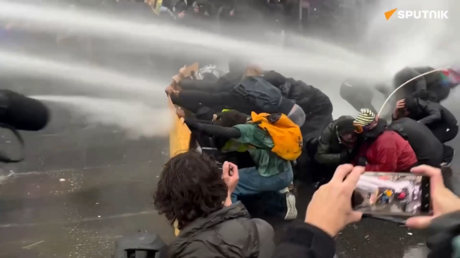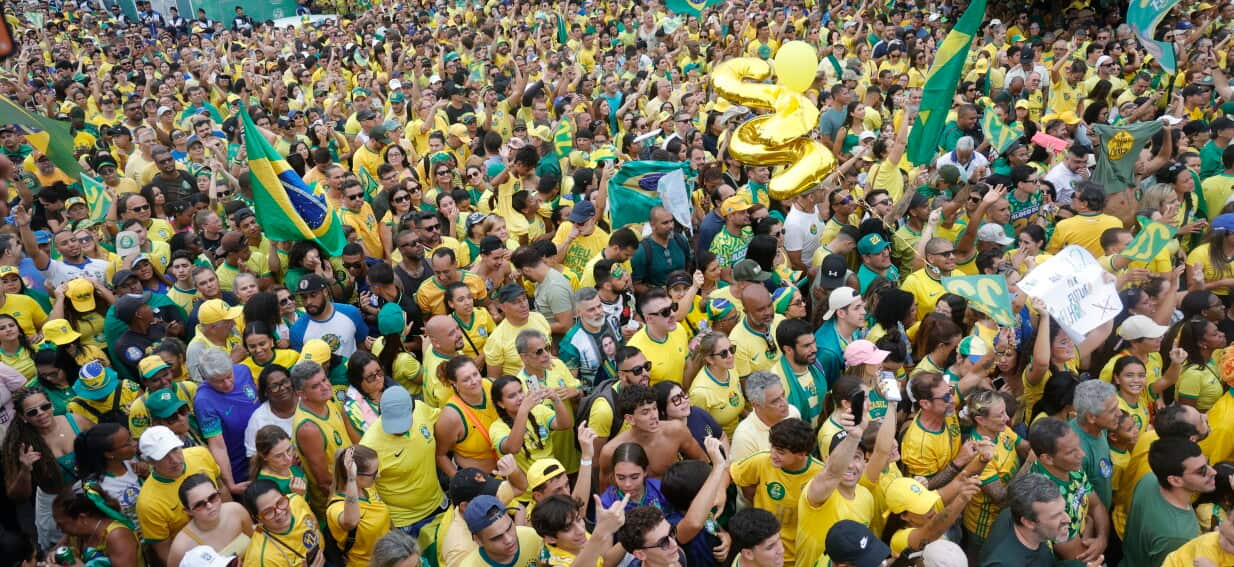
Media coverage of Brazilian elections frequently treats massive street demonstrations as a reliable barometer of voter sentiment. When tens of thousands of people fill iconic avenues like Paulista Avenue in São Paulo or Copacabana Beach in Rio de Janeiro ahead of a closely contested runoff, headlines inevitably frame the spectacle as a decisive momentum shift. Political analysts and observers who treat crowd sizes as a proxy for ballot box results fundamentally misunderstand modern electoral mechanics.
In a country with over 150 million registered voters, even a massive rally of 100,000 people represents less than 0.07% of the electorate. Street mobilization measures intensity among committed partisans, not persuasion among the undecided voters who actually decide close runoff elections.
The Illusion of the Crowd
The mainstream coverage of pre-election protests relies on a visual fallacy. Drone footage of sea-to-sea flags and chanting crowds creates an undeniable emotional impact, leading journalists and campaign strategists alike to conflate noise with numbers.
Political scientists who study Latin American democracies point out that street protests in polarized environments often serve an inward-facing function. Rather than attracting new supporters, they act as solidarity rituals for the already convinced. As political analysts at institutions like the Getulio Vargas Foundation (FGV) and Insper have frequently noted in their electoral breakdowns, high-visibility rallies often correlate with high partisan polarization rather than broad-based electoral expansion.
Consider the mechanics of a Brazilian runoff. By the second round, almost every voter with a strong ideological preference has already chosen a side. The remaining battleground consists of low-information voters, pragmatic moderates, and citizens motivated primarily by immediate economic concerns—such as inflation, employment, and purchasing power—rather than ideological street theater. These voters rarely attend political rallies, and watching partisan crowds clash or chant on the evening news often reinforces their political fatigue rather than inspiring them to switch their vote.
Why Mobilization Fails to Capture the Decisive Voter
To understand why street protests mislead observers, it helps to examine how modern Brazilian campaigns actually win tight races.
- The Enthusiasm Gap vs. The Persuasion Gap: A campaign can enjoy a massive advantage in street enthusiasm and still lose an election if its opponent holds a slight edge among quiet, pragmatic voters. Enthusiastic supporters each get only one vote—the exact same weight as a reluctant voter who decides in the booth on Sunday morning.
- The Alienation Effect: Large demonstrations in major urban centers frequently disrupt traffic, shut down commerce, and dominate news cycles with aggressive rhetoric. For undecided voters looking for stability and economic predictability, massive street mobilizations can trigger anxiety about post-election governability rather than enthusiasm for the organizing movement.
- Digital Echo Chambers: Street rallies today are rarely organic gatherings; they are coordinated media events designed to generate viral content for WhatsApp, Instagram, and TikTok. While this content energizes existing digital networks, algorithmic distribution ensures it primarily reaches people who already agree with the message.
What Actually Moves the Needle in a Brazilian Runoff
If crowd sizes are a mirage, what indicators genuinely matter in the final stretch of a Brazilian presidential or gubernatorial runoff? Experienced campaign operatives and electoral researchers look at a completely different set of metrics.
Abstention and Null Votes
In Brazil, voting is mandatory, yet abstention, blank, and null votes routinely account for roughly 20% to 30% of the total electorate. In a runoff decided by a razor-thin margin, whether a specific demographic stays home on election day matters infinitely more than how many people showed up to a rally three days prior. Bad weather in a key region, public transit availability, or subtle shifts in voter apathy can easily swing hundreds of thousands of votes.
Micro-Targeted Economic Sentiment
While crowds chant broad ideological slogans in state capitals, elections are frequently won or lost in the interior municipalities and urban peripheries. Polling firms like Datafolha and Quaest consistently demonstrate that perceptions of household income, food prices, and local employment opportunities correlate far more strongly with final vote tallies than partisan mobilization metrics.
Institutional and Local Endorsements
In Brazil's fragmented party system, mayors, governors, and local council members control vast networks of community influence. A quiet endorsement from a popular mayor in a populous state like Minas Gerais—historically Brazil's premier bellwether state—carries far more electoral weight than a noisy demonstration in Rio de Janeiro. Local leaders turn out voters in neighborhoods where national street protests have zero presence.
The Risk of Over-Indexing on Optics
There is a practical downside to dismissing street protests entirely: morale and media framing. Campaigns still organize massive rallies because failing to match an opponent's visual footprint can demoralize volunteers, spook financial donors, and create a narrative of inevitability in the press. A candidate who cannot fill a plaza risks looking weak, which can depress turnout among their own base.
However, mistaking a necessary morale exercise for a predictive polling instrument is a classic analytical failure. When observers equate tens of thousands of protesters with an impending electoral victory, they ignore the millions of silent voters who never wave a flag, never attend a march, and decide the future of the country in quiet isolation.