The drone didn't make a sound until it was too late.
For months, the people living in the hills above Port-au-Prince had grown accustomed to a very specific geometry of terror. They knew the sharp, echoing crack of an AK-47 firing down from the ridge. They knew the sudden silence of a street corner right before a pickup truck full of armed men turned the block. They knew how to press themselves flat against cinderblock walls when the Viv Ansanm coalition decided to remind a neighborhood who owned the oxygen.
They did not know the hum of remote-controlled justice arriving from two thousand miles away.
When the explosion tore through the fortified compound of Jimmy Chérizier—the former police officer known across the hemisphere by the chillingly mundane nickname "Barbecue"—the shockwaves didn't just rattle the corrugated tin roofs of Delmas 6. They shattered a long-standing political boundary in the Americas. Almost before the smoke had cleared from the rubble in Haiti, a man sitting in a manicured presidential palace in San Salvador picked up his phone, opened X, and took a victory lap.
Nayib Bukele didn't just confirm the strike. He celebrated it.
To understand why a single social media post from the president of El Salvador set off alarms from Washington to Kingston, you have to strip away the geopolitical jargon and look at what actually happened on the ground. A foreign leader, governing a Central American nation the size of Massachusetts, just claimed credit for projecting lethal force into the sovereign territory of a Caribbean neighbor. And the world didn't condemn him. Half of it cheered.
The Architecture of Desperation
Imagine, for a moment, a composite character we will call Jean-Luc. Jean-Luc isn't a politician or a mercenary; he is a forty-two-year-old structural engineer who hasn't designed a building in three years because cement trucks cannot pass through gang checkpoints without paying a tax that exceeds the cost of the concrete. Every morning, Jean-Luc wakes up at 4:30 a.m. to listen to the radio—not for the news, which is largely paralyzed, but for the neighborhood call-in shows that act as an informal radar system for sniper fire.
If you ask Jean-Luc about national sovereignty, he will look at you as if you are speaking a dead language. Sovereignty requires a state. In Haiti, following the 2021 assassination of President Jovenel Moïse and the subsequent collapse of institutional order, the state evaporated into thin air, leaving behind a vacuum filled by roughly two hundred armed groups. By the time Jimmy Chérizier unified rival factions under the banner of Viv Ansanm, gangs controlled nearly ninety percent of the capital. They burned police stations, emptied prisons, shut down the main airport, and turned hospitals into rubble.
When you are trapped in a burning house, you do not ask the person kicking down the door for their municipal credentials. You just want the fire out.
That visceral, suffocating desperation is the fuel on which Nayib Bukele runs. To see how we arrived at an explosive strike in Port-au-Prince, you have to trace the arc of Bukele’s own domestic transformation—a transformation I watched unfold from the dusty, nerve-wracking streets of San Salvador’s Soyapango district years earlier, back when taxi drivers refused to cross invisible gang borders after dusk.
The Blueprint That Crossed the Sea
Back then, El Salvador was the murder capital of the world. Mara Salvatrucha (MS-13) and Barrio 18 didn't just extort corner stores; they taxed grandmothers selling tortillas and executed bus drivers who missed a five-dollar payment. The air in neighborhoods like Soyapango always smelled faintly of diesel exhaust and woodsmoke, heavy with the unspoken rule that you kept your eyes on your shoes and your mouth shut.
Then came Bukele’s state of exception in March 2022. Over eighty thousand people were swept off the streets and locked inside mega-prisons like CECOT, stripped of due process, hair shaved, dressed in white shorts. The human rights abuses were staggering, documented meticulously by journalists and international observers—innocent bakers, teenagers with the wrong tattoo, and union organizers vanished alongside hardened killers.
Yet the homicide rate plummeted. Families who hadn't walked to a neighborhood park in twenty years suddenly bought ice cream at midnight.
Bukele realized something profound that traditional diplomats in pressed suits completely missed: security is the ultimate currency, and once you monopolize it, you can export it.
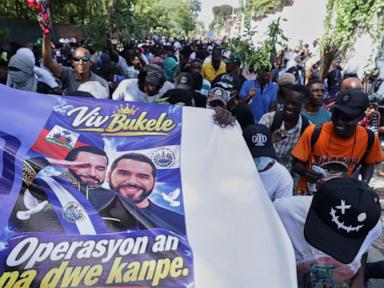
In early 2024, as Haiti’s Transitional Presidential Council struggled to stand up a coherent government and the Kenya-led Multinational Security Support mission stalled under the weight of bureaucratic delays, funding shortfalls, and under-equipped deployments, Bukele threw down a gauntlet. He offered to "fix" Haiti. His condition was simple: he needed a United Nations Security Council resolution, the consent of the host country, and someone else to pay the bill.
The international community largely treated the offer as theatrical bravado from a social-media-savvy autocrat. They were wrong. Bukele wasn't bluffing; he was auditioning.
The Strike on Delmas 6
Let’s look closely at the anatomy of the attack on Chérizier’s compound, separating verified reality from the fog of digital propaganda.
For months prior to the strike, Haiti’s beleaguered security forces—working alongside private military contractors and foreign intelligence advisors—had begun quietly shifting tactics. Ground assaults into labyrinthine slums like Delmas 6 were suicidal; narrow alleys, concrete barricades, and elevated sniper nests turned every police advance into an ambush. So the battlefield moved upward. Weaponized commercial and tactical drones began buzzing over Port-au-Prince, targeting gang leaders in their safe houses.
Chérizier was the ultimate prize. Unlike shadowy cartel bosses who hide in jungle bunkers, Barbecue was a creature of the camera. Dressed in crisp military fatigues, flanked by masked gunmen carrying heavy machine guns, he gave press conferences to international reporters, styled himself as a revolutionary Robin Hood, and casually threatened civil war whenever the international community discussed intervention. He was the face of Haitian impunity.
When the strike hit his residence—leveling concrete walls and sending panicking fighters scrambling into the surrounding alleys—it wasn't just a tactical hit on a command center. It was a psychological decapitation attempt aimed directly at the myth of gang invincibility.
And then came Bukele’s confirmation.
Why did the Salvadoran president step forward to claim and celebrate an operation thousands of miles from his own borders? Because in modern asymmetric warfare, the explosion itself is only half the weapon. The narrative is the payload. By publicly celebrating the strike, Bukele accomplished three things simultaneously:
- He humiliated the traditional multilateral order. While the United Nations, the Organization of American States, and Washington spent years debating rules of engagement and procurement budgets, Bukele projected the image of a leader who simply pulls the trigger.
- He tested the doctrine of extraterritorial policing. If a gang leader in Port-au-Prince can be targeted with Salvadoran backing, hardware, or intelligence, what stops a similar operation in Ecuador, Honduras, or Colombia?
- He turned regional security into a personal brand. Across Latin America—from the gated communities of Guayaquil to the crowded buses of Lima—citizens exhausted by extortion and kidnapping saw a leader willing to break every diplomatic rule to deliver a visceral blow against organized crime.
The Invisible Bill Always Comes Due
I have to be honest here: when you stand in a neighborhood that has been held hostage by teenage boys with assault rifles, the moral calculus gets blurry fast. It is easy to write essays about due process and international law from a quiet office with reliable electricity. It is much harder when your daughter has to step over a corpse on her way to school. That tension—between the desperate human need for immediate safety and the terrifying long-term cost of unchecked executive power—is the hardest knot in modern politics. I don't pretend to have an easy answer for Jean-Luc in Port-au-Prince.
But history is ruthless to people who mistake a demolition crew for architects.
Think of a gang-controlled city like a patient suffering from a raging, systemic infection. Conventional diplomacy tries to treat it with slow, cautious rounds of antibiotics that never quite reach the bloodstream because the bureaucracy is clogged. The Bukele model walks into the operating room with a blowtorch. It cauterizes the wound instantly. The fever breaks. Everyone in the waiting room applauds the surgeon.
Except a blowtorch doesn't know the difference between necrotic tissue and a healthy artery.
In El Salvador, eliminating the gangs required dismantling the judiciary, neutering the legislature, criminalizing independent journalism, and suspending constitutional rights indefinitely. The state didn't just defeat the criminals; it absorbed their monopoly on arbitrary force. Citizens traded the fear of a gang member knocking on their door at midnight for the fear of a state security unit doing the exact same thing without a warrant.
Now, imagine exporting that model to a country like Haiti—a nation with almost no functioning courts, no independent oversight, and a long, tragic history of foreign interventions that left the country poorer and more fractured than before.
Sovereignty in the Age of Drones
What happens next in the Caribbean isn't just a Haitian story or a Salvadoran story. It is a preview of how conflict will look across the Global South over the next decade.
Notice the mechanics of the strike on Chérizier’s home. There was no massive amphibious landing. No tens of thousands of foreign boots marching down Boulevard Jean-Jacques Dessalines, triggering the nationalist backlash that doomed past interventions. Instead, there was intelligence sharing, remote precision hardware, private contractors operating in the shadows, and a foreign head of state claiming victory on social media like a gamer posting a highlight clip.
This is frictionless intervention. It removes the political cost of body bags returning home to the intervening country, while maximizing the domestic political reward for the strongman ordering the hit.
For Jimmy Chérizier and the Viv Ansanm coalition, the calculus has permanently changed. The safe houses of Delmas 6 are no longer sanctuaries. Every buzz in the sky, every unfamiliar vehicle parked two blocks away, every phone signal carries the threat of sudden annihilation from beyond the horizon. Paranoid gang leaders make mistakes; they turn on their lieutenants, fracture their alliances, and lose their grip on territory. In the short term, streets in Port-au-Prince may actually grow quieter.
Yet quiet is not peace.
A drone can collapse the roof of a gang leader’s compound, and a tweet from San Salvador can electrify millions of frustrated voters across the hemisphere. Neither can build a school that stays open, pay a judge who cannot be bribed, or give a forty-two-year-old engineer in Port-au-Prince a reason to believe that tomorrow won't belong to whoever holds the biggest gun.
Down in the hills above the capital, the dust eventually settles over the shattered concrete of Delmas 6. Neighbors step cautiously out from behind their cinderblock walls, squinting up at an empty blue sky, listening for a sound they can no longer hear—and wondering whose finger will be on the controller the next time it returns.