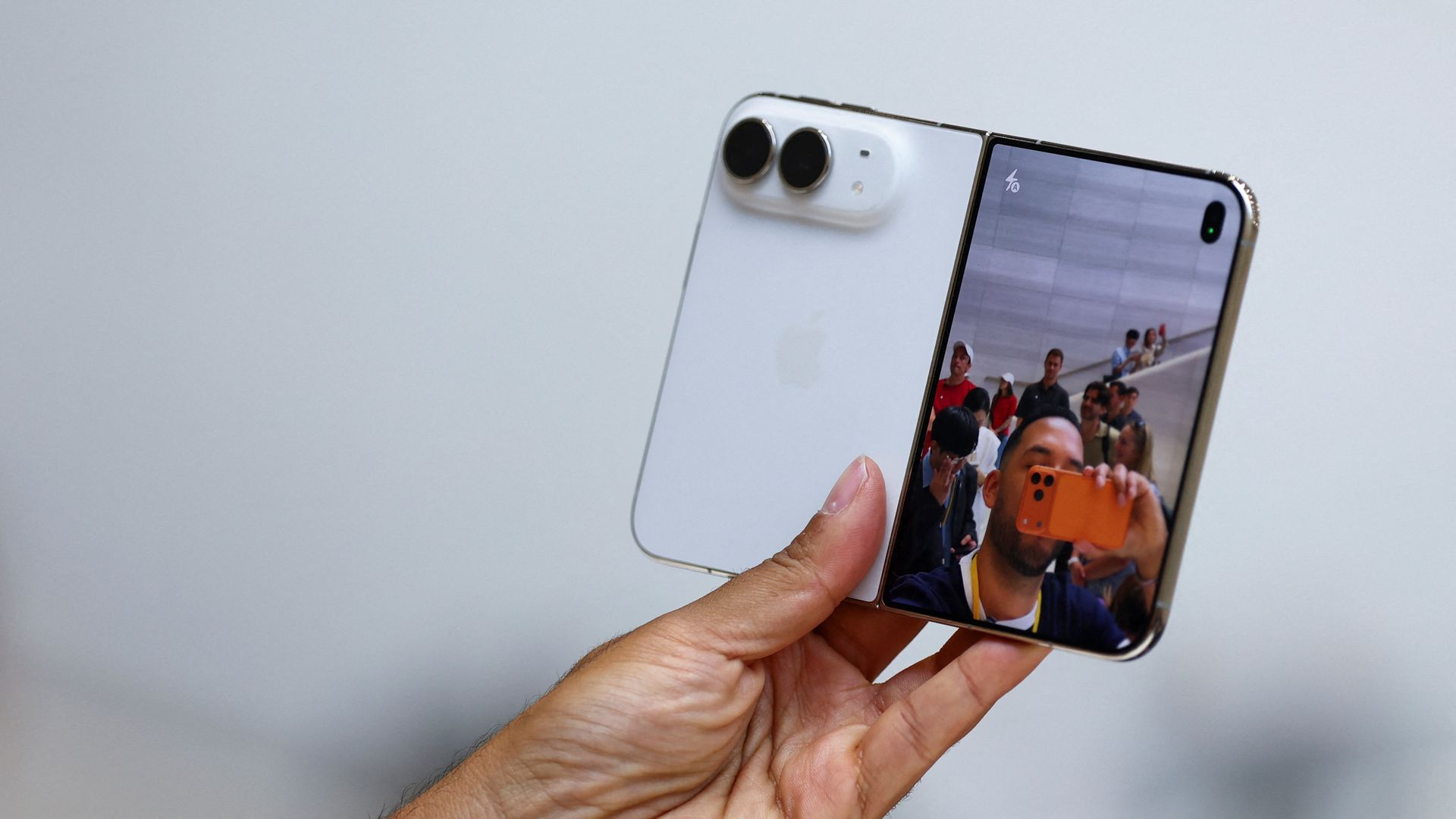
The consumer electronics market has spent nearly a decade absorbing the architectural compromises of folding smartphones. Early market entrants prioritized novelty over operational longevity, trading structural rigidity, battery density, and thermal dissipation for the visual appeal of a flexible display. When Apple introduces a new product category, the engineering constraints change. The arrival of the iPhone Duo alters the competitive boundaries of the segment by imposing rigid solutions on long-standing hardware failures: crease visibility, mechanical wear fatigue, and thermal bottlenecks in ultra-slim chassis designs. Evaluating this hardware shift requires dissecting the fundamental mechanics that govern foldable manufacturing, component margins, and user-workflow integration.
The Mechanical Cost Function of Folding Hardware
Every foldable device operates under a zero-sum hardware equation. Increasing display acreage while compressing z-height forces engineers to solve simultaneous, conflicting physical requirements. The primary engineering failure mode of early folding devices has always been the crease—a localized stress point where repetitive polymer stretching causes material fatigue and optical distortion.
To bypass this degradation cycle, Apple structured its approach around material science rather than software masking. The internal architecture of the iPhone Duo uses a multi-layer display stack built on sliding polymer layers and high-strength glass integration. Instead of forcing a single rigid sheet to bend around a fixed radius, the internal mechanics utilize custom-engineered adhesives that allow distinct film layers to glide relative to one another during closure, similar to the leaf structure of a bound book. This mechanical sliding action distributes bend stress across a broader surface area, preventing localized micro-cracks and eliminating the pronounced optical valley seen in competitor devices.
Beneath the display panel, the structural chassis relies on grade 5 mirror-polished titanium for outer stress-bearing components. Titanium provides the necessary tensile strength to resist torsion when the device is fully open, protecting the internal hinge mechanism from angular drift. Concurrently, internal thermal architecture requires a departure from standard smartphone layouts. Packing dual display drivers, heavy processing silicon, and split-cell batteries into a chassis thinner than a traditional pro model creates severe thermal thresholds. The deployment of a custom-designed vapor chamber within this tight geometry addresses the heat dissipation bottleneck, ensuring sustained processor clocks without throttling.
The Biometric and Spatial Trade-Offs
Form-factor compression forces difficult compromises in user interface ergonomics and security architecture. The physical thinness of the open chassis eliminates the physical clearance necessary for a TrueDepth camera module. Rather than accepting a lower-tier facial recognition sensor or compromising the structural integrity of the upper bezel, Apple bypassed Face ID entirely in favor of side-button integrated Touch ID. This tactical reversion prioritizes reliability and speed in dual-orientation states, as biometric verification must remain frictionless whether the device is operated in its compact closed format or fully expanded.
The spatial configuration of the displays establishes a distinct usage topology. The outer 5.4-inch display provides a tight, passport-like aspect ratio designed for one-handed operation, yielding approximately ninety percent of the screen area of a standard flagship slab phone. Opening the device reveals a 7.6-inch inner canvas. Rather than stretching legacy applications arbitrarily, the operating system maintains a consistent underlying aspect ratio logic. Controls remain anchored in predictable spatial zones, while content windows scale fluidly across the expanded real estate. This eliminates the awkward UI scaling errors that historically plagued Android-based foldables, where applications frequently failed to handle sudden layout transitions gracefully.
Processing Power and Silicon Efficiency
Performance metrics in modern mobile hardware are bounded by energy per watt rather than raw clock speed alone. Powering a dual-screen device of this scale without sacrificing battery longevity demands aggressive semiconductor node optimization. The integration of the A20 Pro silicon chip, paired with a dual-battery architecture, addresses the endurance deficit common to folding architectures.
The division of the battery cells across opposing halves of the chassis maximizes internal volumetric efficiency. Space that would otherwise be wasted on empty cavities is reclaimed for energy storage, pushing the total capacity closer to traditional slab-style flagships despite the hinge cutout. Furthermore, silicon-level power gating ensures that when the inner display is inactive, display driver power draw drops to near zero, preserving reserve capacity for extended multitasking sessions across dual application windows.
The Economic and Market Impact
The introduction of a new hardware tier shifts the pricing architecture of the ultra-premium smartphone segment. Historically, folding phones occupied a speculative niche, priced as luxury prototypes with high hardware failure rates. By introducing a device anchored in precise materials science, premium pricing reflects the manufacturing yield costs associated with ultra-thin glass lamination, titanium frame milling, and custom hinge tolerances.
Competitors can no longer rely on first-mover advantage as a differentiator. The baseline expectations for crease minimization, structural durability, and software continuity have shifted upward. Brands that fail to resolve the fundamental mechanical fatigue of their folding screens face immediate obsolescence among enterprise and power users who demand multi-year hardware reliability.
Prioritize ecosystem integration over standalone novelty. The success of a folding form factor relies entirely on whether the software can eliminate friction during state transitions. Developers must optimize interface layouts for continuous scaling rather than treating the inner screen as an oversized tablet afterthought. Ensure your product roadmap accounts for hardware consolidation around high-durability materials and thermal efficiency, or risk building devices that fail under the basic operational demands of daily enterprise use.