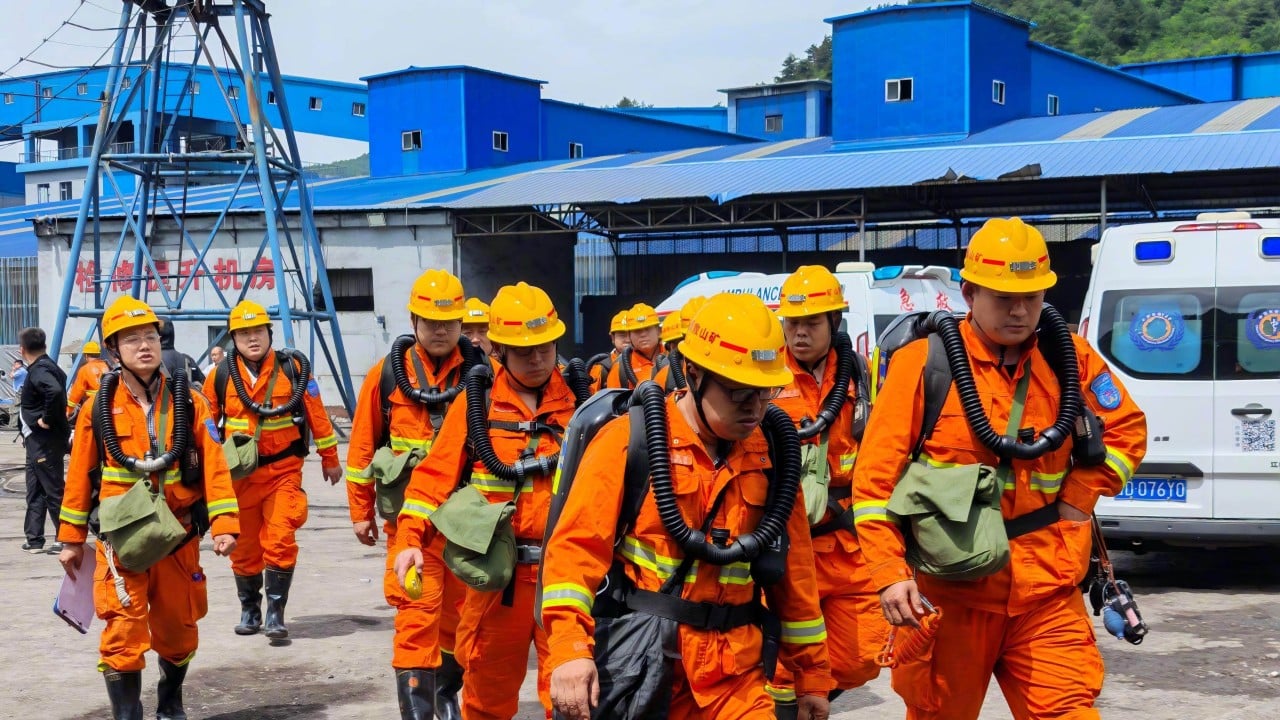
Industrial disasters are rarely the result of a single isolated failure; they are the compounding consequence of systemic regulatory gaps, economic pressures, and critical engineering oversights. When a coal mining incident results in high-magnitude casualties—such as the loss of 82 lives in a single event—it signals a breakdown across three distinct operational layers: geological risk management, physical containment infrastructure, and safety enforcement economics. Understanding these events requires moving past sensational reporting to dissect the precise mechanical and structural vulnerabilities that govern subterranean extraction.
The blueprint for mitigating these catastrophic failures relies on identifying the exact friction points between production volume targets and physical safety thresholds. By analyzing the structural root causes of deep-shaft mining disasters, industrial operators and regulatory bodies can transition from reactive crisis management to predictive risk isolation.
The Tripartite Risk Architecture of Deep-Shaft Mining
Subterranean extraction operates within a highly volatile environment where safety is governed by three interconnected variables: gas accumulation dynamics, structural geology, and ventilation efficiency. A failure in any single pillar destabilizes the entire ecosystem, creating conditions ripe for mass-casualty events.
1. Gas Accumulation Dynamics and Methane Liberation
Coal seams naturally trap methane ($CH_4$), a highly flammable gas adsorbed to the coal surface and held in place by hydrostatic pressure. As mining machines shear the coal face, this pressure drops, rapidly liberating methane into the working environment.
- The Lower Explosive Limit (LEL): Methane becomes explosive at concentrations between 5% and 15% by volume when mixed with air. Maintaining concentrations well below the 1% threshold is the absolute baseline for operational safety.
- The Catalyst Shift: While a localized methane flash can cause immediate, localized casualties, the true driver of mass-fatality disasters is secondary coal dust propagation. The shockwave of a minor methane ignition suspends combustible coal dust particles in the air, creating a highly volatile fuel-air mixture that propagates through the mine shafts with devastating velocity.
2. Structural Geology and Mechanical Overburden
As miners extract material, they alter the stress distribution of the surrounding rock mass. The weight of the overlying strata (overburden) shifts from the extracted coal to the remaining pillars and longwall shields.
- Roof Strata Delamination: Failure to properly calculate the geomechanical properties of the immediate roof leads to catastrophic collapses. When massive rock layers fracture simultaneously, they displace large volumes of air instantly, creating a devastating airblast capable of destroying ventilation bulkheads.
- Floor Heaving and Pillar Bursting: Under extreme pressure, the floor of a mine can buckle upward, or structural coal pillars can explode outward under compressive stress, crushing workers and severing escape routes.
3. Ventilation Efficiency and Airway Geometry
The primary defense against toxic and explosive atmospheric conditions is a robust mechanical ventilation system. This system must constantly deliver fresh air to the working face while exhausting hazardous gases.
- The Dilution Formula: The volume of fresh air required is directly proportional to the rate of methane liberation. If production speeds accelerate beyond the capacity of the ventilation fans to dilute gas emissions, explosive pockets form inevitably.
- Short-Circuiting Risks: Structural damage to ventilation stoppings, doors, or overcasts allows fresh air to bypass the active working faces. This creates stagnant zones where toxic carbon monoxide ($CO$) and methane pool undisturbed until an ignition source is introduced.
The Economic Incentives and Enforcement Bottlenecks
Industrial safety is deeply intertwined with the economic frameworks governing extraction industries. High commodity prices create powerful incentives for operators to maximize output, often leading to a calculated tolerance for marginal safety risks.
+-------------------------------------------------------------------+
|                     THE RISK-RETURN PARADOX                       |
+-------------------------------------------------------------------+
| Higher Commodity Prices -> Increased Production Rate Requirements   |
| -> Accelerated Gas Liberation -> Outpaces Ventilation Capacity   |
| -> Elevated Catastrophic Risk Threshold                           |
+-------------------------------------------------------------------+
The Production-Protection Paradox
When compensation structures for mine management and workers are tied strictly to daily tonnage metrics, a conflict of interest emerges. This structural bottleneck manifests in several predictable behavioral patterns:
- Sensor Tampering: Operators may intentionally mask or disconnect automated methane monitoring systems (methane sniffer loops) to prevent automated machine shutdowns during high-gas events.
- Skipping Gas Drainage Protocols: High-gas seams require pre-mining degasification via surface or underground drilling. Because drilling outpaces extraction schedules and requires significant capital expenditure, it is frequently shortened or bypassed entirely.
- Delayed Maintenance Cycles: Halting production to repair compromised roof support systems or clear blocked ventilation airways directly impacts short-term revenue, causing operators to defer critical maintenance until scheduled turnarounds.
Regulatory Arbitrage and Enforcement Limits
Even when stringent safety laws exist on paper, their efficacy is bounded by enforcement capabilities. In vast, distributed mining regions, regulatory oversight suffers from systemic vulnerabilities.
Local jurisdictions often rely heavily on the tax revenues and employment generated by major extraction facilities. This creates a conflict where local inspectors face immense political and economic pressure to overlook minor infractions. By the time these minor infractions compound into major systemic failures, the threshold for a catastrophic event has already been crossed. Furthermore, punitive fines for safety violations are often priced in by operators as a standard cost of doing business, rather than acting as a true deterrent.
Engineering Failure Modes: From Spark to Explosion
A mass-casualty mining accident requires an alignment of three elements: an explosive atmosphere, an ignition source, and a failure of containment infrastructure. Dissecting the precise timeline of these events reveals where engineered interventions failed.
The Ignition Vectors
In modern mechanized mining, potential ignition sources are numerous and require rigorous isolation:
- Frictional Sparking: Continuous miners and longwall shearer bits striking quartz-rich sandstone strata can generate localized temperatures exceeding $1,000^\circ\text{C}$, well above the autoignition temperature of methane.
- Electrical Faults: Non-explosion-proof electrical enclosures, damaged trailing cables, or improper splicing can produce high-energy arcs capable of igniting gas mixtures.
- Static Discharge: Improperly grounded ventilation ducting or synthetic materials can accumulate static charges that discharge unexpectedly.
The Dynamics of Containment Failure
Once ignition occurs, the survival of underground personnel depends entirely on the integrity of isolation systems.
[Methane Ignition] ---> [Shockwave Suspends Coal Dust] ---> [Secondary Dust Explosion] ---> [Ventilation Failure] ---> [Mass Asphyxiation]
The initial blast wave travels faster than the flame front. If the mine is properly dusted with inert rock dust (limestone powder), the non-combustible dust mixes with the coal dust, cooling the flame and quenching the explosion. If rock dusting is inadequate, the secondary dust explosion tears through the mine workings, destroying heavy steel ventilation doors and turning intake airways into return airways filled with toxic gases.
The immediate cause of death in these large-scale disasters is rarely the kinetic impact of the explosion itself. Instead, it is the rapid production of "afterdamp"—a lethal mixture of carbon monoxide, carbon dioxide, and nitrogen left behind after oxygen is completely consumed by combustion. Without functioning ventilation or adequate self-contained self-rescuers (SCSRs), miners trapped behind collapsed strata succumb to asphyxiation within minutes.
The Deployed Technology Gap
The disparity between available safety technologies and their field deployment remains a primary driver of industrial accidents. While high-margin operations leverage autonomous systems, marginal or rapidly expanding operations often rely on outdated paradigms.
Atmospheric Monitoring Limitations
Traditional gas monitoring relies on localized telemetry networks with sensors placed at fixed intervals along haulage ways and return air courses. This architecture creates blind spots. Methane is lighter than air and accumulates along the roof and in unventilated gob areas (the empty spaces left behind after coal extraction). If sensors are placed too low or are improperly calibrated, they fail to detect rising gas levels until the explosive mixture reaches active equipment.
Emergency Communication and Egress Systems
During a major structural collapse or explosion, power grids are instantly severed. Standard communication systems fail, leaving surface command centers blind to underground conditions. The absence of through-the-earth (TTE) communication systems prevents rescue teams from locating survivors who may have successfully reached underground refuge chambers.
Operational Imperatives for Risk Isolation
To permanently lower the fatality rate of deep-shaft extraction operations, industrial entities must shift from retrospective incident investigations to a framework of absolute risk isolation. The following technical interventions represent the baseline requirements for modern, high-risk mining environments.
Implementation of Continuous Autonomous Degasification
Operations must mandate directional drilling programs that extract methane from the coal seam years before active mining commences. This gas should be captured via vacuum pumps and piped to the surface for utilization or flaring, transforming a critical hazard into an auxiliary revenue stream or a neutralized waste product.
Deployment of Real-Time Laser Spectroscopy Sensors
Fixed electrochemical sensors must be replaced or augmented with continuous open-path laser spectroscopy systems capable of detecting methane concentrations across entire cross-sections of an airway. These systems must be hardwired directly into the power supply of cutting machinery via unalterable, failsafe logic gates: if gas levels reach 1.2%, machine power terminates automatically, eliminating human discretion from safety protocols.
Active Explosion Barriers and Passive Rock Dusting Automation
Mines must deploy automated explosion barriers containing water or concentrated rock dust concentrated at critical junctions. These barriers use pressure-sensitive triggers to detect the incoming shockwave of an explosion, instantly dispersing a dense cloud of suppressing agent to quench the trailing flame front before it can propagate into adjacent sectors.
The operational objective must be the complete decoupling of human safety from manual compliance checks. By embedding physical laws and automated engineering controls directly into the extraction infrastructure, the industry can eliminate the systemic vulnerabilities that transform minor localized failures into mass-casualty disasters.