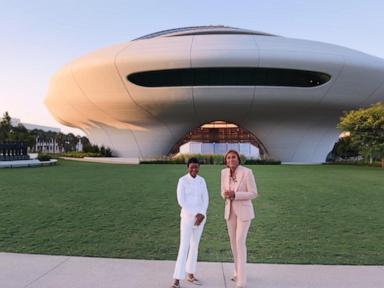
The Lucas Museum of Narrative Art represents a high-capital institutional investment intersecting real estate development, urban curation, and intellectual property management. When capital allocation reaches billions of dollars for a single cultural entity, the underlying mechanics shift from traditional museum operations to industrial asset management, visitor throughput optimization, and long-term endowment sustainability. Analyzing this project requires stripping away the marketing language of cultural enrichment and examining the structural frameworks governing its construction, spatial programming, and economic engine.
Physical infrastructure in contemporary cultural institutions dictates financial viability. The spatial configuration of a museum is a logistical pipeline designed to balance visitor density, environmental controls for sensitive media, and revenue-generating perimeters.
The Capital Expenditure Model and Real Estate Mechanics
Cultural institutions funded by private fortunes operate under a distinct economic logic compared to municipal entities. The initial outlay functions as a sunk capital expenditure intended to generate perpetual civic signaling and asset preservation, but the ongoing cost function tells a different story.
- Land Acquisition and Zoning Constraints: Constructing a massive cultural facility within a high-density urban core requires navigating complex regulatory frameworks, environmental impact reports, and public land use agreements. The cost of urban land imposes strict boundaries on horizontal expansion, forcing architecture to rely on vertical integration or elevated structural profiles.
- Construction Engineering for Preservation: Narrative art encompasses a vast medium spectrum, ranging from traditional oil paintings and illustrations to digital assets, cinematic props, and sequential comic art. Each medium requires distinct micro-climate conditions. The engineering cost function escalates rapidly when specifying HVAC systems capable of maintaining strict relative humidity and temperature bands across varied exhibition spaces.
- Endowment Capitalization: A building is a depreciating asset without an adequately capitalized operating endowment. The long-term solvency of the institution relies on yield from invested capital covering facility maintenance, security, conservation, and administrative overhead, reducing reliance on volatile ticket sales.
Spatial Programming and the Visitor Flow Function
Museum architecture functions as an applied physics problem regarding human movement. The efficiency of a cultural facility is measured by how effectively it manages dwell time, congestion points, and retail conversion rates.
Visitor Arrival -> Screening and Ticketing -> Circulation Core -> Gallery Distribution -> Retail/F&B -> Exit Vector
The circulation core acts as a mechanical bottleneck. If vertical and horizontal transit nodes are undersized, queue formation creates friction that degrades the visitor experience and reduces capacity turnover. Conversely, over-provisioned transit space represents wasted square footage that yields zero revenue.
- Primary Circulation versus Gallery Space: Architectural designs that prioritize grand, sweeping stairwells and cavernous atriums often sacrifice rentable exhibition square footage. The optimal ratio balances monumental civic presence with dense, modular gallery bays that can be reconfigured for changing exhibitions without structural modifications.
- Acoustical and Visual Isolation: Narrative art—particularly cinematic and digital installations—relies on synchronized audio and controlled lighting. Structural separation between galleries prevents audio bleed and light pollution from adjacent exhibits, necessitating advanced acoustic dampening materials and compartmentalized electrical zoning.
The Revenue Architecture of Modern Cultural Assets
Relying solely on general admission fees is an outdated financial model for major institutions. Modern cultural complexes operate as diversified conglomerates with multiple revenue streams designed to hedge against economic downturns and fluctuating tourism numbers.
- Food, Beverage, and Merchandise Yields: The retail footprint is not an ancillary afterthought; it is a core profit center. For narrative art specifically, the intellectual property tied to film, illustration, and popular culture provides high-margin merchandising opportunities that traditional fine art museums cannot replicate with the same volume.
- Special Exhibition Monetization: General admission provides baseline operational coverage, but high-value, exclusive temporary exhibitions drive attendance spikes and allow for tiered ticket pricing. These exhibitions create urgency, shortening the sales cycle for advance bookings and increasing ancillary spending on-site.
- Philanthropic and Corporate Partnerships: Naming rights, corporate sponsorships, and private event rentals form a predictable recurring revenue base. High-net-worth donor cultivation relies on dedicated architectural spaces—such as private viewing salons, boardrooms, and event halls—that offer exclusivity in exchange for capital contributions.
Institutional Risk Factors and Lifecycle Management
Every large-scale cultural asset faces structural vulnerabilities that can erode its financial and operational stability over time. Identifying these risks requires examining the operational variables that threaten long-term viability.
- Visitor Volume Volatility: Cultural institutions located in major metropolitan hubs are exposed to macroeconomic shocks, international travel restrictions, and local tourism trends. A sudden drop in visitor volume strains fixed operational costs, particularly facility maintenance and security staffing.
- Technological Obsolescence: Because narrative art heavily incorporates digital media, projection mapping, and interactive displays, the underlying hardware degrades rapidly. Capital expenditure plans must account for periodic technology refreshes every five to seven years to prevent exhibits from feeling antiquated.
- Curatorial Scope Creep: Without strict institutional mandates, multidisciplinary museums risk becoming unfocused, diluting their brand identity. Maintaining a cohesive narrative thread across fine art, comic illustration, cinematic history, and digital storytelling requires rigorous editorial standards from the curatorial board.
Strategic Operational Outlook
The long-term success of high-capital cultural ventures depends on disciplined asset stewardship and adaptive programming. Institutions that treat their physical footprint as a dynamic operational platform rather than a static monument are best positioned to maintain relevance.
Future viability requires continuous auditing of visitor flow data, dynamic pricing models for peak hours, and aggressive digital archiving strategies to extend the institution's reach beyond its physical walls. Capital deployment must balance immediate architectural spectacle with the unglamorous, essential mechanics of endowment preservation and facility maintenance. The true test of a narrative art institution is not the scale of its initial structural ambition, but its ability to sustain operational efficiency and cultural relevance decades after the opening gates swing wide.