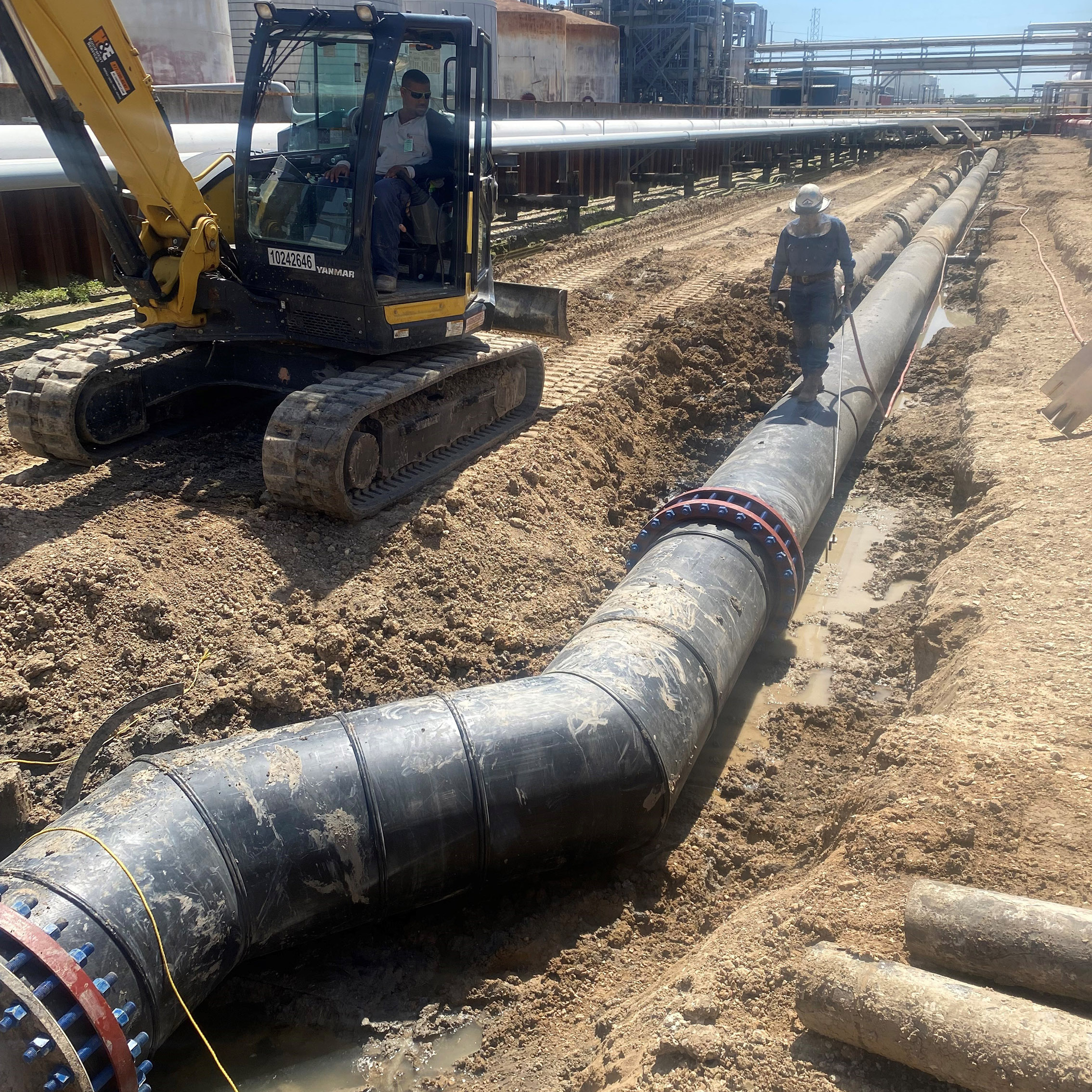
The imposition of mandatory 48-hour water shutoffs affecting over 180,000 utility customers across San Juan, Carolina, Trujillo Alto, and surrounding municipalities represents the collision of meteorological anomaly and structural systemic decay. While political leadership frames the crisis as an act of nature driven by San Juan recording its driest July in over 120 years, a rigorous operational audit reveals that precipitation deficits are merely the final stressor on a grid already operating past failure thresholds.
To understand why a regional dry spell immediately cascades into urban water rationing, one must deconstruct the three primary failure vectors governing the territory's hydrological network: non-revenue water loss, chronic capital underinvestment, and hydraulic transfer bottlenecks.
The Cost Function of Non-Revenue Water
The primary vulnerability of the Puerto Rican water infrastructure is not the absence of supply, but the catastrophic rate of loss before delivery. Industry metrics classify untreated or treated water lost prior to end-user meter points as non-revenue water. On the island, aging distribution pipelines, unmonitored illegal connections, and thousands of visible pipeline breaks locally termed salideros drain millions of gallons daily.
Economic analyses place annual losses near $98 million solely in production costs. When a utility leaks an estimated 40 to 60 percent of its treated water into the subsoil before it reaches a residential or commercial tap, the system loses its buffer capacity.
In a functioning municipal water economy, storage reservoirs hold a multi-month reserve to flatten the curve of seasonal droughts. In Puerto Rico, chronic leakage rates mean reservoirs must work at maximum output merely to maintain baseline pressure. When July rainfall totals drop below 20 percent of historical norms in the southern and southwestern plains, the system lacks the inventory cushion required to absorb the shock. The 48-hour alternating shutoff schedules are mathematical necessities forced by depleted storage volumes that cannot be replenished while leakage vectors remain unsealed.
Infrastructure Decay and the Maintenance Deficit
The current rationing protocols implemented by the Puerto Rico Aqueduct and Sewer Authority are symptoms of decades of deferred maintenance. Capital expenditure programs have historically prioritized reactive emergency repairs over predictive asset management. Essential mechanical components at major water treatment plants and critical raw water transfer systems—which pump supplies from central mountain reservoirs to the northern metropolitan economic engine—have operated past their design life cycles.
This structural neglect creates an inverse relationship between climate stress and system resilience. As temperatures soar and evaporation rates spike, the electrical and mechanical pumping stations required to move water over topographical barriers demand higher operational continuity. However, concurrent electrical grid instability forces treatment plants onto backup generation or leaves them vulnerable to voltage drops, choking pump efficiency.
When municipal leaders note that thousands of residents experienced dry taps for months prior to the official rationing announcement, it exposes a dual-tier failure: official rationing affects the connected grid on a rotational basis, while peripheral and elevated neighborhoods suffer permanent supply dropouts due to insufficient pressure heads caused by degraded pumps and systemic leakage.
Hydrological Mechanics of the 2026 Drought
The meteorological trigger for the current emergency stems from an acute convergence of high temperatures and localized precipitation anomalies. Data from the U.S. Drought Monitor indicates that over 85 percent of the territory suffers from moderate to severe drought conditions, with the southern plains experiencing severe deficits.
Unlike continental watersheds that rely on snowpack accumulation or massive subterranean aquifers with multi-year recharge rates, island micro-watersheds depend on rapid surface runoff and immediate reservoir catchments. When tropical waves and seasonal storms bypass the central cordillera or drop sub-normal rainfall during the early summer transition, surface reservoirs experience immediate drawdown curves.
The hydraulic consequence is stark. Streams feeding reservoirs like Lago Guayabal and regional storage facilities operate at fractions of historical mean daily flows. Without continuous inflows, the volumetric capacity of these basins drops below the minimum operational head required to gravity-feed treatment facilities, forcing shutdowns regardless of consumer conservation efforts.
Strategic Capital Allocation for System Recovery
Solving recurring island-wide water rationing requires shifting public expenditure from emergency water trucking to permanent structural overhaul. Mitigating future shocks mandates a three-step capital allocation framework:
- Acoustic Leak Detection and Pressure Management: Deploying continuous acoustic monitoring arrays across primary metropolitan trunk lines to isolate and repair high-volume subsurface breaks before they compound regional pressure drops.
- Decentralized Storage and Redundancy: Constructing localized micro-storage tanks and investing in modular brackish groundwater desalination units along the coastal zones to relieve baseline demand on highland reservoirs.
- Energy-Hydraulic Co-Optimization: Hardening the power supply infrastructure dedicated to water treatment and pumping stations to ensure uninterrupted operations during grid fluctuations.
Until utilities address the baseline loss rate of non-revenue water, administrative rationing will remain the primary mechanism for managing scarcity, turning every meteorological dry spell into an acute socio-economic crisis.