Geopolitical standoffs default to a high-friction equilibrium termed the state of neither war nor peace. When direct kinetic engagement plateaus into structural exhaustion, belligerents resort to asymmetric friction, maritime chokepoint management, and domestic political insulation.
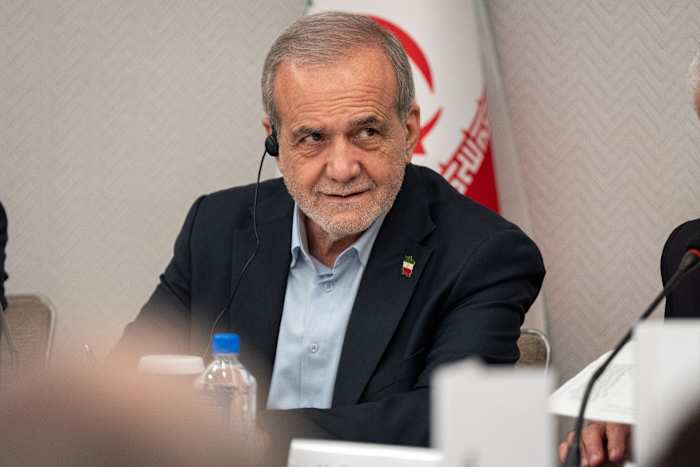
The expiration of the framework agreement between Washington and Tehran highlights the mechanics of this paralysis. Iranian President Masoud Pezeshkian's public defense of the bilateral memorandum reveals a regime attempting to resolve a severe economic constraint without triggering internal collapse or losing hardline deterrence credibility. Deconstructing this deadlock requires mapping the underlying variables governing the current theater: the economic cost function of sanctions, the strategic control of maritime bottlenecks, and the internal friction among competing factions within the Iranian apparatus.
The Economic Cost Function and the Risk Premium
Capital allocation models dictate that liquid assets require predictable risk horizons. In environments characterized by active naval blockades and secondary sanctions, the sovereign risk premium scales exponentially, sterilizing foreign direct investment.
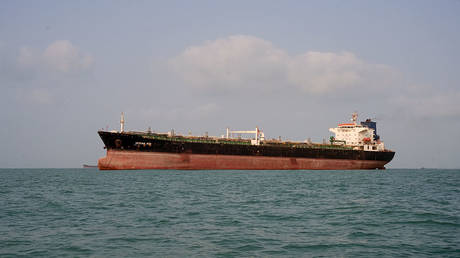
The Iranian executive faces a structural balance sheet crisis. Maintaining a partial closure of the Strait of Hormuz restricts global hydrocarbon transit, reducing international supply while simultaneously choking Iran's own petroleum export revenues. Official statements acknowledging societal economic strain reflect the functional limits of resistance economics. When financial velocity drops and domestic production costs surge, the opportunity cost of maintaining a perpetual posture of maximum pressure outweighs the utility of conventional deterrence.
The administration frames diplomatic engagement not as an ideological capitulation, but as a risk-mitigation maneuver. By attempting to dissolve the risk premium through an agreed legal framework, Tehran seeks to restore baseline economic liquidity. Yet, this strategy collides directly with hardline factions prioritizing institutional survival through militarized isolation.
The Maritime Chokepoint as a Leverage Variable
Control over regional shipping lanes functions as a zero-sum bargaining chip. The Strait of Hormuz handles a critical fraction of global oil and liquefied natural gas flows. By restricting passage, Tehran imposes economic externalities on importing nations and global supply chains, attempting to offset the capital losses inflicted by the American naval counterblockade.
This dynamic creates an operational stalemate:
- The United States and its regional partners enforce financial isolation and maritime interdiction to degrade state capacity.
- Tehran retaliates by regulating transit volume through the gulf, utilizing physical choke points to force diplomatic concessions.
- Neighboring Gulf states face acute exposure, caught between secondary sanction pressures and retaliatory threats targeting alternative export pipelines.
Neither party can secure total dominance through current kinetic or naval postures without inducing catastrophic macroeconomic shocks globally. Consequently, the memorandum functions as a theoretical bridge to bypass this mutual hostage scenario, even as implementation details falter over sequencing and verification.
Factional Divergence and Institutional Friction
Internal governance within centralized security states relies on maintaining a delicate equilibrium between pragmatic technocrats and ideological hardliners. Pezeshkian's insistence that the memorandum contains no clauses amounting to direct surrender targets domestic legislative skepticism. Hardline elements within the Supreme National Security Council and parliament evaluate agreements through the lens of absolute sovereignty and historical distrust of external enforcement mechanisms.
When leadership transitions occur alongside heightened security appointments, the institutional signaling becomes inherently contradictory. While executive organs pursue structured exits from the conflict matrix to preserve economic viability, military and security commands signal readiness for expanded asymmetric retaliation. This duality serves an internal signaling function: projecting strength to domestic constituents while signaling a willingness to negotiate under duress to external actors.
The strategic imperative for the executive branch involves shifting the nation away from acute exposure without fracturing the ruling coalition. Diplomacy remains constrained by the reality that any structural compromise on nuclear enrichment or regional proxy networks directly challenges the core legitimacy metrics of hardline domestic constituencies.
Strategic Forecast
The resolution of the current paralysis depends on whether economic erosion forces a recalibration of hardline security doctrine before domestic friction reaches a critical threshold. Absent a synchronized mechanism for lifting financial blockades in exchange for verifiable maritime and nuclear concessions, the bilateral framework will remain a dead letter.
The immediate trajectory points toward an escalation of economic warfare, characterized by intensified secondary enforcement and localized naval friction, interspersed with backchannel mediation via regional intermediaries. Long-term stabilization requires decoupling trade transit from security architecture—an outcome precluded by the deep structural mistrust defining contemporary state interactions in the region.