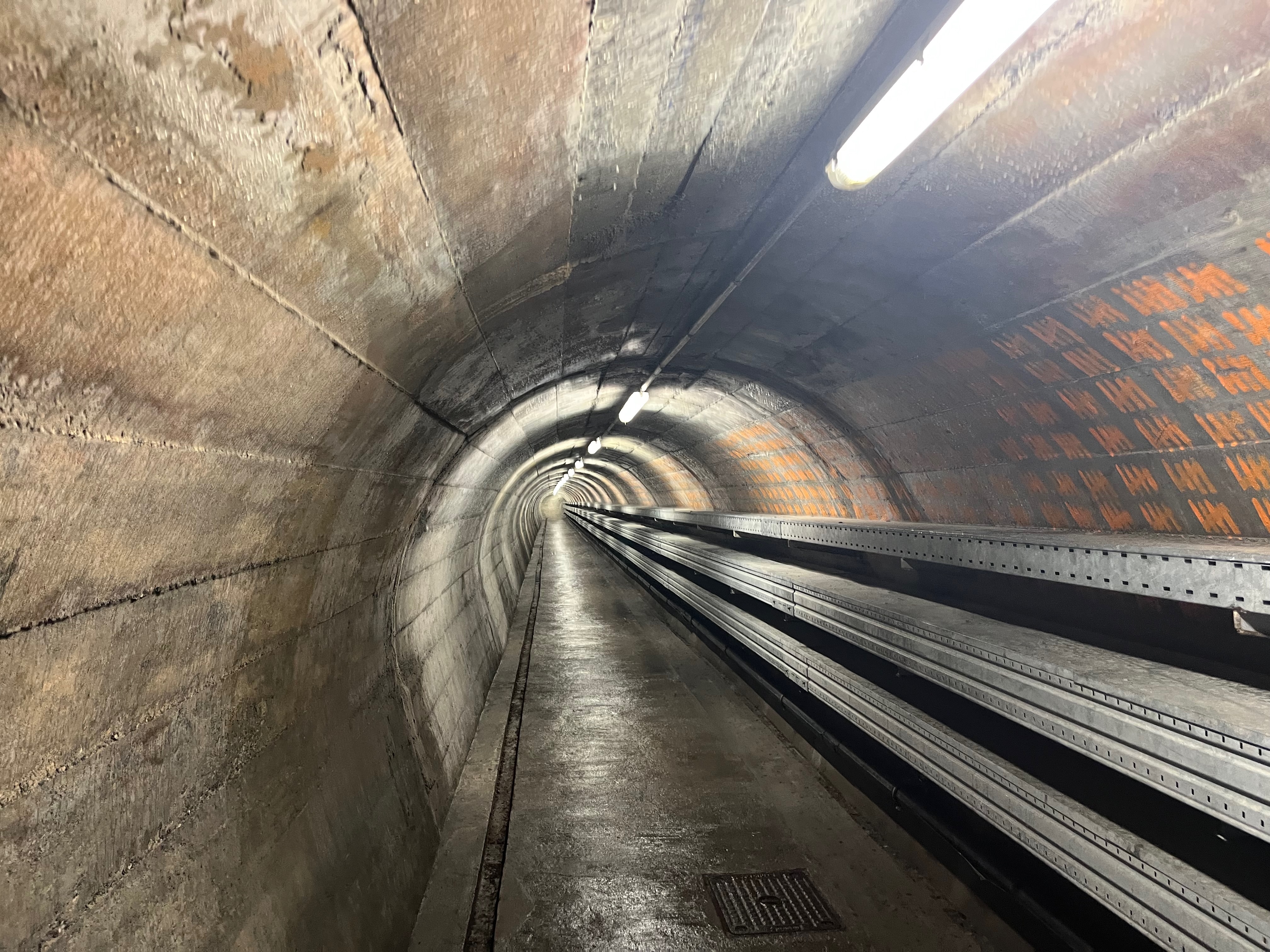
Switzerland maintains a civil defense architecture capable of housing its entire resident population, alongside a structural surplus. This posture is not an artifact of historical paranoia, but the operational output of a codified legislative mandate. Under the Federal Act on the Protection of the Population and on Civil Protection, every resident must be guaranteed a protected place in a shelter close to their place of residence. Achieving this requires a rigorous coupling of municipal zoning laws, private real estate economics, and mandatory infrastructure standards.
Understanding this system demands moving past generalized observations about neutrality and examining the underlying mechanics. Switzerland achieves total population coverage through a decentralized economic model that shifts the capital expenditure of shelter construction onto private property developers, supplemented by public mega-shelters funded through municipal taxation and compulsory exemption fees.
The Dual Mandate of Federal Civil Defense Legislation
The legal foundation of the Swiss shelter network rests on an uncompromising structural mandate. Federal law dictates that municipalities must ensure sufficient shelter capacity for all inhabitants. When private developers construct residential buildings exceeding a specific size threshold—historically set at thirty-eight rooms, though adjusted via regional ordinances—they face a binary choice. They must either build a certified nuclear shelter within the footprint of the property or pay a financial substitution tax to the municipality.
This substitution tax serves as a strategic economic lever. It prevents developers from treating shelter construction merely as deadweight loss by pricing the alternative close to the actual cost of engineering blast doors, air filtration systems, and reinforced concrete envelopes. The collected revenue does not vanish into general state coffers; it is legally earmarked for the construction and maintenance of communal public shelters managed by local authorities.
By decentralizing initial capital allocation, the state avoids massive sovereign debt accumulation for civil defense. Instead, the burden is distributed across the entire real estate development sector. The resulting topology combines thousands of small, private residential bunkers with large, municipal underground installations carved directly into bedrock, such as the Sonnenberg or Felsenburg tunnels.
Engineering Parameters and the Cost Function of Protection
A Swiss civil defense shelter is an exercise in applied physics and resource management. The engineering specifications are calibrated to withstand distinct threat vectors, primarily overpressure generated by conventional or nuclear detonations, thermal radiation, and radiological or chemical fallout.
The structural integrity relies on reinforced concrete walls designed to absorb kinetic energy and disperse shockwaves. Blast doors represent critical choke points in the engineering model. These doors are constructed from multi-layered steel plates with rubber gaskets, engineered to withstand structural collapses above them while remaining operable manually if power grids fail.
Air filtration represents the second major cost and design variable. NBC systems—Nuclear, Biological, and Chemical—rely on heavy-duty particulate and activated carbon filters. Because a sealed underground environment rapidly accumulates carbon dioxide and depletes oxygen, these systems incorporate mechanical hand pumps as fail-safes for electrical grid failures.
The economics governing these installations follow a distinct cost curve. The marginal cost of adding structural reinforcement scales non-linearly as protection tiers increase. Consequently, the standard residential shelter is optimized for containment and survival over a restricted window of two to four weeks, assuming municipal infrastructure will re-establish external rescue capabilities thereafter. Large public shelters, conversely, incorporate extended logistical supply chains, independent water reservoirs, and emergency medical bays to sustain populations for months.
Geographic and Geological Optimization
Switzerland's topography provides natural force multipliers that reduce the engineering complexity of underground civil defense. The Alpine terrain allows military and civil engineers to tunnel directly into granite and limestone formations, leveraging hundreds of meters of rock overburden for radiation shielding and blast mitigation.
In urban centers like Zurich and Geneva where subterranean bedrock is less accessible beneath alluvial plains, engineering strategies shift to deep-basin caissons and reinforced subterranean box structures. The integration of civil defense shelters into everyday civilian infrastructure optimizes real estate utilization. During peacetime, these spaces serve functional roles as underground parking garages, storage cellars, shooting ranges, or municipal clubrooms.
This dual-use methodology alters the economic amortization of the assets. A shelter that sits vacant for decades represents pure capital decay. By designing the spaces for seamless conversion—where storage racks and furniture can be cleared and bunk beds assembled within hours—the opportunity cost of holding non-productive defensive infrastructure is minimized.
The Operational Bottlenecks of Long-Term Population Sustainment
Despite absolute quantitative coverage, the architecture of Swiss civil defense faces systemic operational constraints once the initial deployment phase concludes. The primary vulnerability lies in logistics and psychological endurance rather than structural integrity.
Food, water, and medical supplies within private residential shelters are largely the responsibility of individual property owners or tenants. While federal guidelines recommend maintaining a baseline stockpile of non-perishable rations and potable water per occupant, compliance is decentralized and difficult to audit systematically at scale. In a sudden crisis, the variance in private preparedness means that while the physical container is secure, the internal metabolic sustainment variables remain volatile.
Furthermore, the transition timeline from peacetime utility to wartime lockdown introduces friction. The mechanical systems require periodic testing of air scrubbers, drainage pumps, and diesel generator backups. While municipal installations undergo mandatory state inspections on multi-year cycles, private shelters rely on voluntary or compliance-driven maintenance by property management firms. Degraded rubber seals on blast doors or unserviced filter canisters can reduce a shelter's protective efficacy from complete isolation to partial permeability.
Institutional Resilience and Command Hierarchies
The operational continuity of the shelter network depends on a clear hierarchy of command and communication. Civil protection is structured as a militia system, mirroring the organization of the Swiss Armed Forces. Local civil protection organizations consist of civilian conscripts—individuals who do not serve in the military but fulfill their mandatory national service obligations within civil defense units.
These units are trained in specialized sub-disciplines: engineering, rescue, care, logistics, and command support. Their function is not merely to unlock the shelter doors, but to manage triage, clear debris from access shafts, maintain auxiliary communication arrays, and coordinate with federal emergency management agencies.
This decentralized command structure ensures that even if federal coordination nodes are disrupted by primary kinetic strikes, regional municipalities retain autonomous operational capacity. Localized stockpiles of heavy extraction equipment, mobile water purification units, and auxiliary power generators are distributed across thousands of regional depots, preventing single points of failure from collapsing the entire national response grid.
Strategic Allocation of Municipal Reserves
Reallocate municipal civil defense budgets away from the maintenance of small, highly fragmented private residential units where compliance auditing costs exceed marginal safety gains. Transition capital expenditure toward the expansion and deep-tier hardening of regional underground logistics hubs and communal mega-shelters capable of sustaining autonomous operations for ninety days without external supply lines. Mandate standardized digital sensor arrays across all public installations to automate environmental monitoring of air quality, internal pressure differentials, and radiation levels, removing human error from the initial lockdown sequence.