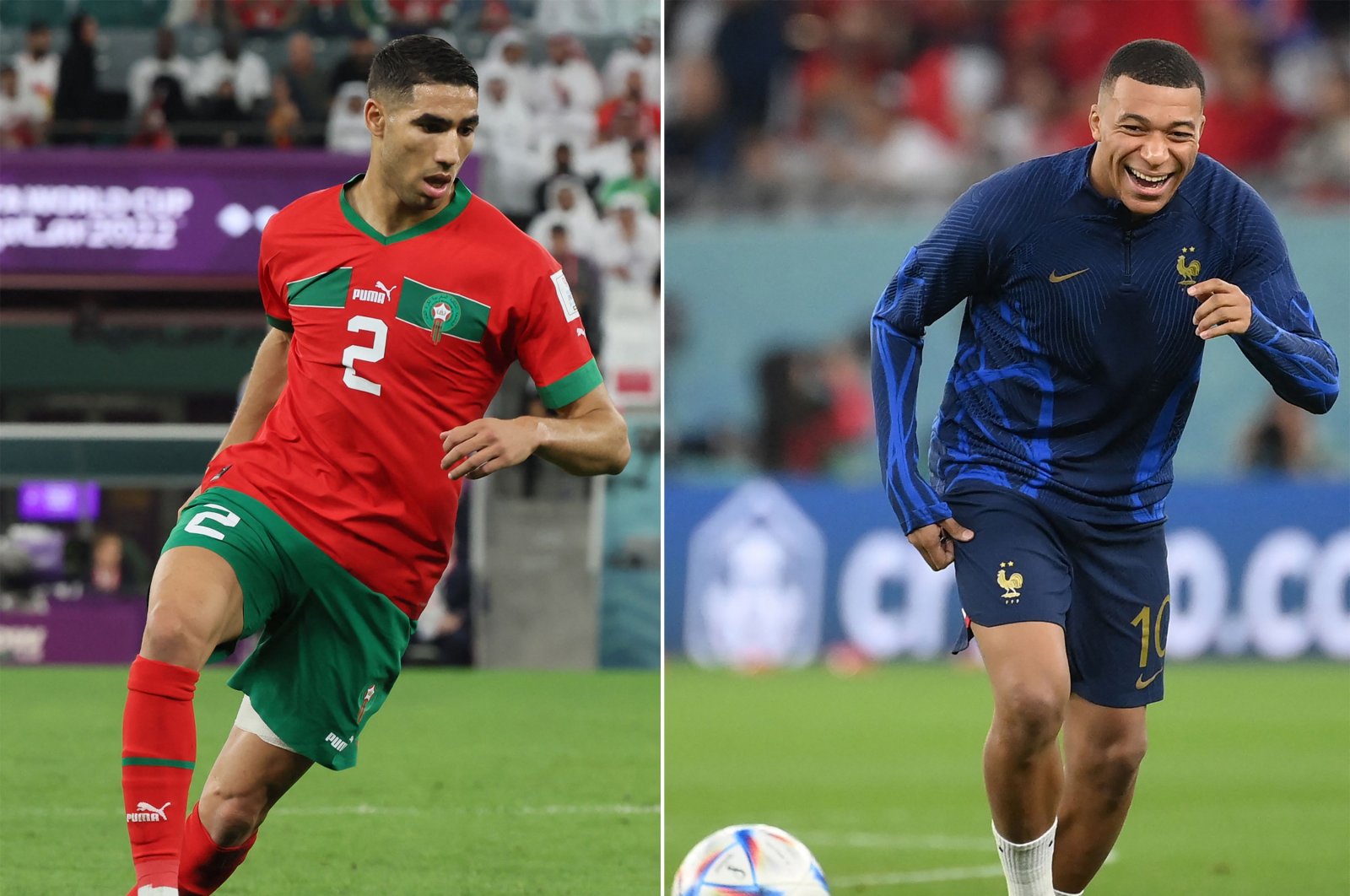
The recent discourse surrounding Morocco’s ascension to the pinnacle of African football, often framed through the emotional lens of "taking" a title from Senegal, ignores the fundamental shift in sporting infrastructure and human capital management occurring across the continent. Labeling a transition of power in the Africa Cup of Nations (AFCON) as a "joke" fails to account for the quantifiable divergence in how these two nations construct their national programs. Senegal’s dominance was built on a generational peak of elite talent localized in European academies; Morocco’s current trajectory is the result of a centralized, state-funded institutional overhaul designed to mitigate the volatility of talent cycles.
To understand why the balance of power is shifting, we must look past the 90-minute variance of a tournament and analyze the structural pillars supporting these federations.
The Infrastructure Arbitrage
Morocco’s advantage is not rooted in a superior "spirit" but in a massive capital expenditure program. The Mohammed VI Football Academy serves as a high-performance blueprint that most African nations, including Senegal, have yet to replicate at scale. This facility provides a controlled environment for elite development that bridges the gap between raw domestic talent and the tactical rigors of European leagues.
- Capital Centralization: Morocco’s investment exceeds $600 million over the last decade in stadium upgrades, training centers, and grassroots coaching education.
- Geographic Proximity: The federation utilizes its proximity to Europe to integrate dual-national players into a cohesive system years before they reach senior levels.
- Logistical Superiority: By hosting multiple continental tournaments and providing facilities for other African nations, Morocco has gained "home field" familiarity across the CAF landscape.
Senegal, by contrast, operates on a more decentralized model. Their success relies heavily on the "Generation Foot" pipeline and external French academies. While this produces world-class individuals, it creates a dependency on external development philosophies that the federation cannot directly control. When a "golden generation" like Senegal’s—led by Sadio Mané and Kalidou Koulibaly—begins to age, a decentralized system often faces a lag in replacement talent. Morocco’s centralized system is designed to produce a standardized "output" of players, ensuring a higher floor of performance regardless of individual star power.
Tactical Evolution and the High-Press Bottleneck
The criticism of Morocco’s success often centers on their pragmatic, defensive-first approach seen during the 2022 World Cup. Critics confuse efficiency with a lack of merit. In tournament football, the "Cost Function of Error" is significantly higher than in league play. Morocco’s tactical framework under Walid Regragui is built on minimizing high-risk zones.
The "Senegal Model" under Aliou Cissé perfected a physical, high-transition game. This requires peak athletic output from every outfield player. As that squad ages, the metabolic cost of maintaining that intensity increases, leading to late-game defensive lapses. Morocco has shifted the paradigm toward tactical flexibility—alternating between a low block and a mid-press that conserves energy over a month-long tournament. This is not a "joke" of a strategy; it is a clinical optimization of player resources.
The Dual-National Integration Variable
A primary driver of the tension between these footballing cultures is the recruitment of the diaspora. Morocco has mastered the identification and "onboarding" of players born in Spain, France, the Netherlands, and Belgium.
- Early Identification: Scouts engage with players at the U-15 level, rather than waiting for senior-team eligibility.
- Cultural Alignment: The federation markets a sense of national identity that competes with European call-ups.
- Professionalism Parity: By offering world-class medical, travel, and training standards, Morocco removes the "quality gap" that previously deterred top-tier diaspora talent from committing to African nations.
This creates a depth chart that is resilient to injuries. Senegal has also utilized the diaspora, but their recruitment has historically been more reactive. The friction arises when a nation like Morocco, which leverages European tactical schooling through its players, dominates a competition traditionally defined by "African" stylistic tropes of physicality and individual flair.
Financial Sustainability and Governance
The Royal Moroccan Football Federation (FRMF) operates with a level of corporate governance that is currently unmatched in the CAF region. This is reflected in their ability to secure long-term sponsorships and government subsidies that are insulated from the economic volatility affecting other nations.
The "Three Pillars of Moroccan Governance" include:
- Professionalization of the Botola Pro: Increasing the domestic league's quality to ensure local call-ups are fit for international intensity.
- Coaching Education: Standardizing the CAF Pro License requirements to create a surplus of high-level domestic tactical minds.
- Economic Diplomacy: Using football as a tool for soft power, which in turn brings in commercial revenue that is reinvested into the youth system.
Senegal’s federation has made strides, but it lacks the same level of direct state-integrated funding. This creates a disparity in the "Margin of Error." Morocco can afford a failed coaching appointment or a botched tournament because the underlying system is robust. For most other African nations, a single poor AFCON cycle can lead to a total collapse of the national project due to funding withdrawals or political interference.
Psychological Warfare and the "Title" Narrative
The claim that a title was "taken" suggests a natural right to dominance that does not exist in professional sports. Senegal’s 2021 victory was the culmination of a six-year build-up. Morocco is currently in the middle of a similar, if not more aggressive, cycle. The "joke" narrative is a byproduct of regional rivalry and the disruption of the established hierarchy.
Historically, North African teams were criticized for not performing well in Sub-Saharan conditions. Morocco has systematically dismantled this excuse by investing in climate-controlled environments and advanced recovery technology. They have engineered away the variables that used to cause them to fail.
The Regression to the Mean
In statistical terms, Senegal’s recent run was an outlier of excellence. Maintaining that level requires constant reinvention. Morocco is not "stealing" a crown; they are filling a power vacuum created by the natural lifecycle of a great team. The transition of power is a lagging indicator of investments made ten years ago.
The mechanism of this shift is simple:
- Phase 1: Infrastructure development (2014-2018)
- Phase 2: Talent integration and tactical standardization (2018-2022)
- Phase 3: Continental dominance and global competitiveness (2022-Present)
Any nation wishing to challenge this must stop viewing Morocco’s rise as an anomaly and start viewing it as a blueprint. The era of winning AFCON on "talent alone" is over. The future belongs to the federations that function like elite corporations.
Strategic focus must now shift to the 2025 AFCON and 2026 World Cup cycles. Morocco has established a baseline of quarter-final appearances as a minimum requirement. To disrupt this, Senegal and other West African powers must move beyond the academy-to-Europe pipeline and begin building domestic high-performance hubs that allow for the same level of tactical continuity and physiological monitoring found in Rabat. Failure to modernize the administrative and physical infrastructure will result in a permanent shift where North African nations leverage their superior resources to monopolize continental silverware.