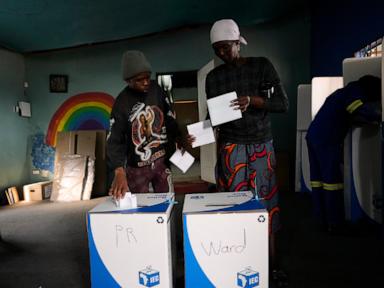
Municipal elections in South Africa serve as the primary leading indicator for national political realignment, operating as a high-frequency stress test of the African National Congress (ANC) governing model. When voters cast ballots at the local level, they are not merely selecting ward councilors; they are auditing the state’s capacity to convert tax revenue into basic physical infrastructure. The ongoing decline of ANC vote share in local polls—falling below the 50 percent threshold nationally for the first time in the 2021 municipal cycle and continuing its downward trajectory in subsequent local contests—is driven by three compounding structural failures: municipal fiscal insolvency, the breakdown of patronage distribution networks, and the fragmentation of the opposition vote into volatile coalition blocs.
Understanding this political contraction requires stripping away ideological narratives and examining the operational mechanics of South African local government. Municipalities are constitutionally mandated to provide water, sanitation, electricity distribution, and refuse removal. These services generate the bulk of municipal revenue through user tariffs. When infrastructure degrades due to deferred maintenance and capital misallocation, a negative feedback loop initiates: service interruptions reduce willingness to pay, tariff collection rates collapse, and the municipality loses the liquidity required to repair the grid. Voters experience this macroeconomic failure directly at the tap and the wall socket, making local elections an immediate referendum on administrative competence rather than historical liberation legitimacy. Learn more on a connected subject: this related article.
The Mechanics of Municipal Service Collapse
To quantify the political risk facing the ANC, analysts must evaluate the operational health of the 257 municipalities across South Africa's three tiers: metropolitan municipalities (Category A), local municipalities (Category B), and district municipalities (Category C). The political vulnerability of the ruling party is concentrated most acutely in Category A metros—such as Johannesburg, Tshwane, Ekurhuleni, and eThekwini—which serve as the country’s economic engines.
The root cause of voter defection in these urban centers is a failure of capital expenditure execution. Municipal budgets rely on a delicate equilibrium between equitable share transfers from the National Treasury and own-source revenue derived from property rates and utility surcharges. Over the past decade, two systemic distortions have broken this model: Further reporting by Associated Press highlights related views on this issue.
- The Wage-to-Maintenance Inversion: Municipal payrolls have expanded consistently above inflation, consuming an unsustainable proportion of operating budgets. This crowds out the standard industry benchmark—typically 8 percent of the value of property, plant, and equipment—required for routine repairs and maintenance. Without preventative maintenance, water treatment plants, substations, and sewage pump stations suffer catastrophic mechanical failure.
- Eskom Debt and Grid Distribution Bottlenecks: Municipalities act as intermediaries, purchasing bulk electricity from the state utility Eskom and reselling it to residents at a markup to cross-subsidize other municipal functions. Rising bulk tariffs, combined with rampant illegal connections and non-payment, have left dozens of municipalities in arrears to Eskom. When Eskom attaches municipal bank accounts or throttles supply, the local administration loses both its primary cash cow and its credibility with ratepayers.
This operational decay alters voter behavior through a mechanism political scientists term economic voting. In national elections, voters often weigh abstract national policies, social grants, and identity politics. In municipal elections, the causal chain between the incumbent party and daily hardship is direct and unmediated. A resident enduring multi-day water outages or raw sewage spills in suburban streets does not require opposition campaign messaging to identify institutional failure.
Demographic Shifts and the Erosion of Liberation Hegemony
The ANC’s historical dominance rested on a durable electoral coalition uniting rural traditionalist voters, the organized labor movement, and the black urban middle class. Local election trends demonstrate that this coalition is fracturing along generational and geographic lines, driven by two distinct demographic pressures.
First, the born-free cohort—citizens born after the end of apartheid in 1994—now constitutes a massive share of the eligible electorate. For this demographic, the ANC is not a liberation movement that dismantled racial oppression; it is simply the incumbent bureaucracy presiding over youth unemployment rates exceeding 60 percent. Historical loyalty has a quantifiable depreciation rate. Each five-year electoral cycle replaces older, fiercely loyal ANC voters with younger cohorts whose political allegiance is transactional and contingent on economic opportunity.
Second, rapid urbanization has shifted the electoral center of gravity away from rural strongholds—where traditional leaders and state social grants reinforce ANC support—toward dense metropolitan areas. Urban voters exhibit higher educational attainment, greater exposure to independent media, and lower susceptibility to clientelist mobilization. In the metros, the ANC faces a structural deficit: it cannot rely on rural turnout to offset urban losses in a local election, because local boundaries isolate the urban electorate. When the ANC loses control of Johannesburg or Tshwane, it loses control over multi-billion-rand procurement budgets, accelerating the atrophy of its local party machinery.
The Patronage Bottleneck and Factional Fragmentation
A critical yet frequently overlooked driver of the ANC’s local decline is internal party dysfunction. In South Africa, the boundary between party and state has been blurred through the policy of cadre deployment, wherein party committees influence the appointment of senior municipal managers, chief financial officers, and supply chain directors.
While this system was designed to ensure ideological alignment and transformation, in practice it has turned municipal administrations into arenas for intra-party resource competition. The mechanics of this dysfunction follow a predictable sequence:
- Factional Capture: Local ANC branches compete fiercely for control over candidate lists prior to municipal elections. A ward councilor position or a mayoral committee seat provides direct influence over municipal tenders, public works contracts, and Expanded Public Works Programme (EPWP) job allocations.
- Administrative Paralysis: When a rival faction wins control of a regional party structure, it routinely purges the municipal administration installed by the previous faction. Key technical roles—such as municipal engineers and procurement heads—are left vacant or filled with underqualified loyalists. Institutional memory evaporates, and multi-year infrastructure projects stall mid-execution.
- Voter Alienation via Candidate Imposition: Because branch-level politics are dominated by gatekeepers trading memberships for influence, the candidates selected to represent the ANC in local wards frequently lack genuine community support. Voters punish this disconnect either by abstaining entirely—depressing turnout in traditional ANC strongholds—or by voting for independent ward candidates who split the ruling party’s base.
Low voter turnout is the silent killer of ANC majorities. In recent municipal contests, overall turnout has dipped below 50 percent of registered voters. Data from ward-level results indicates that ANC voters rarely defect directly to the center-right Democratic Alliance (DA). Instead, disillusioned ANC supporters stay home, effectively lowering the absolute number of votes required for opposition parties to capture a plurality.
The Coalition Trap and Post-Election Instability
As the ANC slips below the 50 percent mark in an increasing number of councils, South African local governance has entered an era of forced coalition politics. However, the transition from single-party dominance to multi-party governance has not automatically produced administrative stability. Instead, it has introduced a new set of institutional vulnerabilities.
Unlike mature European parliamentary democracies with established norms for coalition formation, South African municipal coalitions suffer from extreme ideological incoherence and transactional opportunism. A typical hung council requires alliances between fundamentally incompatible actors: the market-oriented Democratic Alliance, the Marxist-Leninist Economic Freedom Fighters (EFF), regionalist parties like the Inkatha Freedom Party (IFP), and hyper-local micro-parties holding only one or two seats.
This dynamic creates a severe principal-agent problem known as the kingmaker distortion:
- Disproportionate Leverage: A micro-party winning less than 2 percent of the municipal vote often holds the balance of power in a hung council. This party can demand the mayoralty or lucrative committee chairmanships as the price for its support, divorcing executive authority from electoral mandate.
- Chronic No-Confidence Motions: South African municipal legislation allows councils to remove mayors and speakers through simple majority votes with minimal procedural friction. Consequently, coalitions collapse repeatedly between elections. Johannesburg, for example, cycled through multiple mayors within a single five-year term, halting budget approvals and paralyzing municipal departments.
- Policy Gridlock: When a coalition unites solely to keep the ANC out of power, it lacks a shared governing manifesto. Disagreements over tariff structures, insourcing of municipal workers, and spatial planning stall council resolutions, leaving residents with the same broken infrastructure they experienced under single-party ANC rule.
Distinguishing Verified Trends from Strategic Hypotheses
To maintain analytical rigor when forecasting the trajectory of South African local politics, observers must separate established empirical patterns from speculative projections.
Verified Empirical Realities:
- The ANC’s national vote share in local government elections has followed a consistent, multi-cycle downward trend, dropping from over 60 percent in the 2000s to 53.9 percent in 2016, and below 46 percent in 2021.
- Audit outcomes from the Auditor-General of South Africa consistently show that fewer than 15 percent of municipalities achieve clean audits, with irregular, fruitless, and wasteful expenditure running into tens of billions of rand annually.
- Voter registration and turnout among citizens aged 18 to 29 remain significantly lower than among citizens over 50, creating a massive pool of unmobilized voters capable of upending polling models if activated.
Educated Strategic Hypotheses:
- The Ceiling of Opposition Consolidation: While the ANC is losing ground, no single opposition party is positioned to inherit a national majority. The DA faces a demographic and ideological ceiling in historically black townships, while populist alternatives like the EFF or uMkhonto weSizwe (MK) party cannibalize the ANC’s base without building the administrative infrastructure required to govern complex metros.
- The Normalization of ANC-Led Coalitions: Having lost outright majorities, the ANC is shifting from a hegemonic party to a dominant plurality party that governs through formal or informal supply-and-confidence agreements with smaller regional or populist parties, replicating at the local level the dynamics of its national Government of National Unity (GNU).
Limitations of Institutional Reform
Proposals to stabilize local governance—such as raising the electoral threshold to eliminate micro-party kingmakers, requiring a constructive vote of no confidence before removing a mayor, or placing failing municipalities under national administration—face severe structural constraints.
Electoral threshold reforms require legislative amendments that smaller parties will fiercely resist, and they risk disenfranchising minority communities. Similarly, national interventions under Section 139 of the Constitution—where provincial or national executives take over failing municipalities—have a poor track record. Administrators dispatched to insolvent towns frequently encounter hostile local bureaucrats, entrenched tender networks, and a lack of ring-fenced turnaround funding. Without depoliticizing the appointment of municipal managers and enforcing strict criminal accountability for financial misconduct, structural reforms merely rearrange the political deck while the underlying fiscal insolvency persists.
The Strategic Imperative for Political and Economic Actors
For institutional investors, corporate operators, and civic organizations operating within South Africa, the continued decline of the ANC at the local level demands an immediate shift in risk management and stakeholder engagement. Relying on centralized, top-down relationships with national ministries no longer guarantees operational stability at the municipal level.
Organizations must execute a decentralized, ward-level resilience strategy:
- Ring-Fence Critical Infrastructure: Businesses cannot assume municipal grids will stabilize under coalition governments. Capital allocation must prioritize off-grid energy generation, independent water storage and filtration, and private security infrastructure as permanent operating expenditures rather than temporary stopgaps.
- Map Micro-Political Risk: Political risk analysis must move from national polling to granular, council-by-council tracking. Companies with physical footprints in hung metros must map the specific committee chairs, municipal managers, and coalition agreements governing their local districts, preparing contingency plans for rapid executive turnover every six to twelve months.
- Engage in Direct Public-Private Civic Partnerships: Where municipal capacity has collapsed, private sector actors must utilize legal mechanisms—such as Special Rating Areas (SRAs) or City Improvement Districts (CIDs)—to ring-fence local property surcharges and directly manage street lighting, waste removal, and basic maintenance within commercial corridors, insulating operations from municipal administrative paralysis.