The cessation of hostilities between Israel and Hezbollah is not a resolution of the underlying conflict but a temporary recalibration of a high-friction equilibrium. To understand the longevity of this ceasefire, one must look past the immediate humanitarian relief and analyze the structural integrity of the agreement’s enforcement mechanisms. The survival of this pause in kinetic warfare depends entirely on three variables: the credibility of the international monitoring mission, the internal political cohesion of the Lebanese state, and the risk-reward calculus of the Iranian regional strategy.
The Buffer Zone Dilemma and Enforced Sovereignty
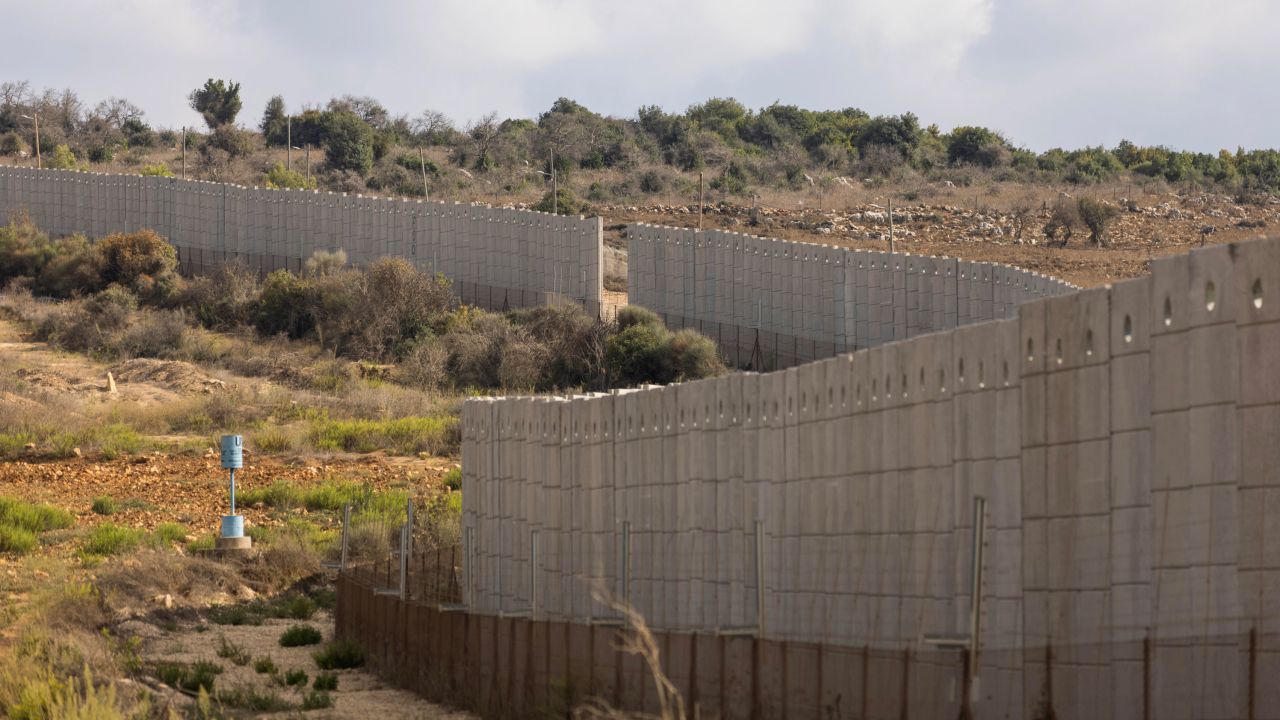
The core of the agreement rests on a geographical exclusion zone. For the ceasefire to hold, Hezbollah must physically vacate the area south of the Litani River, transferring security responsibilities to the Lebanese Armed Forces (LAF) and the United Nations Interim Force in Lebanon (UNIFIL). This creates a fundamental execution risk.
The LAF faces a dual-constraint problem. First, it lacks the technical and logistical capacity to serve as a high-intensity border guard against a non-state actor that is domestically more powerful than the army itself. Second, the LAF’s political mandate is fragile; any direct kinetic confrontation with Hezbollah risks fracturing the army along sectarian lines. This leads to a state of Passive Compliance, where the army occupies space but does not proactively dismantle the infrastructure of the militant group it is replacing.
Israel’s security requirement is based on the prevention of "return-to-status-quo." If the LAF cannot or will not dismantle tunnels and weapon caches, Israel maintains a self-declared right to strike targets it deems an imminent threat. This "freedom of action" is the primary friction point. If Israel exercises this right, it undermines the sovereignty the agreement seeks to restore to the Lebanese state, potentially triggering a resumption of full-scale hostilities.
The Economic Cost Function of Lebanese Reconstruction
Lebanon’s willingness to sustain the ceasefire is heavily influenced by its total economic collapse. The cost of reconstruction is estimated in the billions of dollars, and international donors have signaled that funds will not flow into a theater of active war.
- Capital Flight and Risk Premiums: The Lebanese banking sector cannot facilitate recovery while the threat of renewed bombardment looms.
- Energy Infrastructure: Repairing the power grid requires foreign technical expertise and credit guarantees that disappear the moment a rocket is fired across the Blue Line.
- Displaced Population Return: The logic of the ceasefire assumes that the return of civilians to Southern Lebanon acts as a "human shield" for peace. However, if the area remains a militarized zone under the surface, the return of civilians merely increases the potential for collateral damage in future strikes, raising the political cost for the Lebanese government.
The disconnect between the military ceasefire and the economic recovery plan is a critical failure of the current framework. Without a tangible "peace dividend" that reaches the Lebanese populace quickly, the political pressure on the government to enforce the agreement against Hezbollah’s interests will evaporate.
The Asymmetric Logic of Regional Proxy Warfare
Hezbollah’s decision to accept a ceasefire was not driven by a change in ideology, but by a degradation of its command-and-control structure and the decimation of its senior leadership. This is a strategic retreat aimed at Regeneration.
The group operates on a long-term time horizon where the survival of the organization is the primary objective. By agreeing to a pause, they preserve their remaining missile inventory and allow for the recruitment and training of a new generation of commanders. The strategic risk for Israel is that the ceasefire becomes a shield for Hezbollah's re-armament, facilitated by smuggling routes through the Syrian border.
The Syrian border remains the most significant intelligence blind spot in the current agreement. While the South is monitored, the supply chain originating in Tehran and passing through Damascus is not part of the primary enforcement zone. This creates a leakage in the system: as long as the "Axis of Resistance" perceives value in maintaining a threat on Israel’s northern border, the ceasefire is merely a period of tactical replenishment.
Enforcement Thresholds and Violation Management
A ceasefire is only as strong as its definition of a violation. The current framework relies on a US-led monitoring committee to adjudicate disputes. The effectiveness of this committee is limited by its lack of physical enforcement power.
- Grey Zone Activity: Small-scale incursions, the rebuilding of observation posts disguised as civilian structures, and clandestine weapons transfers do not always trigger a "red line" response. These incremental violations slowly erode the buffer zone's integrity.
- Attribution Latency: Determining who fired a projectile or who established a clandestine position takes time. In the window between a violation and an adjudication, the political will to respond often dissipates, leading to "Normalization of Defiance."
- Proportionality Trap: If Israel responds to a minor violation with a major strike, it risks being labeled the aggressor in the eyes of the international community. If it does not respond, it signals weakness.
This dynamic creates a game theory trap where the party most willing to operate in the "grey zone" gains a cumulative advantage over time.
The Displacement of the Palestinian Variable
The ceasefire in Lebanon was explicitly decoupled from the conflict in Gaza. This decoupling is a significant diplomatic shift but introduces a new instability. Hezbollah’s original justification for the conflict was "solidarity" with Hamas. By ending its active participation while the Gaza conflict continues, Hezbollah risks a loss of regional prestige.
To mitigate this, the group may shift its activity to other domains, such as cyber warfare, international terror cells, or inciting unrest in the West Bank. The conflict has not disappeared; it has merely changed its primary theater of operations. The pressure on the Lebanon-Israel border will remain high as long as there is no resolution to the broader regional alignment.
Strategic Recommendations for Stability Maintenance
To move from a cessation of hostilities to a durable period of non-conflict, the focus must shift from monitoring the border to addressing the supply-side mechanics of the war.
- Sanctioning the Logistics Chain: Efforts must focus on the land corridors between Syria and Lebanon. Without interdicting the flow of replacement parts for long-range precision-guided munitions, the South Lebanon buffer zone is a cosmetic solution.
- Institutional Strengthening of the LAF: The international community must provide not just equipment, but the political air cover necessary for the Lebanese Army to act independently of Hezbollah. This requires a new domestic political consensus in Beirut that has yet to materialize.
- Decoupled Reconstruction Aid: Aid should be released in tranches strictly tied to the verified absence of militant infrastructure. This creates a direct financial incentive for local municipalities to prevent Hezbollah from re-establishing a presence in their villages.
The current ceasefire is a tactical breather for both sides. For Israel, it allows the focus to shift back to the Iranian nuclear program and the Gaza theater. For Hezbollah, it is a survival necessity. The absence of noise is not the presence of peace; it is the sound of two adversaries preparing for a different iteration of the same struggle.