Operational Bottlenecks Within Federal Containment Systems
When border enforcement volume exceeds processing capacity, the immediate operational response involves temporary holding zones designed for rapid turnover rather than prolonged confinement. Federal oversight reports evaluating facilities often referred to colloquially as Alligator Alcatraz highlight a structural mismatch between intake velocity and institutional throughput. The mechanics of border processing rely on a predictable mathematical formula: incoming apprehensions divided by processing speed must equal or remain below physical holding capacity. When intake outpaces processing speed by a factor exceeding baseline design specifications, systems experience operational gridlock.
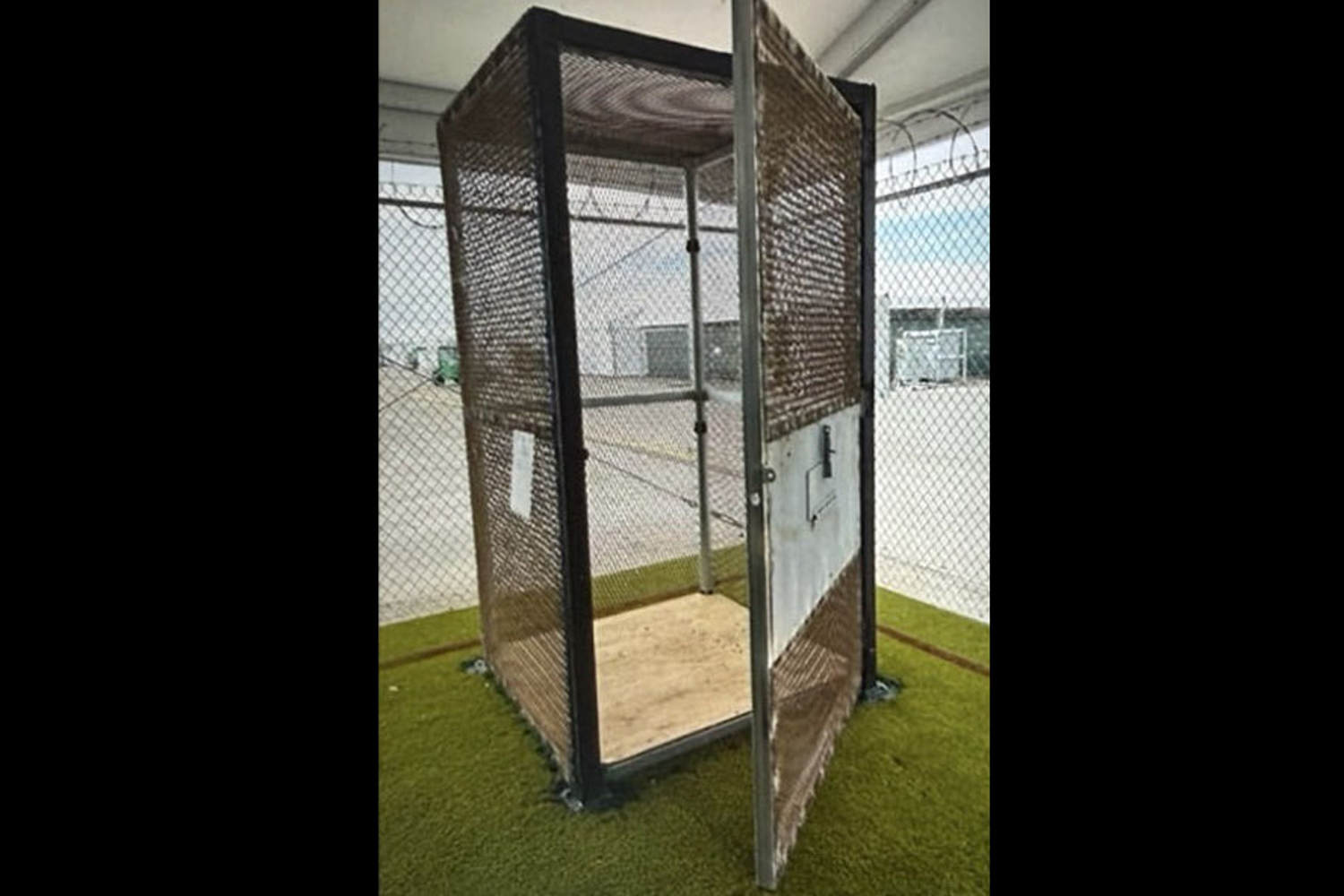
Temporary holding structures, including outdoor chain-link pens and partitioned enclosures criticized for their restricted square footage, emerge as ad-hoc solutions to absorb surplus population. These enclosures function as pressure release valves within a constrained administrative pipeline. However, treating a chronic systemic throughput deficit with acute spatial compression creates severe operational friction. Personnel managing these sites operate under statutory processing mandates while lacking the physical infrastructure required to maintain humane or efficient holding standards during surge events.
The velocity of modern migration patterns interacts with legacy legal constraints, specifically federal court settlements and statutory limits governing the duration individuals can remain in short-term custody. When immigration processing centers reach maximum saturation, field agents face immediate compliance conflicts. Releasing individuals into the interior without complete vetting violates national security protocols, whereas retaining them beyond legal time limits in unauthorized conditions triggers civil rights litigation. Outdoor cages and improvised booths represent the physical manifestation of this administrative bind, serving as spatial receptacles where individuals wait while processing queues stall.
The Cost Function of Temporary Infrastructure
Deploying improvised containment measures introduces quantifiable economic and institutional costs that extend far beyond initial procurement expenditures. Within public administration frameworks, capital expenditure on permanent, climate-controlled processing facilities competes with operational funding for personnel and transport logistics. When agencies underinvest in permanent infrastructure, they inherit an escalating cost burden driven by emergency contracting, legal liabilities, litigation defense, and heightened employee turnover resulting from substandard working environments.
The economic model governing holding facilities relies on minimizing per-capita daily maintenance costs. By utilizing outdoor perimeter fencing, temporary tarps, and minimal modular partitions, agencies reduce immediate capital outlay per detainee. Yet, this approach shifts the cost burden onto external systems. Medical interventions required due to environmental exposure, administrative delays caused by disorganized processing queues, and regulatory penalties levied following watchdog inspections generate indirect expenditures that easily surpass the initial savings achieved through minimalist spatial design.
Furthermore, the operational inefficiency of constrained spaces generates severe labor bottlenecks. Staff members spend disproportionate hours managing physical crowding, distributing basic rations in cramped quarters, and quelling friction among detainees confined to high-density environments. This allocation of staff time pulls personnel away from core adjudication and repatriation workflows, compounding the backlog and lengthening the average duration of stay within substandard enclosures.
The financial calculus of emergency contracting also demands scrutiny. When federal agencies must rapidly procure mobile lighting, temporary sanitation units, and emergency food supplies during an unexpected migration surge, they lose bargaining power in the open market. Procuring goods and services under emergency declarations frequently incurs premium costs, rendering temporary fixes significantly more expensive over a fiscal year than amortized capital investments in permanent infrastructure would have been.
Institutional Friction Between Oversight and Enforcement
The relationship between internal watchdogs—such as the Department of Homeland Security Office of Inspector General—and operational field components exhibits classic principal-agent friction. Oversight entities operate with a mandate focused on regulatory compliance, statutory adherence, and human rights standards. Operational components, conversely, prioritize immediate situational control, border security maintenance, and compliance with court-mandated release timelines under severe resource constraints.
When watchdog investigations document severe crowding, inadequate sanitation, and restricted personal space approximating the dimensions of traditional phone booths, the public discourse typically frames the issue solely around moral failure. A rigorous administrative analysis, however, reveals a structural conflict. Field commanders frequently face binary choices: release unverified individuals into the interior without proper tracking due to zero available bed space, or hold them in improvised outdoor enclosures that violate internal policy guidelines. The absence of a middle-tier structural buffer—such as regional transit hubs or pre-processing intake centers with scalable modular housing—forces field units into compromised operational postures.
This dynamic creates a defensive bureaucratic posture within enforcement agencies. Rather than treating inspector general findings as diagnostic data to recalibrate capacity planning, agencies often respond through public relations mitigation and legal defensibility arguments. This institutional defensiveness prevents organizational learning. Without an objective feedback loop that translates audit findings into structural capital investments, agencies repeat identical containment cycles during subsequent migration surges.
The structural insulation of field operators from long-term capital planning creates a severe disconnect. Field commanders are evaluated on short-term metrics such as apprehension containment and immediate border security indicators, whereas facility planners operate on multi-year budgetary timelines dictated by congressional appropriations. Until agency command structures align operational incentives with capital infrastructure readiness, watchdog reports will continue to document identical operational failures year after year.
Systemic Failures in Scalable Infrastructure Planning
Predicting migration surges involves complex variable inputs, including economic instability in origin countries, seasonal weather patterns, and shifts in regional enforcement policies. Despite the historical predictability of these surges, federal infrastructure planning has historically relied on static capacity models rather than dynamic, elastic architectures.
A resilient institutional design requires surge-capable infrastructure that expands and contracts without compromising baseline standards. Traditional brick-and-mortar facilities lack the architectural flexibility to absorb sudden volume spikes without catastrophic overcrowding. Conversely, entirely ad-hoc outdoor containment systems degrade too rapidly under environmental stressors and fail to provide the environmental controls necessary for humane short-term staging.
Bridging this gap requires modular engineering frameworks capable of rapid deployment, climate regulation, and secure internal zoning. Yet, procurement cycles within federal agencies are notoriously rigid, often requiring multi-year appropriations and complex environmental impact reviews before groundbreaking. Thus, when an operational crisis arrives, field operators are left with no viable instruments other than chain-link fencing and concrete pads. The structural failure is therefore not merely tactical; it is a failure of procurement agility and long-term capital allocation.
The lack of architectural modularity forces agencies into a binary operational state: facilities are either vastly underutilized during periods of low migratory flow or catastrophically over capacity during surge events. In any other logistical enterprise, managing capacity variance through permanent under-building would be recognized as an egregious management failure. In public sector border administration, however, chronic under-capacity is institutionalized, forcing personnel to rely on improvised containment units as standard operating procedure.
The Mechanics of Environmental Exposure and Detainee Management
Confining individuals in outdoor enclosures during extreme weather events introduces severe physiological and psychological stressors that undermine institutional objectives. Temperature extremes, whether intense heat in southern border zones or sub-freezing conditions in northern sectors, accelerate dehydration, heat exhaustion, and hypothermia. From an operational standpoint, compromised physical health among detainees drastically increases the frequency of emergency medical transports, straining local healthcare infrastructure and pulling security personnel off perimeter watch.
In addition, spatial compression directly influences behavioral dynamics within holding facilities. When individuals are allocated minimal square footage—comparable to enclosed booths—interpersonal tension escalates rapidly. Sleep deprivation resulting from constant illumination, ambient noise, and lack of horizontal resting space impairs cognitive function and increases volatility. Security personnel must then deploy higher levels of coercive control to maintain order, creating an adversarial dynamic that heightens the risk of civil unrest or use-of-force incidents.
The management of vulnerable populations, including families with minor children and unaccompanied minors, within these compressed environments presents an acute administrative hazard. Statutory frameworks and legal settlements mandate specific time limits and care standards for juveniles. When holding facilities rely on improvised outdoor cages, compliance with these legal boundaries becomes mathematically improbable. The resulting violations expose the agency to immediate judicial injunctions and severe reputational damage, paralyzing normal operational workflows.
Environmental stress also degrades the physical infrastructure itself. Temporary fencing, outdoor sanitation trailers, and fabric shade structures deteriorate rapidly when subjected to intense ultraviolet radiation, high winds, and continuous high-density utilization. The continuous need to repair or replace degraded temporary assets creates an endless maintenance loop that drains operational budgets away from permanent infrastructural improvements.
Strategic Operational Shifts for Institutional Reform
Resolving the structural vulnerabilities exposed by oversight audits requires a fundamental reconfiguration of border intake architecture. Agencies must transition from reactive containment models to proactive, elastic processing networks. This strategic transformation rests on three core operational imperatives.
First, federal procurement protocols must be modernized to allow rapid acquisition of modular, climate-controlled semi-permanent structures that can be deployed within weeks of a projected surge. These units must incorporate integrated sanitation, medical triage stations, and dedicated family separation zones to maintain legal compliance during peak volume periods.
Second, the structural pipeline must decentralize intake processing. Concentrating thousands of apprehensions at specific rural border sectors creates localized bottlenecks that overwhelm even well-funded facilities. Establishing regional transit nodes further inland allows agencies to move individuals out of immediate border sectors within hours, distributing the processing load across a broader administrative footprint.
Third, oversight findings must be integrated directly into operational performance metrics. Field leadership should be evaluated not solely on apprehension volume or immediate processing speed, but on adherence to humane holding standards and the efficient turnover of temporary staging zones. Aligning operational incentives with regulatory compliance eliminates the defensive posture that currently stifles institutional adaptation.
Strategic reallocation of resources toward elastic infrastructure and streamlined transit logistics represents the only viable pathway to prevent recurring crises. Without structural modernization, federal containment systems will continue to oscillate between administrative paralysis and severe humanitarian exposure, trapped within an obsolete framework.