Domin
The Structural Mechanics of Dominance How Structural Efficiency Decided The Montreal Alouettes Victory Over The Winnipeg Blue Bombers
sports
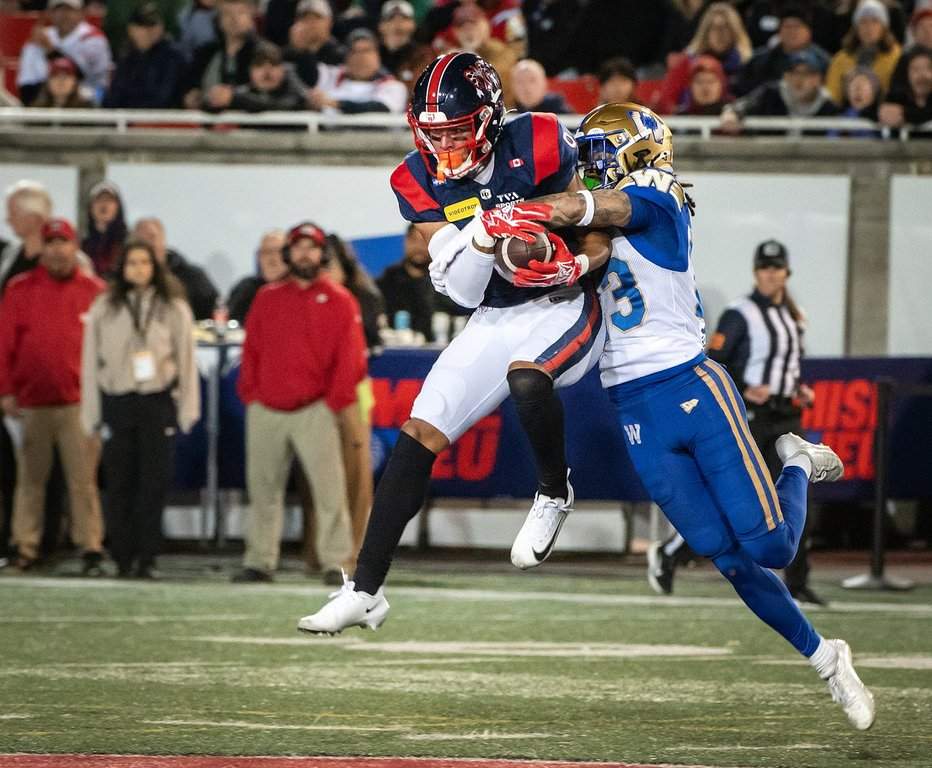
In professional football, dominant margins of victory are rarely the product of random variance or sudden surges in athletic output. When the Montreal Alouettes secured a 37-10 win over the Winnipeg Blue Bombers to clinch the East Division, the outcome was governed by systemic efficiency, tactical discipline, and the exploitation of structural mismatches. A final score of 27 points does not describe a fortunate afternoon; it exposes a systemic failure in the opposition's defensive framework and an offensive execution that maximized expected value on every possession.
To deconstruct this performance, one must look past the superficial box score and analyze the underlying operational mechanics: field position management, third-down efficiency, explosive play differential, and the defensive disruption rate.
The Mechanics of Field Position and Drive Architecture
The foundation of any blowout victory begins with drive architecture. Football is fundamentally a game of territory, where the probability of scoring decays exponentially as distance to the end zone increases. The Alouettes controlled this metric by winning the hidden yardage battle through tactical special teams play and defensive three-and-outs.
When an offense consistently operates with a short field, the offensive coordinator’s playbook expands because the risk profile of individual play-calls decreases. Third-and-medium situations transform into manageable scenarios where the play-caller can leverage both run and pass options equally. Conversely, the Blue Bombers spent a disproportionate amount of time pinned deep in their own territory. This structural disadvantage forces predictable play-calling, rendering the offense vulnerable to aggressive pass rushes and zone coverage traps.
The primary driver of the Alouettes' early-game advantage was their ability to sustain drives while denying the Bombers intermediate rhythm. In elite football strategy, sustained drives serve two functions: they accumulate points and they diminish the opponent's defensive stamina. By stringing together methodical plays that averaged over five yards on first down, Montreal neutralized Winnipeg's pass rush. When an offense stays ahead of the chains, defensive coordinators cannot pin their ears back and blitz; they must play conservative zone coverages that cede short completions to prevent explosive plays.
Tactical Exploitation of Defensive Vulnerabilities
The 37-10 scoreline reveals an acute mismatch in tactical adaptability. Winnipeg entered the matchup with a defensive identity predicated on stopping the run and forcing opposing quarterbacks into tight-window throws under duress. Montreal's coaching staff dismantled this approach by utilizing horizontal stretching concepts and quick-release passing games that bypassed the pass rush entirely.
By deploying personnel groupings that forced the defense to show its hand early, the Alouettes repeatedly identified single-coverage opportunities on the perimeter. The passing game relied on timing and route spacing rather than deep-developing concepts. This eliminated the need for maximum protection schemes, allowing Montreal to keep extra blockers in reserve only when necessary while maintaining a four- or five-receiver flood against standard coverages.
The second component of this tactical dominance was the run-pass option efficiency. When the defense overcommitted resources to contain the perimeter threats, interior gaps opened for the rushing attack. This created a zero-sum problem for the Winnipeg linebackers: commit to the run and yield explosive vertical seams, or drop into coverage and allow efficient, clock-bleeding runs that advanced the chains.
The Cost Function of Turnovers and Penalties
In high-stakes football, the margin for error is compressed by the frequency of high-cost events, namely turnovers and drive-killing penalties. The analytical takeaway from this game is the asymmetry of risk.
Winnipeg’s offensive strategy was derailed not merely by failed conversions, but by catastrophic variance events—specifically, turnovers in plus territory and penalties that flipped field position. In strategic analysis, a turnover is a multi-variable disaster: it yields immediate possession to the opponent, surrenders expected points, and places the defensive unit back on the field with depleted rest intervals.
When Montreal capitalized on these extra possessions, the psychological and physical burden on the Blue Bombers intensified. A defense that is forced to defend short fields repeatedly will experience structural breakdown in its gap integrity by the third quarter. Missed tackles increase, communication errors in secondary coverages multiply, and the opponent’s yards-per-carry metric surges. The 37-10 margin reflects this exact tipping point, where a competitive deficit transformed into an operational collapse.
Evaluating the East Division Clinch
Clinching a division title requires more than winning individual games; it requires structural consistency over a macro-season timeline. The Alouettes' performance in this fixture encapsulated the traits of a championship-caliber roster: tactical versatility, low self-inflicted error rates, and the capacity to ruthlessly exploit an opponent's schematic weaknesses once identified.
The victory confirms that Montreal’s ceiling is built on sustainable offensive efficiency rather than unsustainable defensive scoring or lucky breaks. For the Blue Bombers, the defeat serves as a diagnostic audit of their defensive limitations against elite, high-tempo passing attacks that utilize pre-snap motion to stress assignment football.
Moving forward, the strategic imperative for Montreal is maintaining this level of schematic discipline against opponents who will undoubtedly attempt to disguise coverages to disrupt their timing. For Winnipeg, the path to correction requires a fundamental reassessment of how their defensive front-seven handles spread formations and quick-cadence offensive structures. The scoreboard was merely the byproduct of these underlying mechanical truths.


