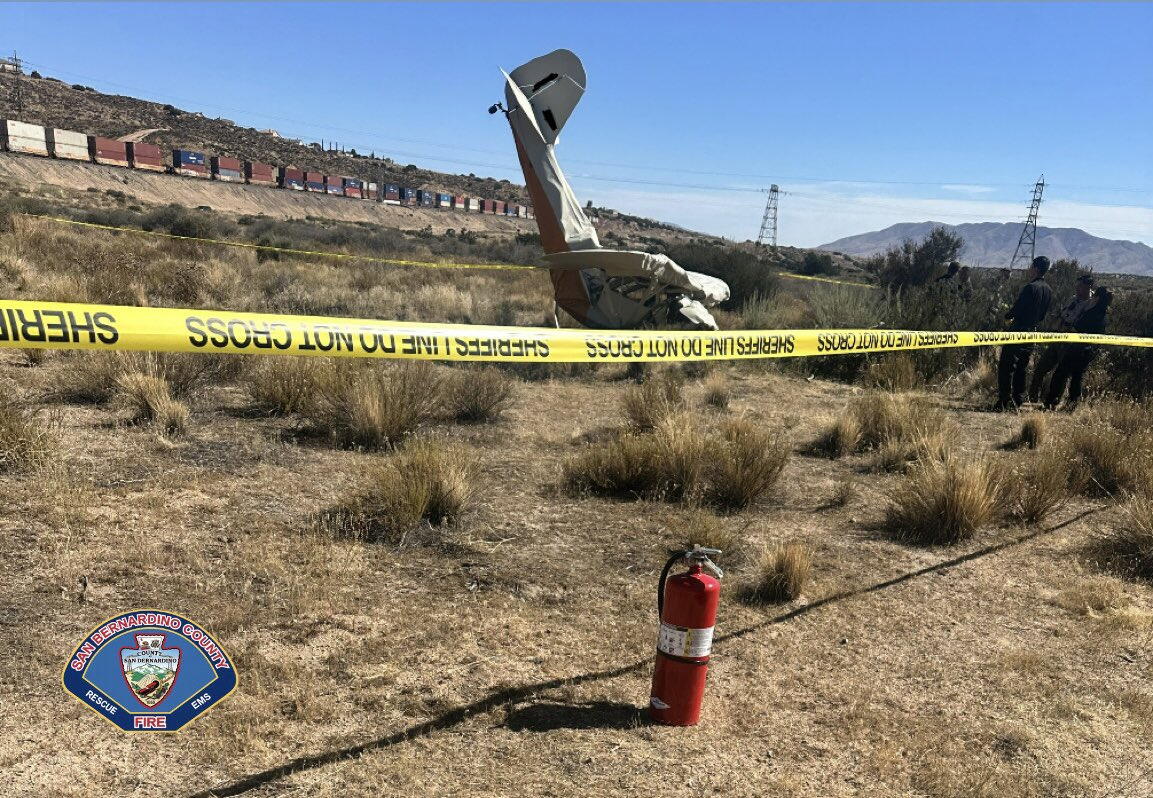
Single-engine aircraft mishaps rarely occur due to a single, isolated catastrophic failure. Instead, they represent the terminal intersection of multiple latent vulnerabilities within a closed operational system. When an aircraft such as a light single-engine platform encounters a fatal trajectory—as evidenced by recent fatal events in areas like Hesperia—investigators and safety analysts look past the immediate wreckage to map the underlying sequence of kinetic, environmental, and human-factor variables.
Evaluating these incidents requires stripping away anecdotal reporting to examine the mechanics of loss-of-control, structural loading limits, and decision-making loops under stress.
The Operational Envelope and Kinetic Energy Transfer
At the core of any aviation incident involving a light aircraft is the fundamental relationship between lift, drag, thrust, and gravity. A single-engine power plant provides a narrow margin of energy redundancy. When mechanical anomalies or environmental disruptions occur, the available kinetic and potential energy must be managed within strict aerodynamic parameters.
[System Disturbance]
       ↓
[Loss of Power / Lift Degradation]
       ↓
[Energy Management Deficit]
       ↓
[Terminal Trajectory / Ground Impact]
The kinetic energy involved in a high-rate descent scales exponentially with vertical speed and mass. Light utility aircraft lack the structural crush zones and redundant multi-engine architectures found in transport-category commercial jets. Consequently, any departure from controlled flight within ground proximity leaves an exceptionally narrow window for aerodynamic recovery.
The Mechanics of Low-Altitude Flight Regimes
The transition from cruise flight to emergency descent involves severe time-compression for the pilot. Maneuvering flight close to terrain restricts the available maneuvering room. When an engine fails or loses output in a single-engine configuration, the pilot faces an immediate mathematical problem: glide ratio versus altitude loss over a specific terrain profile.
- Airspeed Decay: Attempting to stretch a glide by pulling back on the yoke increases induced drag, leading rapidly to an aerodynamic stall.
- Vector Selection: Choosing a forced landing site requires instantaneous calculation of wind direction, density altitude, and obstacle clearance.
- Workload Saturation: The cognitive load of executing emergency checklists while managing aircraft control inputs frequently exceeds human processing capacity under high acute stress.
Environmental Variables and Localized Micro-Meteorology
Topography significantly influences local wind patterns, density altitude, and visibility. Regions characterized by complex terrain, such as high-desert basins surrounded by elevated ridges, generate severe mechanical turbulence and downdrafts.
Density altitude—pressure altitude corrected for non-standard temperature—dictates engine performance and wing lift efficiency. High ambient temperatures decrease air density, directly reducing the mass airflow through a naturally aspirated internal combustion engine. This reduction limits power output precisely when maximum climb performance is required.
The Density Altitude Performance Penalty
- Thrust Degradation: Reduced air density lowers propeller efficiency and engine output.
- True Airspeed Increase: Higher true airspeeds required to maintain indicated airspeed increase ground roll and turn radii.
- Climb Gradient Reduction: The margin between level flight requirements and maximum rate of climb narrows toward zero, preventing obstacle clearance.
Human Factors and Decision Architecture in Crisis
The National Transportation Safety Board consistently identifies human factors as a primary contributor or catalyst in general aviation mishaps. The decision-making architecture of a solo operator or small crew lacks the cross-checking redundancy of a multi-pilot commercial flight deck.
Confirmation bias and goal-directed persistence often lead operators to press on into deteriorating meteorological conditions or ignore early indicators of mechanical degradation. Once an aircraft enters a degraded state, the psychological pressure to complete the flight plan creates a dangerous heuristic trap.
Cognitive Traps in Single-Pilot Operations
- Plan continuation bias: The psychological cost of abandoning a mission outweighs the perceived risk of continuing into marginal conditions.
- Loss of situational awareness: High workload scenarios tunnel-vision the operator onto a single instrument or immediate crisis, blinding them to secondary threats like terrain proximity or airspeed decay.
- Automation reliance: While modern glass cockpits reduce navigation workload, they can introduce complexity burdens that divert attention away from basic flight control.
Systemic Safety Deficits in General Aviation
Unlike commercial aviation, which operates under continuous regulatory oversight, standardized training loops, and robust data-monitoring programs, general aviation relies heavily on individual risk tolerance and discretionary maintenance intervals.
The economic cost of preventative maintenance, avionics upgrades, and recurrent simulator training creates structural disparities in safety margins across the fleet. Older airframes, while certified and airworthy, lack modern structural crashworthiness features and angle-of-attack awareness systems that mitigate inadvertent stalls.
Risk Mitigation Vectors
Enhancing safety margins in single-engine operations requires shifting from reactive post-accident analysis to predictive risk modeling. Operators must systematically account for variable weight and balance limits, strict density altitude performance ceilings, and mandatory recurrent emergency maneuver training. Treating every flight with the procedural discipline of commercial transport operations remains the primary defense against systemic vulnerabilities.