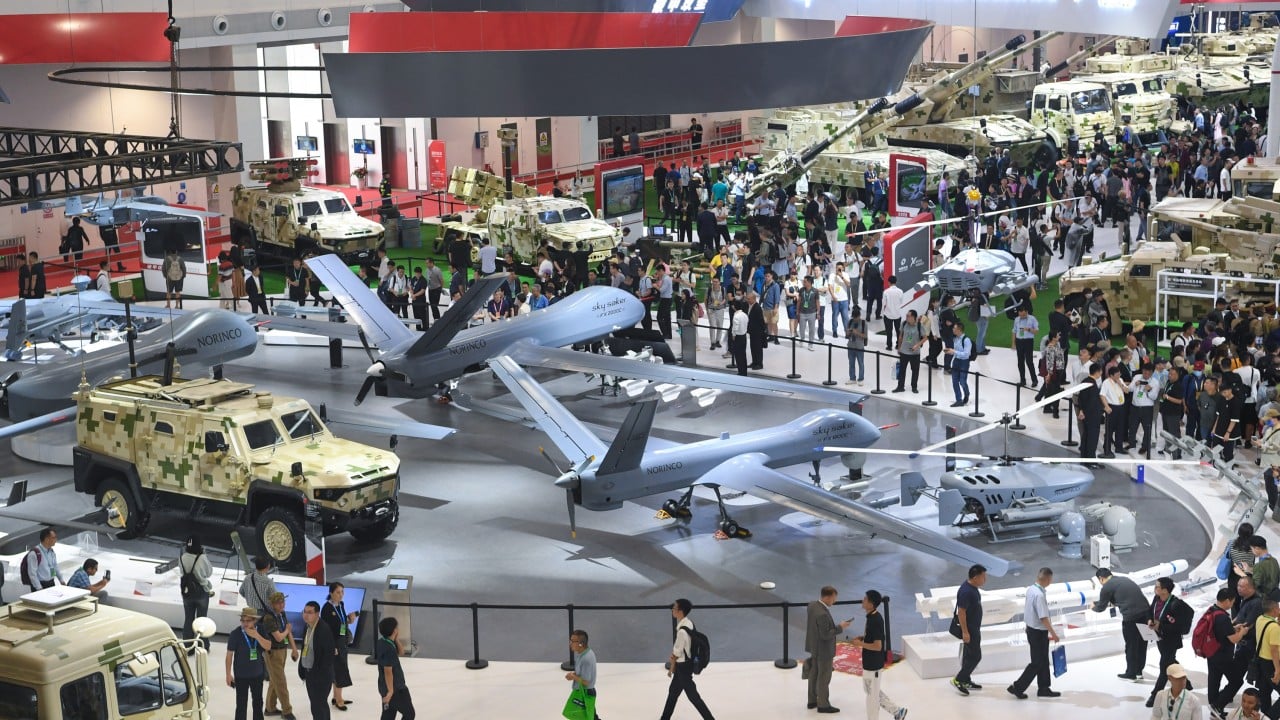
The expansion of the 16th China International Aviation and Aerospace Exhibition to include a dedicated naval equipment display zone represents a calculated structural evolution in defense trade expositions. Historically anchored in aerospace manufacturing and aviation systems, the Zhuhai exhibition has operated as a localized venue for aviation assets and rocketry. By absorbing maritime defense domains into its operational framework, the exhibition mirrors an ongoing consolidation within the defense industrial base—specifically, the operational convergence of air, surface, and sub-surface warfare systems into unified command-and-control architectures.
Deconstructing this expansion requires an examination of institutional mechanics rather than surface-level event marketing. The integration of maritime hardware, spearheaded by entities like the China State Shipbuilding Corporation (CSSC), exposes a deliberate shift in export packaging and domestic systems integration. Also making headlines recently: The Black Sea Graveyard How Unidentified Drones Are Turning NATO Waters Into a Maritime War Zone.
The Industrial Logic of Multi-Domain Convergence
Traditional defense exhibitions segment capabilities by operational environment. Aerospace shows display airframes, propulsion units, and guided munitions; maritime expos focus on hull designs, sonar suites, and surface combatants. However, modern littoral and blue-water combat doctrines render these boundaries obsolete.
When an exhibition introduces a 500-tonne-class unmanned surface vessel alongside heavy-lift and reusable rocket systems, it signals a shift toward system-of-systems marketing. The underlying economics are straightforward: Additional details into this topic are detailed by NBC News.
- Reduced Transaction Friction: International buyers evaluate complete operational kill-chains rather than isolated components. Presenting naval aviation, shipborne sensors, and unmanned surface assets within a single venue enables unified procurement evaluations.
- Technology Spillover Visualization: Technologies developed for aerospace guidance systems—such as advanced guidance, navigation, and control (GNC) algorithms—find direct application in autonomous maritime drone swarms and high-speed interceptors. Zhuhai now serves as the centralized node to display these shared technological roots.
The Economic Mechanics of Defense Trade Scaling
The inclusion of active-duty naval hardware and approximately 3,000 total pieces of equipment alters the cost-to-reach ratio for both defense contractors and international procurement delegations.
Exhibiting heavy military hardware incurs substantial logistical expenditure. By consolidating multi-service displays into a biennial anchor event, defense conglomerates optimize their marketing capital. Instead of deploying separate delegations to regional maritime expos and aerospace trade shows, prime contractors concentrate capital into a single high-visibility window. This centralization accelerates the feedback loop between industrial R&D output and international client acquisition.
Furthermore, the integration of uncrewed maritime systems alongside traditional combat aircraft highlights a strategic focus on cost-asymmetric warfare. Unmanned surface vessels and air-sea coordination nodes offer lower unit costs compared to traditional crewed platforms, altering the acquisition calculus for regional navies operating under strict budgetary constraints.
Systemic Limitations and Operational Constraints
Despite the broadened scope of the exhibition, structural limitations persist in translating static trade show displays into operational efficacy.
First, a static display environment abstracts hardware from its actual operational network. The performance metrics advertised on exhibition floors—such as sensor range, payload capacity, and autonomous transit duration—frequently rely on optimal testing conditions. Real-world deployment introduces degradation factors, including electronic countermeasures, severe sea states, and maintenance bottlenecks that cannot be replicated on a showroom floor.
Second, the integration of disparate systems—such as linking naval surface drones with airborne reconnaissance assets—requires robust, jam-resistant tactical data links. The display of hardware components does not inherently prove the maturity of the underlying software architecture required for seamless multi-domain interoperability. Buyers must look past the physical casing to evaluate the maturity of the underlying command software.
Strategic Forecasting
The structural expansion observed at the Zhuhai exhibition establishes a new baseline for defense trade events. Future industrial exhibitions will increasingly discard single-domain limitations in favor of tri-service integration platforms, mirroring the operational reality of modern defense forces. Analysts monitoring defense sector trajectories must shift their evaluation metrics away from isolated hardware specifications and toward the scalability of integrated, multi-domain command structures.
This video provides an overview of the major naval and air equipment exhibits showcased at the Zhuhai exhibition.


