Trade delegations involving ministerial leadership are frequently misconstrued by general media as direct commercial transactions. In reality, state-level visits within the agricultural commodity sector function as high-level signaling mechanisms designed to recalibrate bilateral friction points, address phytosanitary disputes, and establish political goodwill that filters down to private refiners and importers. When a delegation from Malaysia departs for India, the underlying economic engine driving the itinerary is not mere diplomacy; it is an exercise in market share defense within the world’s largest vegetable oil importing nation.
India absorbs millions of metric tons of edible oils annually to satisfy domestic caloric demand that domestic oilseed production cannot meet. Palm oil historically occupies the largest share of this import basket due to its superior caloric yield per hectare and competitive pricing structure relative to soybean and sunflower oils. However, procurement decisions by Indian importers are governed strictly by landed cost parity, tariff differentials between crude and refined grades, and macro-political considerations. Ministerial interventions aim to influence the margins of these variables, creating a predictable framework within which private trading houses operate.
The Economic Architecture of Bilateral Vegetable Oil Flows
The structural trade relationship between Malaysian producers and Indian buyers rests upon an intricate cost function defined by transportation economics, duty differentials, and competing supply origins. Indonesia remains Malaysia's primary structural competitor in the global palm oil market, possessing superior production scale and aggressive export tax structures that frequently undercut Malaysian crude palm oil pricing.
To understand the economic constraints facing the visiting delegation, one must deconstruct the landed cost equation for Indian refiners:
$$\text{Landed Cost} = \text{FOB Price} + \text{Freight} + \text{Insurance} + \text{Import Duties} + \text{Cess}$$
India applies varying import duty structures on crude palm oil versus refined, bleached, and deodorized palm olein. This tariff wedge is deliberately engineered to protect domestic Indian refining capacity by incentivizing the import of crude raw material rather than finished products. Therefore, Malaysian exporters must optimize their product mix toward crude grades while simultaneously lobbying for predictable duty quotas that prevent sudden margin compression for Indian buyers.
When trade policies shift unpredictably, procurement desks in Mumbai and New Delhi hedge their exposure by diversifying import sources. Sunflower oil from the Black Sea region and soybean oil from South America enter the pricing equation whenever the discount of palm oil narrows beneath historical thresholds. The ministerial delegation's primary unstated objective in India is to secure long-term purchase commitments or tariff stability assurances that insulate Malaysian producers from these substitution effects.
Phytosanitary Barriers and Sustainability Standards
Beyond pure tariff economics, non-tariff barriers constitute the most formidable friction points in modern commodity trade. Regulatory compliance requirements regarding environmental standards, pesticide residue limits, and sustainability certifications dictate market access velocity.
Malaysia’s national certification scheme, the Malaysian Sustainable Palm Oil standard, represents an institutional effort to satisfy international environmental criteria. Yet, key importing markets like India operate under distinct domestic regulatory frameworks where price sensitivity often supersedes sustainability premiums. Unlike European Union markets, which enforce rigorous mandatory deforestation regulations, Indian buyers prioritize consistent supply chain continuity and absolute price competitiveness.
Nevertheless, aligning sustainability benchmarks with Indian food safety standards remains a critical diplomatic talking point. Phytosanitary inspections conducted by Indian authorities can create operational bottlenecks at ports if documentation or quality parameters deviate by marginal tolerances. Ministerial delegations utilize these diplomatic channels to streamline port clearance protocols, reduce demurrage costs, and establish bilateral technical working groups that preempt administrative disputes before cargo vessels reach discharge ports.
Currency Exposure and Financial Hedging Mechanisms
Bilateral trade flows are inherently exposed to foreign exchange volatility, specifically the interplay between the Malaysian Ringgit, the Indian Rupee, and the dominant global invoicing currency, the United States Dollar. Palm oil futures are predominantly denominated in Ringgit on the Bursa Malaysia Derivatives exchange, while Indian importers settle transactions in USD or through local currency settlement mechanisms.
Currency depreciation in importing nations directly impairs purchasing power parity, raising domestic food inflation and forcing state intervention through sudden import duty reductions or quotas. Conversely, strengthening commodity prices combined with an appreciating dollar creates severe margin pressure for Indian refining margins. The delegation must navigate these financial mechanics by discussing alternative payment architectures, such as rupee-denominated trade settlement mechanisms or bilateral credit lines that mitigate exchange rate risk for private trading entities.
Operational Volatility and Port Logistics
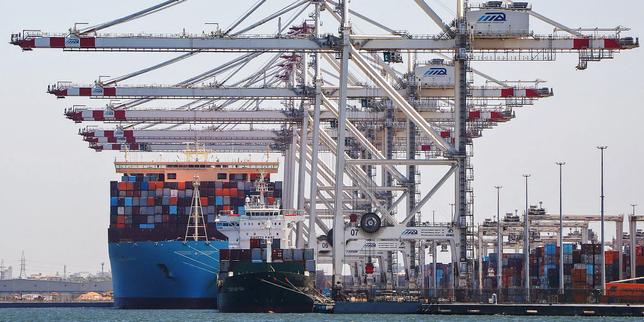
The microeconomic reality of bulk commodity trade is dictated by port efficiency, storage infrastructure, and discharge capacity. Indian import hubs such as Kandla, Mundra, and Kakinada experience periodic congestion during peak festive demand cycles when edible oil consumption surges. Vessel turnaround times directly influence demurrage costs, which are absorbed either by the supplier through discounted pricing or by the buyer through higher landed costs.
Ministerial delegations use government-to-government channels to negotiate priority berthing rights, streamlined customs clearance, and expanded storage tank capacities at key entry points. These logistical optimizations reduce landed cost friction without altering nominal commodity prices. When state actors collaborate on supply chain reliability, private importers gain the confidence required to lock in forward contracts rather than relying exclusively on volatile spot market purchases.
Geopolitical Hedging and Supply Chain Resilience
Agricultural commodities are inherently sensitive to geopolitical shocks. Trade restrictions, export bans implemented by rival producers, and diplomatic friction between exporting and importing states introduce systemic risk into food supply chains. India's historical experience with sudden export curbs imposed by major palm oil and edible oil suppliers has elevated supply security to a matter of national strategic priority.
The Malaysian delegation must position its export infrastructure as a reliable, stable alternative immune to unilateral trade disruptions. This involves offering long-term supply agreements backed by government guarantees of export quota availability, even during domestic production shortfalls caused by climatic anomalies such as El Niño weather cycles. By providing transparency on production inventories and inventory buffers, Malaysian officials reduce the perceived sovereign risk associated with their export sector, strengthening their competitive position against alternative producers.
Strategic Forecast and Market Execution
Evaluating the efficacy of upcoming ministerial talks requires tracking specific structural indicators rather than official diplomatic communiqués. Observers should monitor three core quantitative variables over the subsequent two quarters:
- The spread between crude palm oil FOB prices in Port Klang and landed CIF prices at major Indian ports like Kandla and Mundra.
- Changes in the tariff differential between crude and refined palm oil enacted by the Indian Ministry of Finance.
- Import volume ratios comparing Malaysian market share against Indonesian shipments into the subcontinent.
If the delegation successfully establishes predictable regulatory baselines and administrative streamlining, Malaysian exporters will capture higher capacity utilization rates among Indian coastal refiners. Conversely, failure to secure competitive parity against alternative oilseeds will accelerate market share erosion, compelling Malaysian producers to pivot volume toward alternative growth corridors in the Middle East and East Africa. Private sector operators should maintain flexible hedging strategies, insulating operating margins against sudden tariff adjustments while monitoring bilateral trade policy announcements for early signals of regulatory shifts.