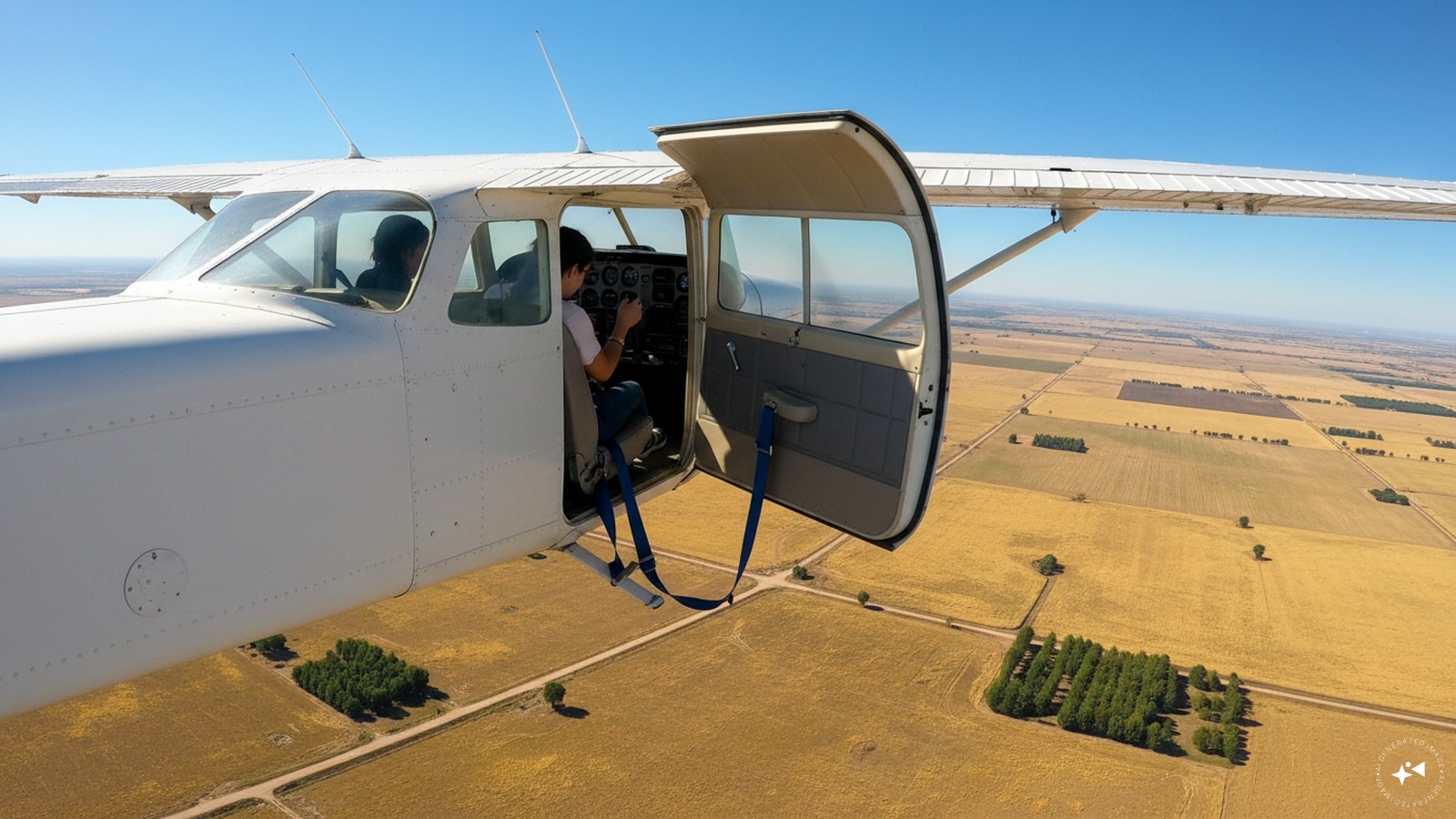
Imagine flying at a couple thousand feet when the person teaching you how to stay alive suddenly unbuckles their seatbelt, takes off their headset, and opens the door. That is exactly what happened to a 22-year-old student pilot named Rosario over Córdoba Province in central Argentina.
Her 42-year-old flight instructor, Leandro Andrés Bertazzo, looked at her, delivered a final seven-word instruction, and stepped out into the open air without a parachute.
"You know what you have to do. Carry on."
Then he was gone.
Most people freeze when panic hits. Rosario did not have that luxury. Left entirely alone in the cockpit of a light Cessna 150, she had to override total psychological shock to bring the aircraft down by herself.
The Mid-Air Emergency Over Toledo
The routine training flight took off on Saturday, July 4, 2026, operating out of the Flying Parrot Córdoba aviation school. By all accounts, it started as an ordinary afternoon lesson. Bertazzo was an experienced instructor who had spent years teaching students both in Argentina and neighboring Chile. He had already completed a successful training flight with another student earlier that morning without a single issue.
But while cruising over the town of Toledo, things went completely off script.
According to investigators, Bertazzo calmly unfastened his harness, removed his communication headset, and forced open the aircraft door. In a Cessna 150 flying at typical training speeds, fighting the slipstream to open a door takes immense physical effort. Eduardo Álvarez, the director of the flight school, noted that fighting the air pressure at that velocity is like trying to force open a car door while speeding down a highway at 124 mph. Bertazzo pushed through that force anyway, spoke his final words to Rosario, and exited the aircraft.
How Rosario Saved Her Own Life
When an instructor leaves a plane mid-flight, the student is instantly thrust into a worst-case scenario. Rosario held a license but lacked the deep, instinctual experience required to handle severe crisis situations.
She did not freeze. Instead, she executed a textbook emergency protocol under conditions that would break veteran pilots.
- Maintained Aircraft Control: She kept the nose level and prevented the Cessna from entering a dangerous bank or dive after the sudden aerodynamic shift of the open door.
- Established Radio Contact: She immediately dialed into air traffic control, reported the emergency clearly, and stayed on the frequency.
- Navigated to Safety: Following the guidance of controllers, she lined up the aircraft with the runway at Coronel Olmedo Airport.
- Executed the Landing: She brought the plane down smoothly without causing a single scratch to the airframe or sustaining any personal injuries.
Once the wheels stopped spinning, Rosario was able to provide authorities with the exact coordinates where Bertazzo exited the cabin. Emergency crews used her data to locate the instructor's body in a rural field shortly after.
The Mental Health Reality in Commercial Aviation
The Córdoba Public Prosecutor’s Office is handling the ongoing investigation, treating the tragedy as an apparent suicide. While the flight school management initially reported absolutely no visible warning signs or odd behavior on the day of the flight, Bertazzo’s family later provided critical context. His father told local Argentine media that the instructor had been battling intense personal struggles and was actively receiving psychiatric treatment.
This incident exposes a massive, systemic issue that the aviation industry constantly tries to sweep under the rug: the crushing stigma surrounding pilot mental health.
Pilots face a brutal catch-22. If they admit they are struggling with depression, anxiety, or severe stress, they risk losing their medical certification. Losing that certification means losing their livelihood instantly. Because the stakes are so high, many aviators choose to hide their struggles, avoid seeking help, or seek treatment completely off the record to protect their careers.
When a pilot's mental health deteriorates in secret, the cockpit ceases to be a controlled environment and becomes a liability. The aviation community frequently praises the mechanics of flight safety, but the psychological fitness of the crew is just as vital as the engine oil pressure.
If you are an aspiring pilot or currently working in the aviation industry, never compromise your well-being or safety for a flight hour log. If you recognize signs of severe stress or burnout in yourself or a colleague, speak up. Reach out to peer support networks or aviation medical professionals who can help navigate mental wellness resources confidentially before a crisis develops.