The mainstream media loves a clean, bird’s-eye tragedy. A satellite zooms in on the Gezira Scheme in Sudan, captures the charred remains of a wheat field, and instantly triggers a flood of headlines about a "shattered breadbasket." It’s easy. It’s visual. It’s also a lazy misreading of how hunger and power actually operate in East Africa.
The narrative that Sudan’s war "scorched" its future assumes that the Gezira was a functioning, efficient engine of food security before the Rapid Support Forces (RSF) and the Sudanese Armed Forces (SAF) started burning it down. That is a fantasy. For decades, the Gezira Scheme has been a zombie project—a colonial-era relic propped up by debt and state mismanagement. To mourn it as a lost utopia isn't just inaccurate; it ignores the structural reasons why people are starving.
We need to stop looking at satellite pixels and start looking at the ledger books. Hunger in Sudan is not a crop yield problem. It is a liquidity and logistics problem.
The Myth of the Imperial Breadbasket
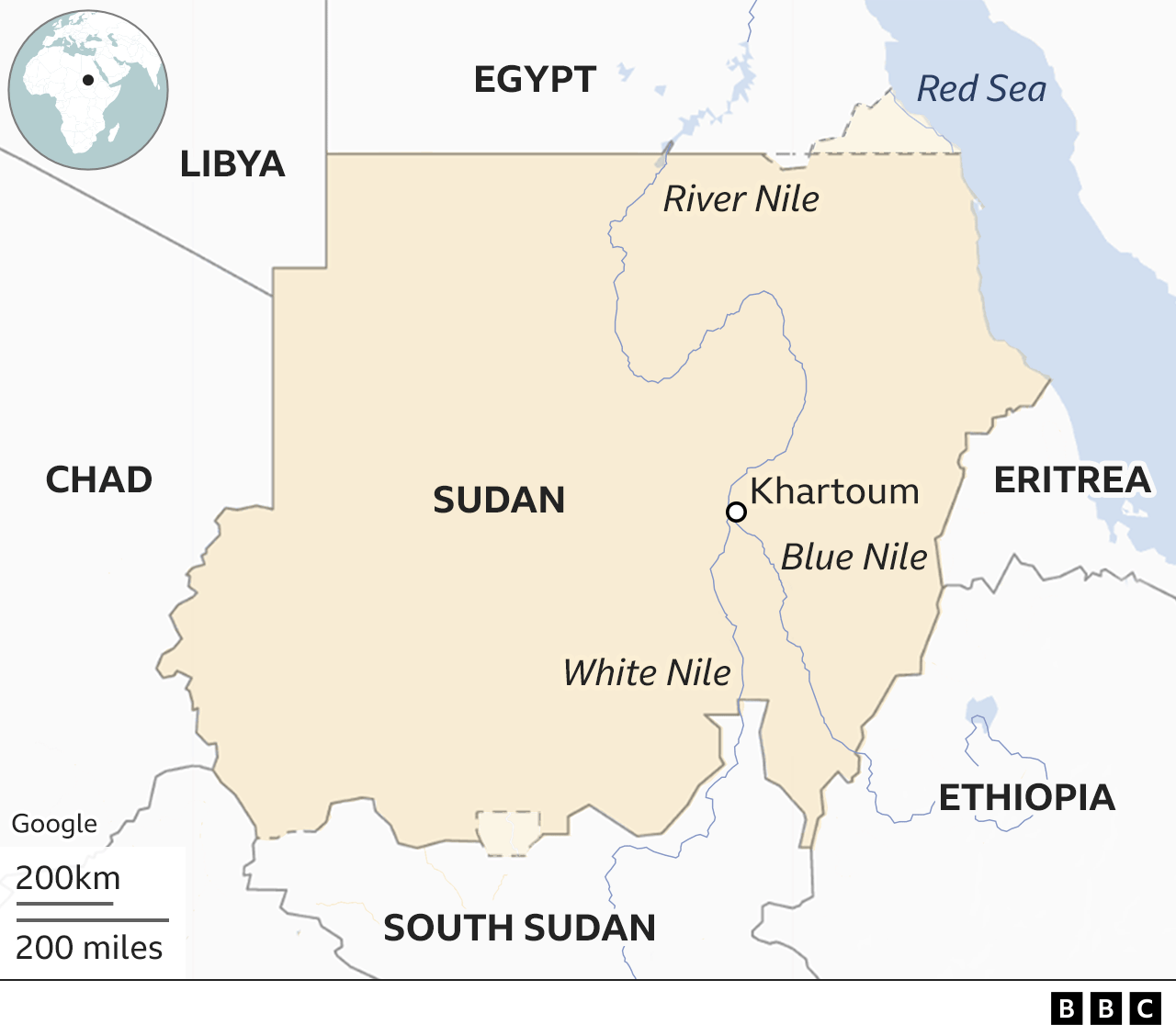
The Gezira Scheme, spanning over 2 million acres between the Blue and White Nile, was designed by the British to grow cotton, not to feed Sudanese people. It was an extraction machine. Post-independence, the Sudanese state tried to pivot it toward wheat and sorghum, but the DNA of the project remained top-down, rigid, and prone to failure.
By the time the current conflict ignited in April 2023, the "breadbasket" was already leaking. Siltation had choked the irrigation canals. Low-quality seeds and lack of fertilizer meant yields were a fraction of global averages. When journalists point to satellite images of blackened earth and claim "this is why Sudan will starve," they are mistaking the final blow for the cause of death.
I have watched international NGOs pour millions into "revitalizing" irrigation systems in conflict zones, only to see that infrastructure become a magnet for militia taxation. In Sudan, the breadbasket wasn't destroyed by the war; it was the prize that funded the war. The obsession with "restoring" this centralized agricultural hub is a sunk-cost fallacy that keeps the country dependent on a broken model.
Why High-Res Satellites See Nothing
We are living in an era of "optical fetishism." Because we have Maxar and Planet Labs providing 30cm resolution imagery, we assume we have the full story. We see the burn scars. We see the lack of greening in the winter wheat cycle.
But satellite imagery cannot see:
- The Extortion Gate: A farmer may have a successful harvest, but if he has to pass through fifteen RSF checkpoints to get it to market, that food effectively does not exist.
- The Currency Collapse: The Sudanese Pound has been in a freefall. Even if the Gezira was overflowing with grain, the average citizen in Omdurman or Port Sudan cannot afford it.
- The Seed Bank Looting: The destruction of the Agricultural Research Corporation in Wad Madani is a far greater tragedy than a few burned hectares. That’s where the genetic history of Sudan’s climate-resilient crops lived. You can replant a field in a season; you cannot replace fifty years of localized agronomy.
The "breadbasket" narrative is a distraction because it suggests that if the fighting stops and we throw enough tractors at the Gezira, the problem is solved. It won't be.
The Decentralization Mandate
If you want to talk about food security in Sudan, stop talking about the Gezira and start talking about the Wadi and the Jubraka.
Sudan’s true resilience lies in its decentralized, small-holder rain-fed sectors in the west and south. These are harder to see on a satellite because they don't look like neat, industrial grids. They are messy. They are integrated with livestock. But they are also harder for a centralized military force to monopolize.
The obsession with the Gezira is an obsession with state control. Both the SAF and the RSF want the Gezira because whoever controls it controls the caloric intake of the urban population. By framing the Gezira’s destruction as the primary driver of the famine, the international community inadvertently supports a return to the very centralized power structures that caused the war in the first place.
Instead of trying to fix a colonial monolith, the focus should be on:
- Mobile Processing: Small-scale mills that can be moved to avoid frontline shifts.
- Digital Markets: Bypassing the physical "hubs" that militias occupy.
- Cross-border Informal Trade: Acknowledging that the "official" breadbasket is dead and the real food is coming in through porous borders in the back of Toyota Hiluxes.
The Data Trap
"People Also Ask" online queries often focus on: When will Sudan's agriculture recover?
The brutal answer? It shouldn't recover to what it was. What it was was a brittle, state-captured monopoly. The "recovery" people envision is a return to a system where a few generals in Khartoum decide who eats based on who controls a specific set of sluice gates on the Nile.
We see this in every major conflict. Analysts look at the "big" infrastructure—the dams, the industrial farms, the power plants. They ignore the subterranean economy. In my years tracking supply chain disruptions, the most successful interventions were never the ones that tried to rebuild the "status quo" middle. They were the ones that empowered the fringes.
The scorched earth in the Gezira is a tragedy, yes. But it’s also a clearance. It is an opportunity to move away from a failed, centralized agricultural model that served the elite and move toward a fragmented, resilient system that might actually survive the next decade of climate and political instability.
Stop Sending Tractors
The knee-jerk reaction to "breadbasket" destruction is to plan for a massive influx of heavy machinery and industrial seed kits once the "dust settles." This is a mistake I’ve seen repeated from Iraq to Ethiopia.
Industrial agriculture in a failed state is just a "lootable asset." A tractor is a mobile generator and a transport vehicle for a militia. A centralized grain silo is a fortress. If you give a starving country a centralized breadbasket, you are giving the warring factions a reason to keep fighting over that specific piece of ground.
True food security in Sudan requires the "ungovernable" farm. It requires crops that don't need a state-run irrigation department to function. It requires markets that exist on encrypted messaging apps rather than in physical squares that can be shelled.
The Ledger is the Weapon
The war didn't just burn the wheat; it weaponized the bureaucracy of food. The Agricultural Bank of Sudan is as much a frontline as the streets of Khartoum. By controlling the credit and the fuel required to run the Gezira, the warring parties have turned "farming" into a form of combat.
When you read an article about satellite imagery showing "declining vegetation indices," understand that you are looking at a symptom of a financial blockade, not just a physical fire. The farmers didn't stop planting because they were afraid of bullets; they stopped planting because the banks closed and they couldn't buy fuel.
The focus on "scorched earth" makes it sound like a natural disaster or a mindless act of vandalism. It isn't. It is a calculated removal of the civilian population's autonomy.
Stop looking at the fires. Look at the fuel prices. Look at the seed monopolies. Look at the way the Nile's water is being used as a lever of surrender. The breadbasket is a myth, the satellite is a narrow lens, and the only way out is to stop trying to rebuild the past.
Burn the old maps. The Gezira is gone, and Sudan might be better off for it if we have the courage to build something that doesn't require a general’s permission to grow.


